
Write something

Feb 4 •
Week 3 - Home Stretch
In this video, Kayla is working dogs in Week 3 of their training, where we begin transitioning skills into real-world environments. At this stage, the dogs already understand their commands. Now the focus shifts to: Training in new locations Practicing long line recall Building reliability around distractions Preparing for the off-leash transition Despite a foot of snow on the ground, these dogs are working at a local park, proving that solid training doesn’t depend on perfect conditions — it depends on clarity, consistency, and repetition. This phase of training is where structure starts to turn into freedom. The skills being practiced here are what allow dogs to safely enjoy off-leash time, public spaces, and real-life outings with their owners. If you want your dog to live this kind of lifestyle, these are the skills that make it possible.
2
0

Jan 28 •
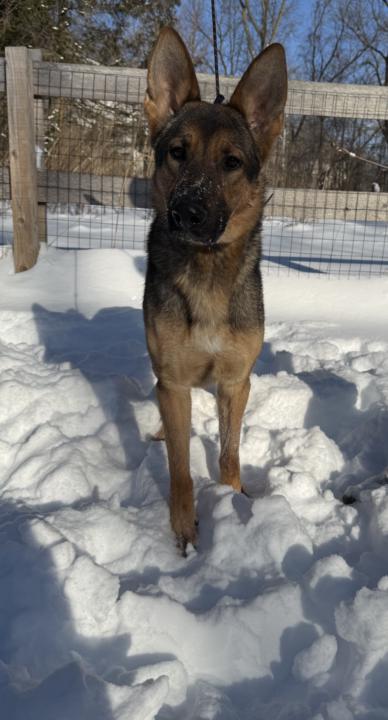
Storms enjoying the snow
Training can also be simply letting the dogs decompress for a little bit and enjoy something fun like playing in the snow.

Jan 12 •
Cash – Day 1 | Building Trust Before Training
I want to introduce you to Cash. He’s an interesting case, but also a good example of why trust and emotional conditioning come before obedience. Cash will take food from me, but eye contact, direct body pressure, and certain types of interaction are very triggering for him. Based on his history, my working theory is that people previously tried to intimidate him—likely attempting to create aggression instead of stability. The result wasn’t protection… it was conflict, anxiety, and compulsive behavior. What you’re seeing here (the spinning, tail biting, tension) is a dog who learned he had no control over what was happening to him. So the goal on Day 1 is not commands. It’s not corrections. It’s not “testing” him. The goal is predictability. Right now, every interaction I have with him needs to communicate one thing: When I engage with you, good things happen. That’s why all of his food is being hand-fed through the kennel. It’s safe, controlled, and emotionally clear. I’m intentionally squaring up, talking to him, and occupying space—without forcing eye contact or pushing him past his threshold. If he chooses to disengage visually, that’s fine. We’ll build that later. Dogs’ behavior follows their expectations. If Cash learns to expect calm, predictable, positive interactions with me, his behavior will start to reflect that. But because of his history, there’s no room for sloppy handling or rushed progression. One wrong move can set him back—or put someone at risk. Over the next 6–8 weeks, I’ll walk him through this process step by step: • Reconditioning his emotional response to people • Creating safety and predictability • Gradually expanding freedom and interaction • Only then layering in skills and structure This is what real rehabilitation looks like. Trust first. Clarity second. Skills come later. Stay tuned — I’ll keep documenting his progress and the decisions behind each step.

1-10 of 10

skool.com/paradigm-k9-7474
Transform your dog and your relationship. Our proven 4 Pillar System creates calm, obedient, reliable dogs you can trust anywhere.
Leaderboard (30-day)
1

+21
2

+6
3

+6
4

+2
5
+2
Powered by