Activity
Mon
Wed
Fri
Sun
Aug
Sep
Oct
Nov
Dec
Jan
Feb
Mar
Apr
May
Jun
Jul
What is this?
Less
More
Owned by Bryan
We educate high performers in business and sport on how to clarify what matters in their lives through weights, nutrition and Cellular Medicine.
Memberships
Body Systems Coaching [Men]
49 members • Free
Clinician Growth Blueprint™
6.1k members • Free
Skoolers
166.7k members • Free
Castore: Built to Adapt
1.1k members • Free
Endless Evolution w/ Duffin
2.9k members • Free
6 contributions to Castore: Built to Adapt

May 16 •
You’re Wasting Your Peptides…And It’s Not the Peptides’ Fault
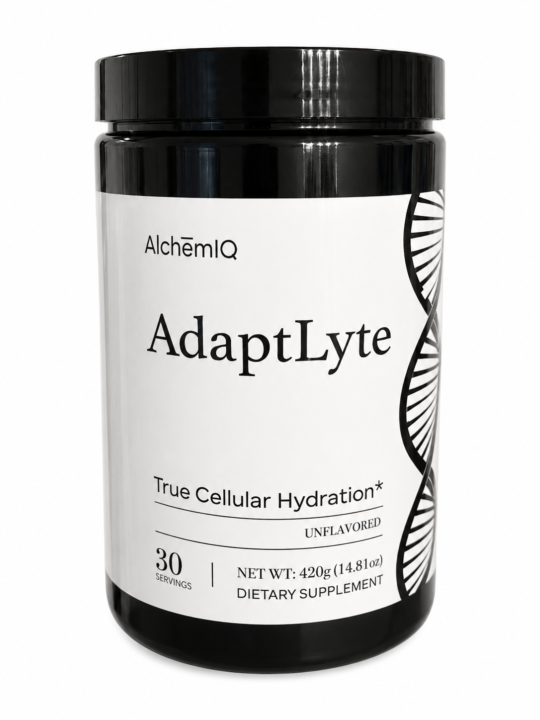
You probably aren't as hydrated as you think. “Drinking water” and “becoming hydrated” are two very different conversations Most people think hydration is solved at the kitchen sink. Fill the bottle. Drink the bottle. Repeat. Maybe toss in some electrolytes if training was hard or the sauna ran long. The internal scorecard says hydrated, the body says something else, and we keep moving. Here is the uncomfortable part. You can drink water all day and still have cells that are under-volumed, undercharged, and under-resourced. The water moves through you. It does not always move into you not where it counts. This article is about where it counts. The Two Compartments Almost Nobody Talks About When you drink water, that water enters the extracellular space first, the bloodstream and the fluid bathing your tissues. That is the easy compartment. It moves fast, it dilutes quickly, and you can pee most of it out within an hour if the terrain is not set up to hold it. The compartment that actually drives performance, recovery, and adaptation is the intracellular space. That is the water inside the cell. Roughly two-thirds of your body water lives there. It is the environment where mitochondria make ATP, where ribosomes build protein, where signaling cascades fire, where peptide messages get translated into actual biological responses. A useful analogy: extracellular water is the rain on the roof. Intracellular water is the rain that actually reaches the roots. You can have a lot of one and very little of the other, and the plant will tell you which one matters. The goal of real hydration is not to soak the roof. The goal is to get water to the roots. Cell Volume Is a Signal, Not a Side Effect This is the piece that reframes everything once you see it. A well-hydrated cell is not just a wetter cell. It is a cell with a different internal pressure and that pressure is interpreted by the body as a signal. The biochemist Dieter Häussinger’s work established that cell swelling, within normal limits, tends to bias the cell toward an anabolic, building, repairing state, while cell shrinkage tends to bias it toward a catabolic, stressed, breakdown state.

1 like • May 20
How do I DM here @Anthony Castore ?
Dec '25 •
The Hidden Recycling Loop That Controls Estrogen (And Why Anti-Estrogens Fail)
Bile acids and estrogen are linked not because the body made a mistake, but because it is extraordinarily efficient. Human physiology is built around conservation. Anything energetically expensive or biologically powerful is reused whenever possible. Cholesterol is reused. Bile acids are reused. Steroid hormones like estrogen are reused. The liver and gut work together as a recycling plant, constantly deciding what to keep, what to modify, and what to throw away. Estrogen and bile acids happen to share the same conveyor belt. This is why problems with digestion, stool, gallbladder function, thyroid output, stress, or the microbiome so often show up as “hormone issues.” The hormones are downstream. The traffic system is upstream. To understand the connection, we start with the simplest possible truth: estrogen does not simply rise or fall on its own. Estrogen exposure is the result of production, conversion, binding, recycling, and elimination. Bile acids influence three of those five steps. That alone explains why anti-estrogen strategies so often fail. Bile acids are usually taught as digestive detergents. You eat fat, the gallbladder squeezes, bile comes out, fats get emulsified, end of story. That explanation is incomplete. Bile acids are also signaling molecules that talk directly to the liver, the gut, immune cells, and the microbiome. They regulate which bacteria survive. They turn genes on and off. They decide how aggressively the liver detoxifies hormones. Think of bile acids less like dish soap and more like traffic police. They don’t just clean up fat. They control flow. Estrogen’s journey through the body follows a predictable arc. Estrogen is synthesized or converted from precursors, used in tissues like breast, bone, brain, muscle, and reproductive organs, and then whatever is left over is sent to the liver. The liver’s job is not to destroy estrogen but to neutralize it temporarily. It does this by conjugating estrogen, mainly through glucuronidation and sulfation. These chemical tags make estrogen water-soluble and biologically quieter.
1 like • Dec '25
Great post @Anthony Castore. Amazing how the loops all “loop” together…
Sep '25 •
The Hidden Switch: Why Long COVID Lingers and How to Restart the System Part 1
This weekend’s conference has been electric, hallways buzzing with ideas, people challenging each other to think beyond silos, and a shared hunger to connect dots that usually get studied in isolation. That energy is exactly what this article series is about. Long COVID gives us a living case study in systems biology: it’s not just lungs or immunity or mitochondria it’s the way every domain of the body intersects and adapts, for better or worse. Whether your personal goal is recovering from a chronic condition, building muscle, or chasing peak performance, the principles are the same. When we understand how the body adapts and more importantly, how its systems talk to each other we can master outcomes across the spectrum. Mitochondria, immunity, vascular health, fascia, hormones, and the brain aren’t separate silos; they’re parts of one adaptive network. By studying complex disease models like long COVID, we learn the rules of that network and once you know the rules, you can bend them toward health, recovery, and performance.COVID long hauler syndrome is best understood as a problem of the cell danger response failing to turn off. Normally, when a virus or injury strikes, cells switch into an emergency program. They divert energy away from normal operations, release warning signals to the immune system, and restrict their own metabolic flexibility. This is protective in the short term, but it comes at a cost. Once the threat has passed, the response should resolve. In long COVID, that resolution never happens. The body is left stuck in a low-level alarm state, draining energy, impairing function, and producing symptoms that seem to affect every organ system. At the center of this stalled recovery is the persistence of viral fragments. Even after the acute infection ends, leftover pieces of spike protein or viral RNA may linger in tissues. These fragments are enough to keep immune cells on high alert. Think of it like a smoke detector that still smells faint smoke long after the fire is gone. It keeps beeping, not realizing the danger has already passed. The immune system, like that alarm, continues to release inflammatory signals, creating a cycle of ongoing distress.
1 like • Sep '25
This is a great explanation @Anthony Castore . Thank you for helping me reframe this for my clients. It is needed

0 likes • Aug '25
Was trying to figure out where to post @Anthony Castore . Yes loved the webinar. May I get the slides? [email protected] Plus I’m getting my SLU tomorrow!
Aug '25 •
Death by 5’s: Part 2 – Variations, Tools, and Strategy
In Part 1, we introduced Death by 5’s as a brutally efficient training system that condenses the three main drivers of hypertrophy—mechanical tension, stretch-mediated signaling, and metabolic stress—into one extended set. It’s simple, devastating, and effective. But here’s the key: the way you order the phases, the tools you use, and where you place the set in your workout completely changes the outcome. This is where Death by 5’s evolves from just a method into a system you can tailor for hypertrophy, strength, or metabolic conditioning. The Three Variations 1. Hypertrophy Sequence (Tension → Stretch → Burn) This is the default Death by 5’s order: 1. Paused reps with slow eccentrics (tension) 2. One-and-a-half reps in the stretch (damage/stretch-mediated hypertrophy) 3. Rep-out to failure (metabolic stress) Why it works: You hit the muscle with peak tension while fresh, pile on stretch-induced signaling, and finish with a metabolic flood. This balances all three hypertrophy drivers. When to use: General hypertrophy programming. Ideal for machines and isolation patterns where control and safety are maximized. 2. Metabolic Sequence (Burn → Stretch → Hold) 1. Rep-out to failure first (pump/metabolic stress) 2. One-and-a-half reps in the stretch (damage under fatigue) 3. Paused rep or heavy negative finisher (tension under exhaustion) Why it works: Leading with high-rep failure floods the muscle with metabolites, creates hypoxia, and recruits high-threshold fibers by necessity. Stretch and pause phases then extend the set beyond failure. When to use: Smaller muscles (arms, delts) or as a finisher. Best with dumbbells or cables where you can focus on the pump and stabilizers without risking collapse under heavy compound loading. 3. Strength Sequence (Stretch → Burn → Heavy Pause/Negative) 1. One-and-a-half reps in the stretched position 2. Rep-out to failure 3. Final paused rep or negative overload Why it works: Prioritizes stretch-mediated overload, which heavily stresses titin and myofibrils, creating significant damage and repair. Ending with a heavy pause/negative overloads remaining fibers with maximal force.
1 like • Aug '25
Anthony, Looks like you can place these in Primary - Accessary - Remedials. When you first use them, where do you suggest optimal placing? Im sure (as you put above) it doesn’t matter but thought I’d see where you first started.
1-6 of 6

Active 5h ago
Joined Aug 2, 2025
Saint Louis
Powered by