Activity
Mon
Wed
Fri
Sun
Aug
Sep
Oct
Nov
Dec
Jan
Feb
Mar
Apr
May
Jun
What is this?
Less
More
Memberships
The Watch Manual
32 members • Free
1 contribution to The Watch Manual

25d •
The Seven Phases of Watch Loving
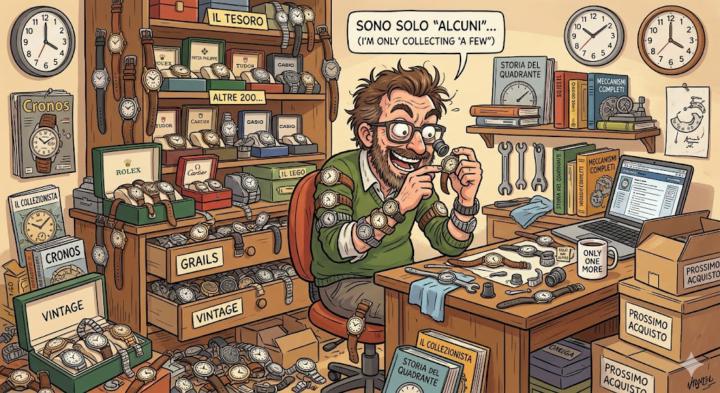
Have you ever wondered what the watch on your wrist actually signals to the world? Let’s be completely honest: spending thousands on a piece of charming but outdated mechanical technology is irrational. Yet, as watch enthusiasts, we are deeply tied to the social and personal meaning of what we wear. There is a bittersweet running joke in the community that every collector passes through seven distinct phases of this shared "horological illness": - Phase 1: Pure Joy. Whatever you get is excellent. It’s fun, colorful, tells the time, and makes you happy. - Phase 2: Social Pressure. You start looking at watches differently. You want a recognizable name, often landing on a mainstream fashion watch. - Phase 3: Horological Awakening. You realize the brand needs to be a true watchmaker. You shop around for affordable, flashy entry-level pieces, often quartz-based. - Phase 4 & 5: Mechanical Enlightenment & The Rolex Fandom. You discover the beauty of mechanical calibers. This is almost always followed—or preceded—by the inevitable Rolex obsession phase - obsession meaning love or hate (statistically it's rather unlikely that Rolex leaves you lukewarm). - Phase 6: True Maturity. You break free from peer pressure and brand snobbery. You can finally appreciate a timepiece solely for its intrinsic merits, whether it costs $150 or $150,000. - Phase 7: The Philosopher. You realize the futility of it all. You can measure it precisely, but time passes anyway. You look at your collection and prepare to hand it down to the next generation who will care for it. Or find someone who will do. The Rolex Litmus Test: How to Spot Awareness Rolex is the most divisive brand in the world, splitting onlookers into fanatical camps. Broadly speaking, Rolex wearers fall into two distinct categories: those who know very little about horology, and those who know a great deal. If you want to know which one you are talking to, there is a single, elegant question you can ask: "What are your other watches?"

1 like • 25d
6
1 like • 24d
Grand Seiko. Thanks
1-1 of 1
@benny-mathew-1877
I am a watch enthusiast but a late entrant in my life to automatic watches. I am on the look out for good value and is not given to brands
Active 17d ago
Joined Mar 30, 2026