Activity
Mon
Wed
Fri
Sun
Aug
Sep
Oct
Nov
Dec
Jan
Feb
Mar
Apr
May
Jun
What is this?
Less
More
Memberships
The Watch Manual
32 members • Free
10 contributions to The Watch Manual

14d •
Girard-Perregaux Gyromatic: The Lesson the Vintage Market Still Hasn't Learned
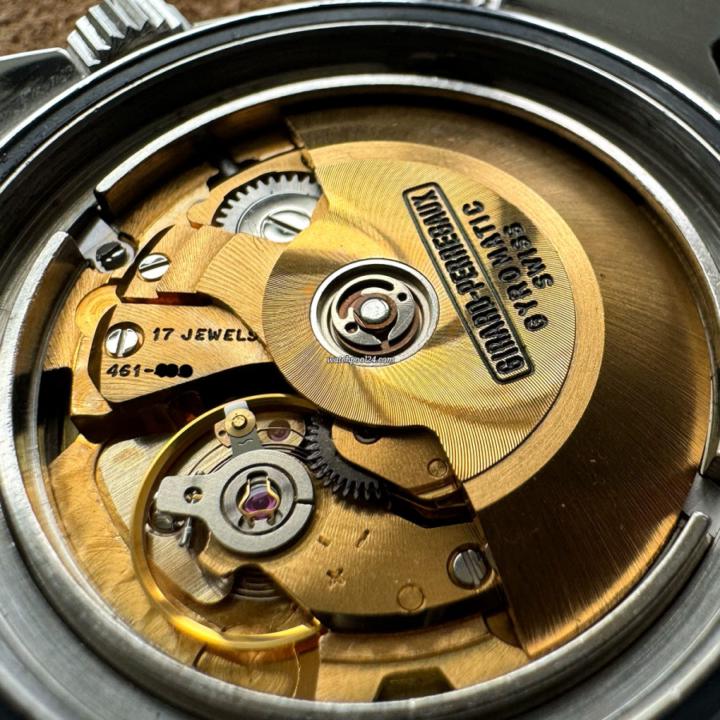
There's a watch I often use as an informal "test" with people getting into vintage collecting. I show them a late-1960s Gyromatic HF and ask: what do you think it's worth? The answer is almost always a fraction of the piece's real value. Then I explain what they're actually looking at — and that's when things shift. Not because I talked anyone into anything, but because I showed facts the market simply doesn't tell anymore. 1. The Problem the Gyromatic Was Built to Solve To understand why the Gyromatic matters, you have to start with the technical problem the entire industry was wrestling with in the 1950s. Early automatic movements (Harwood in the 1920s, then Rolex's and Eterna's solutions in the '30s and '40s) used rotors connected to click wheels: mechanisms that converted the rotor's back-and-forth oscillation into a single winding direction for the mainspring. They worked, but with two clear limits: they generated significant mechanical friction, and they lost efficiency with wear — especially when the goal was to slim down the movement or improve long-term reliability. Girard-Perregaux tackled the problem in 1956-57 with the Calibre 21: not an automatic movement built from scratch, but a winding module fitted to a manual ébauche (initially from Peseux, later Adolf Schild). The solution was elegant, and for its time, radical: replace traditional click mechanisms with two unidirectional clutches mounted on precision ruby rollers. GP called them Gyrotrons — hence the name of the whole system, Gyromatic. 2. How the Gyrotrone Actually Works (and Why It's Clever) This is worth getting into in detail, because it's the part almost nobody explains properly. The system uses two Gyrotron wheels, not one. The reason is simple: the rotor oscillates in both directions as the wrist moves, and the system needs to convert both directions of rotation into useful winding energy. One Gyrotron wheel handles clockwise rotation, the other handles counter-clockwise. Each wheel runs on ruby bearings that minimize internal friction and protect the components from premature wear — a structural detail, not a decorative one.

1 like • 14d
Great explanation, so it turns out my El Primero is the nephew of the Gyromatic!
18d •
From Status to Substance: How a Watch Collector's Taste Actually Matures
There is a moment in almost every serious collector's life that he can rarely point to with precision, because it doesn't arrive as a single event. It arrives the way dusk does — imperceptibly, and then all at once you realise the light has completely changed. One day he is buying watches for what they say. Another day, years later, he catches himself buying a watch that says almost nothing to anyone but him, and he is happier than he has ever been. This is the quiet migration from status to substance. It is the single most important transition a collector goes through, and understanding it tells you almost everything about where taste comes from and where it is going. The label is always the first language we speak Let me be clear about something, because too many people in this hobby are snobbish about beginnings: there is nothing wrong with buying a status symbol. It is the natural entry point. It is, in fact, the correct one. When someone makes their first serious watch purchase, they almost never have the vocabulary to evaluate the object itself. They cannot read a movement. They cannot tell hand-finishing from machine work, a true in-house caliber from a dressed-up ébauche, an honest dial from a cynical one. So they do the only rational thing available to a person without knowledge: they outsource the judgment to the market. They buy the name that the world has already agreed means success. That purchase isn't really a watch. It's a sentence spoken to other people. It says: I have arrived. I belong. I made it. And it is aimed entirely outward — at colleagues, at strangers in a meeting, at the version of oneself one wants reflected back. There is no shame in this. We all start by speaking the only language we know, and the language of the logo is the first one the watch world teaches us. The exact same road, walked in cloth If you want to understand where this is heading, stop looking at watches for a moment and look at tailoring, because it is the identical journey — and in menswear the stages are easier to see.

1 like • 17d
Someone once told me that there were certain levels of collecting, the first was interest, the second was commitment, the third was obsession. I believe what they failed to include was passion. Somewhere between commitment and obsession there is passion and that can be for something of beauty, something of practicality or something that just makes you feel good. Certainly watch collecting for me falls into that category. I was never interested in watches until my future in-laws gave me an original Acutron which started my interest. I’m passed commitment, at the passion level at this point in my life.
May 25 •
FREE Watch Valuations
Hello horological friends. Starting today, I’m offering one FREE watch valuation per day directly in the community feed. It's a service that is also open to community members (privately) for a USD 29 fee. If you’d like me to appraise your watch (brand, model, approximate market value, condition remarks, etc.), just post clear photos and basic details in the feed (face, back, crown, and if possible, movement and the inside of the caseback). Every day I’ll publicly reply to ONE request with my honest assessment regarding the watch, the brand and its history. First come, first served — one valuation per day. Drop your watch below if you want it valued! ⌚ Looking forward to seeing what you have. And if you appreciate, bring in your friends!
Poll
3 members have voted

0 likes • 29d
[attachment]
1 like • 29d
@Franz Rivoira that is about what I expected… it wears well but it is heavy for me so it’s off to a new owner
29d •
Company History and Report: Movado
Movado is one of the Swiss brands with the strongest visual identity of the twentieth century. Its name is inextricably linked to the Museum Watch, an iconic model that marked a precise moment in the history of watch design. Behind this clean and instantly recognizable image, however, lies a longer and more complex story, made up of real merits but also of commercial choices that have made the brand less coherent in recent decades. The History of the Brand Movado was founded in 1881 in La Chaux-de-Fonds by Achille Ditesheim. The name, which in Esperanto means “always in motion,” already reflected a modern ambition at the time. In the early decades of the twentieth century the company produced watches of good quality and stood out for some technically advanced chronographs. The real turning point came in 1947, when American designer Nathan George Horwitt proposed a revolutionary dial: a black disc with a single gold dot at twelve o’clock. Most brands rejected the idea. Movado decided to produce it. The Museum Watch was born. In 1960 an example entered the permanent collection of the Museum of Modern Art in New York, and from that moment the model became the defining icon of the brand. In 1983, Movado was acquired by the North American Watch Corporation, which later became the Movado Group Inc. This marked a decisive shift in the brand’s trajectory. While Movado had historically been a relatively small, independent Swiss manufacturer focused on quality and design, the acquisition placed it within a larger, publicly listed American group with a clear commercial strategy. Under the Movado Group, the brand moved away from its traditional positioning and lowered its positioning. The company significantly expanded its product range, introduced multiple collections at different price points, and relied heavily on licensing agreements with fashion brands. This strategy increased visibility and sales volume, but it also diluted Movado’s original identity as a design-oriented watchmaker.

1 like • 29d
Great minds think alike I put this on today
May 21 •
Jewels and horology: the story of a breakthrough
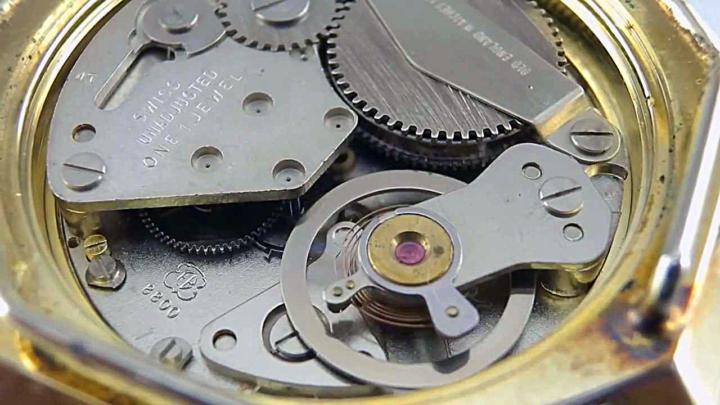
This is a longish and more advanced article coming from one of my ebooks, precisely "The Patreon Chronicles" (available in the Classroom here for purchase). It details jewels in watches, and complements the article about mainplates published earlier. _______________________________ What are the functions of a ruby or other precious-sounding gems in watch movements? While watches are considered among the rare items composing men’s jewelry, we need to understand the main differences between jewels “in” a watch and jewels “on” a watch. The words “ruby” and “precious stones” are indeed most evocative, but the reality is much more prosaic if we examine the application of these precious stones into watchmaking micromechanics. So, we’re not considering the precious stones that people display over their watches, and instead, check the much less glamorous aspect of what stays inside the watch: its heart, that is, the movement. First of all, let’s start by examining a real-life case. What you see below is a cheap watch movement called EB 8800. It was produced in mass quantities in the Seventies, and it is a relatively simple affair - equivalent to the cheap quartz-based calibers of today. As you can see, the top bridge has writing etched on it which says “Swiss - Unadjusted - One Jewel.” And the only jewel here is quite visible: it is the ruby located on the top of the balance wheel, at three o’clock. Apart from this, you can see the circular depressions in a lozenge-shaped array in the center of the watch. There are tiny holes practiced into them, and they host the pinions of the wheels turning inside the movement. You can see one of the wheels quite clearly next to the “EB” logo, with its teeth. Now, let’s check another photo of another movement. The movement is similar, but looking closely, you can spot a few key differences. Precisely, the very holes we talked about before showing the application of rubies, similar to the one over the balance wheel. Why the first movement has none, and the other does?
1 like • May 21
Love that physics!
1-10 of 10