Activity
Mon
Wed
Fri
Sun
Mar
Apr
May
Jun
Jul
Aug
Sep
Oct
Nov
Dec
Jan
Feb
What is this?
Less
More
Memberships
The Buyer's Mind
48 members • Free
RelationshipDynamics Community
259 members • Free
Lauren Dallas Creator Hub
6k members • Free
GC
Growthworks Community
24.1k members • Free
Top Coaches & Advisors Network
1.9k members • Free
The B2B School™
1k members • $99/month
5 contributions to The Buyer's Mind

12d •
Day 2 - The Fear Of Judgement
https://www.instagram.com/reel/DUFrDsJDhhC/?utm_source=ig_web_copy_link&igsh=NTc4MTIwNjQ2YQ== The closer you get to the edge of your comfort zone, the more outside of your known world you are. For most people, this loss of certainty and state of confusion is an uncomfortable experience. Whilst some rise to the challenges, the majority will retreat back to the known. It is a retreat back to security, comfort and certainty. The edge of comfort zones is unfamiliar territory, it is unknown, and it is scary. Comfort is familiar, and familiarity leads to certainty, one of the most powerful of human motivators. People who are strongly motivated by certainty always default to the familiar. They resist change by maintaining old patterns. Familiarity is certainty, and certainty generates feelings of reassurance, pleasure, dependability, satisfaction and knowing what is happening. It is the breakdown of familiarity and certainty that most people fear the most because it affects habitual patterns. In any process of change, it takes courage to leave the familiar and travel towards the unknown. If you have a high need for certainty in your life, there is little possibility of change taking place because, by definition, change is an uncertain activity and it destabilises the way people choose to organise their lives. Any talk of major change will be seen as a threat, an attack on the familiar, and will be met with strong resistance. Certainty is about doing the same things over and over again because it is comforting. Whilst people complain about their financial results, at least they are familiar and they can keep reproducing them. There is no mystery in comfort, there are no adventures, no challenges beyond survival, no requirements beyond the known, no variety beyond misfortune, no newness beyond consistency, no progress beyond immediate gratification, and no demands beyond the daily immersion in the 'rat race.
1 like • 12d
We are where we are in life because this is our 'highly valued state'. We can 'breakthrough' the fear barrier etc but in most cases change is often temporary because your identity hasn't shifted toward the thing you are trying to achieve. There are so many ways we 'keep ourselves safe' by not moving forward. Here are a couple of examples that you may have seen in others (and ourselves). 'Not beginning until we are finished or already feel perfect' - "Oh, my website has to be just right, and I need one more certification, and I better learn the latest instagram hack,THEN I am ready get my coaching business going" 'Making others responsible for us having or not having what we want' - "I did an on-line course and I didn't start making '6 figures in 24 hrs and waking up to my client roster full of high ticket clients on autopilot' 🤣 so it's the their fault or if "only my spouse supported me more I would be further ahead" 'Uncertainty' often comes from trying to make too big a change in a short space of time. Until we understand how we can move from where we are safely, the change will not last or the behaviour will show up somewhere else. e.g. The person who goes 'cold turkey' to quit alcohol ends up binge eating instead etc. So in my view (and that of my clients), it's not about 'pushing through' it's about extending our comfort zone in a way that keeps ourselves safe. How do you know it's working? You do 'the thing' when nobody is watching. Having an accountability partner / coach can be beneficial at the start but in the end it is just another form of 'supervision' After all, the only person's judgment that really counts is our own. Make it an awesome day!
14d •
What Can You Say That No One Else Can? 🔪🔫
One of the most important ideas we touched on in the Community Discussion + Q&A call last night was this idea of being able to say things that no one else can say. Not because they’re clever or polarising. But because they’re true. And they’re yours. Most people try to stand out by refining their messaging. Better hooks. Better frameworks. Better explanations. But the real leverage isn’t in how well you explain something. It’s in what you’ve lived that gives weight to the way you see the world. Your story is the multiplier that everything else runs through. When you can collect a handful of statements that are undeniably true about your life, things no one else could honestly say, you stop competing on knowledge and start operating from identity. These aren’t things you invent. They’re things you’ve survived, navigated, or earned. That’s where confidence actually comes from. For me, some of those statements are simple, but heavy. - I was stabbed and shot at 15 - I went through nine surgical alterations. - I almost died on the operating table. - Later, with zero marketing or sales experience prior, I ended up directing marketing & sales for some of the most influential thought leaders and influencers in the health and fitness space. Those aren’t accomplishments. They’re context. You can’t fake that. You can’t reverse-engineer it. And you don’t need to exaggerate it to make it meaningful. The power comes from the fact that it actually happened. When you tie what you know now to what you’ve lived through, people feel it immediately. Curiosity increases because your perspective didn’t come from theory. It came from consequence. Interest grows because they know you didn’t arrive here the easy way. That’s what creates gravity, and this is where authority actually gets built. Not by proving you’re smart, but by showing people the path you walked to earn the way you think. Your story becomes the context through which everything you say makes sense.

3 likes • 14d
I was in a motor vehicle accident (on the freeway) that left me with a fractured skull, bleeding brain, lost more than once on the operating table and spent over a year learning to walk, talk, and wore a full face burn mask for a long time. i have so many funny moments to share about that time. - Major Takeaway that I share? "My injuries didn't show me who i was, they showed me who the people around me were" I once attempted to set the Australian altitude record for a glider and reached an altitude of over 27,000 ft in a plane with no motor. (Use this experience as it relates to growing a biz). I was the Arthur Murray national social ballroom dancing champion winning the title six weeks before my accident. Over the 2 years I competed, I won 15 gold medals (use this to demonstrate how quickly life / business can change in a moment) Yes ladies, I still have the moves! 🕺 🤣 I have raced sportcars for many years winning a number of club titles and finishing on the podium in a national series (use this to illustrate fulfilling a dream from when I was 5 years old) Yes this was 'after' my motor vehicle accident. My mum will turn 100 in May! I use this to celebrate and talk about how there is no replacement for 'lived experience' (not just technical knowledge).
Jan 2 •
What I'm working on this year😳
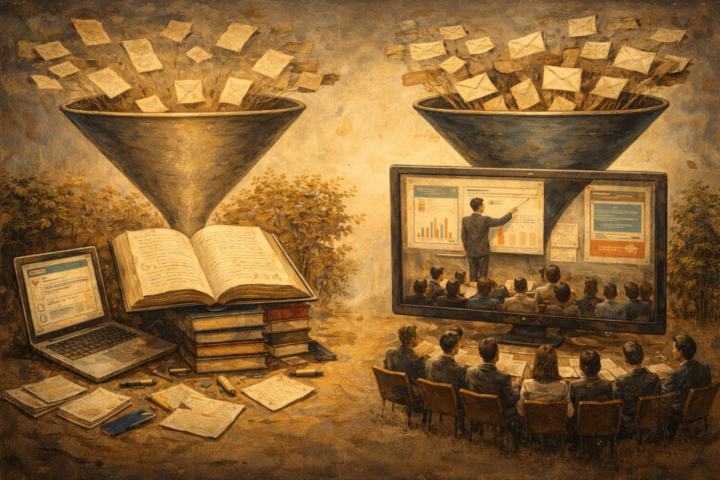
This year, I want to be far more deliberate about practicing what I teach. A lot of people teach from a distance. They explain what works, analyse why things fail, and stay safely upstream from the mess of actually building. I want my thinking to be shaped by doing the thing itself, not just talking about it. So I’m keeping my focus intentionally narrow. I’m committing to two funnels for the year. That's it. The first is my book funnel. It’s already live and it’s how most people discover my work. The second is a webinar funnel. It’s been one of the most reliable ways to move someone from interest to understanding for a long time now. 2 of the most proven funnels of all time. That makes them an honest place to learn. I’m deliberately choosing simplicity over sophistication. Fewer moving parts and fewer distractions. Everything I share this year will be informed by what I’m seeing and learning firsthand. What holds up and what breaks. What feels obvious in hindsight but wasn’t obvious going in. That’s the commitment I’m making this year. What are you choosing to go deep on this year?
1 like • Jan 2
Love to see 'product in action' with you in the arena with us rather than the folks who say "Here is what I did 100 years ago and it will certainly work for you too!" 🤣 I think Ben Franklin said it best "Well done is better than well said" In terms of what I going deep on this year? My personal KPI is really simple (and very effective). I aim to have at least 1 meaningful conversation everyday (Mon - Fri) with a person that fits the following criteria; 1. Someone who could potentially use my assistance / guidance 2. Someone who has someone in their 'world' that should know about me and what I do 3. Someone I can learn some new insight or 'map of reality' from that gives me new insights and learnings. So to aid all of this my intention is to go deeper on collaborating with others to help them provide their clients an even great result. Trialled this successfully last year (2025) and this year I will be building more of these collabs.
1 like • Jan 2
@Joshua Whitlock I have found from my experience that many people from business owners all the way through to C Suite and Board members tend to confuse KPIs and KRA / KRIs. The best way I like to illustrate this is the following; KPI's are the Levers (often pulled daily) KRA / KRI's are the Dials (read monthly or quarterly) KPI = What you do - Activity- and behaviour-based - Primarily leading indicators - Within the direct control of the person or team - Predictive of outcomes if done well and consistently So in my case my ONLY KPI is, how many conversations I have each day. Everything else predictably flows from those chats e.g. We book a time for an 'Alignment Conversation' where if it makes sense the prospects ask me how we can work together etc. In other words an easy way to define a KPI is 'Are we performing the actions that should create the result?' I have two KRIs for my practice. 1. The lifetime value of my clients. 2. How many clients got the result that we agreed we were aiming for (this one actually affects the other because when clients get meaningful results they stay longer 😎). So the two KRA's that they apply to are 'Revenue' and 'Transformation' Good way to define a KRA / KRI is 'Did the performance (KPI) produce the intended result?' KPIs are the behaviours you commit to. KRAs are the consequences of those behaviours Sorry it was a long winded answer to your question but this comes up a lot when I am involved in exec coaching. Like you, I practice what I preach! P.S. Enjoying the discussion.
Nov '25 •
Welcome! Introduce yourself + share your bigger vision🌍
Welcome to The Buyer's Mind Skool Community! Before you get yourself familiar with the platform here... Let's get to know each other! Like & Comment below a brief introduction into who you are, what you're working on right now and the bigger vision that your business is funding💭 Let's not forget that we all have dreams and passions outside of business❤️

2 likes • Dec '25
Greetings from Sydney Australia folks! Yep, I am in the future for most of you (It's 3hrs away from 2026 as I write this) Oh yes please don't ask me for the winning Powerball numbers because it's against the rules for me to tell you and it' just get's a bit awkward. 🤣 Who am I? Well one of my client's described me this way when she was introducing me to a group of business owners so what better way to describe myself than how a long term client described me in her words. So... "I'm the guy established business owners call when they need a creative solution to an impossible situation." They also call me when; They are looking to exit their business in the next 3-5 years or they want to get to the root cause of why their business is not working the way they would like it too. From my experience all 3 of the above things are usually intertwined. I practice the craft of 'Business Success Acceleration' which means I do whatever is necessary to help / guide my clients to their desired result. Sometimes it's coaching, sometimes it's advising, sometimes it's consulting, sometimes it's collaborating with an expert and bringing them in. My perfect client? The one who get's their desired result from working with me. My bigger vision? To raise the standard of coaching / advising worldwide. I also have two person objectives. 1. To learn something new everyday (been doing this since i was 5). 2. To make at least 5 people smile everyday. Since setting this objective I have brought over 60,000 smiles into the world. In fact it is double that because I was smiling too! I am already satisfying the first item by being in this group and hopefully some of you may be contributing to item number 2 when reading this intro. Looking forward to interacting with you all.
2 likes • Dec '25
@Joshua Whitlock great to be here.
Dec '25 •
Who actually decides value, the seller or the buyer?🤔
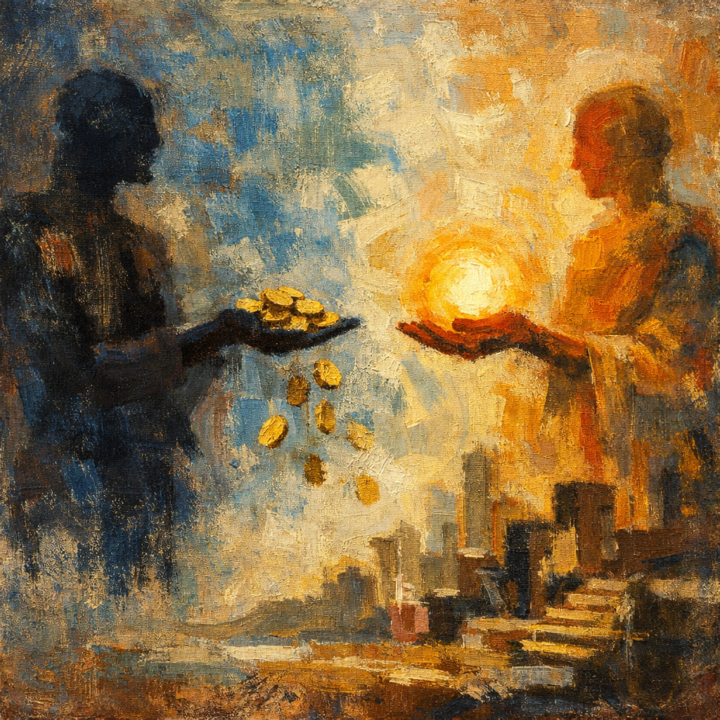
Value is not something you can assign unilaterally. You can explain. You can position. You can package. You can price. But value is only ever confirmed by the person who chooses to exchange for it. This is where a lot of confusion shows up. People assume that if they lower the price, they are making something more valuable to more people. However, lower prices reduce commitment, and commitment is what turns information into outcomes. Price is not the same thing as worth. Price is a signal. It communicates who something is for, how it should be approached, and how seriously it should be taken. In most cases, people use price to orient themselves before they ever engage with the content. Buyers decide value through action, not agreement. If someone pays and applies, value is created. If someone pays and disengages, value collapses regardless of how good the material is. This is why value cannot be imposed. It has to be recognised. It only emerges when the buyer meets the offer with attention, responsibility, and effort. Sellers often carry unnecessary guilt here. They feel responsible for whether someone extracts value. In reality, the seller can create conditions, but the buyer completes the equation. When you understand this, pricing becomes clearer. You stop trying to convince. You stop trying to rescue. You focus on clarity, standards, and alignment. Value is not something you give. It is something that happens when the right person engages in the right way. Take one and answer honestly: - Where have you seen value collapse because of disengagement rather than poor quality? - Have you ever paid more for something and taken it more seriously? What changed? - Where might you be carrying responsibility for outcomes that are not actually yours? - What does your current pricing signal about commitment and expectations? - If buyers ultimately decide value, how does that change the way you think about selling? No right answers here. Drop your thoughts below⬇️
1 like • Dec '25
We can never 'give' value we can only receive it. A Ferrari is only valuable to the person who purchases it. when I believe I I will realise more value from a purchase / investment than the money in my pocket (or what else I could spend that money on), I will make the purchase. This is why I always chuckle at the 'internet gurus' who teach you to include a 'value ladder' in all your offerings. "That's a total value of $56,000 but today it's $997!" 🤣 Here is my experience. "In the absence of value people will default to price" As an advisor I know I have NO intrinsic value, the value is created in the interaction with my clients. Like bringing two electrodes together, they cause a spark (value), move them apart again no spark. So my answer to the question is the buyers decides the value.
1-5 of 5
@azim-sahu-khan-4739
Most businesses are half the size they could be with the owner working twice as much as they should be. I help you fix this.
Active 4m ago
Joined Dec 30, 2025
Sydney Australia
Powered by