Activity
Mon
Wed
Fri
Sun
Nov
Dec
Jan
Feb
Mar
Apr
May
Jun
Jul
Aug
Sep
Oct
What is this?
Less
More
Owned by Arlyn
Warrior women: Forge strength, confidence, and resilience—and become impossible to break💪❤️🔥🔥
Party Profit Secrets
56
Free
Resilient Speakers
301
5.0
$27/m
🌴 Unemployed Abroad 🌴
333
5.0
Free
Evolve Now Social
2.8k
5.0
Free
Skoolers
151.3k
Free
36 contributions to The Wonder Woman Collective 🔥
Aug 8 •
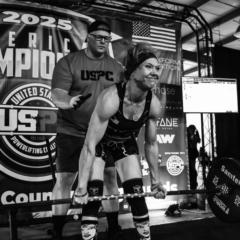
Surprise! My husband is also a powerlifter! 53 and cerebral palsy 💪
Steve is also platforming in Paranationals. This is a 275 deadlift where his grip began to slip at the top 💚💪🥰

1 like • Aug 8
@Matthew Hill his PR at Odins at the end of MARCH was 255: so 20 pounds in less than 5 months! He’s stronger than ME! He always was, he kept getting broadsided with health stuff (unrelated to CP). It’s so awesome you’re meeting soon! You all have so much heart: it’s AWESOME!!❤️🔥💪🤩

Jul 15 •
The fire within
An unbreakable body is impressive. An unconquerable mind is unstoppable. A heart set ablaze is invincible
0
0

Jun 9 •
Strength, Courage, and the Beauty of Life
Last week, I sat in my neurologist’s office for what I expected to be another appointment. Another discussion about symptoms. Another conversation about cerebellar ataxia. Another reminder of what had happened to me over twenty years ago when a stroke changed the trajectory of my life. Instead, I heard words I never imagined I would hear. My neurologist looked at me and said: “You’re going to be around for a long time.” And I started sobbing. Not graceful tears. Not polite tears. The kind of tears that come from somewhere so deep inside of you that they surprise even you. Because for years — if I am honest — I never thought I would hear those words. At 23 years old, after addiction, trauma, and the devastating loss of my father to suicide, I had a cerebellar stroke. My life changed overnight. One day I had independence. The next, I had paralysis. I had to learn how to walk again. How to speak clearly again. How to navigate a body and brain that no longer moved the way they once had. For a long time, life became about survival. And survival is a strange place to live. You are alive, but not fully living. You are breathing, but carrying fear. Fear about what comes next. Fear about what has been lost. Fear about how much time you have. Somewhere deep inside me, I think a part of me quietly wondered for years if my body would continue to decline. If I would ever truly feel strong again. If I would ever feel fully alive again. But somewhere along the way, something shifted. I got serious about recovery. Not just from substances. Not just from an eating disorder. But recovery in the deepest sense of the word. Recovery of mind. Recovery of body. Recovery of spirit. I have now been sober for 12 years. I fought my way through an eating disorder that once consumed my life. I stopped merely surviving and began prioritizing my mental, emotional, and physical wellbeing. I started treating my body less like an enemy and more like something sacred.
0
0

May 28 •
The Power of Community for Women in Fitness ❤️🔥
Had Liz Strong, OCB Pro Bodybuilder competing in Bikini on the Podcast this week 👊🏻❤️🔥 She has her own gym focused on Women’s Health, and has built a powerful Community focused on Strength. She is definitely a Wonder Woman!!

0 likes • May 28
How in the WORLD did I miss this?? She’s AWESOME 🔥🤩❤️🔥
0 likes • May 28
Steve is retired OCB. The first person that really gave me hope for anything athletic was the father of Sally Salang who is an OCB pro. What REALLY forwarded everything was Steve’s friend, Shervonne Smith (also has a Pro card). She has cerebral palsy and is an OCB pro. The walls in the bathroom at Flex Gym (where Odin’s Fury is) : is covered in OCB flyers. Needless to say, there’s a massive love for OCB and all bodybuilding over here ❤️🔥
1-10 of 36
@arlyn-smith-1898
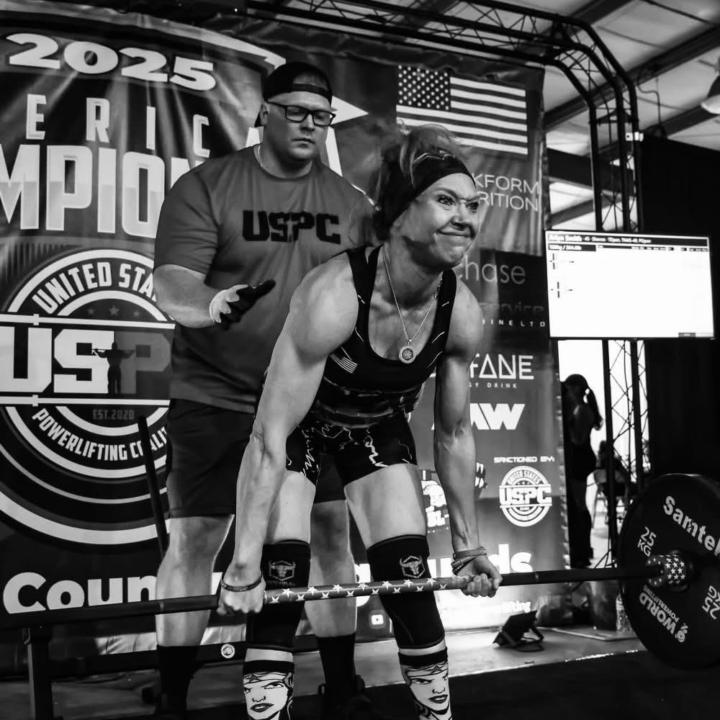
45. 20x Records (Powerlifting) 💚Para/Masters athlete. Thriving beyond stroke,coma,paralysis, anorexia, addiction. The strength is within you 🔥
Active 43d ago
Joined Mar 22, 2026
ENFP
Virginia
Powered by