Activity
Mon
Wed
Fri
Sun
Aug
Sep
Oct
Nov
Dec
Jan
Feb
Mar
Apr
May
Jun
What is this?
Less
More
Memberships
Classical Guitar Community
68 members • Free
4 contributions to Classical Guitar Community
Feb 5 •
16 Methodological tools for solving every passage
Hi, group! Almost a year ago I started writing a small "booklet" compiling the most effective tools I use and teach my students to use for solving methodologically any passage's difficulty either technical or musical. These are tools that many of us use most of the time but I never saw them all together systematically explained. The pdf was first distributed in spanish with great feedback from all over and I have now translated it into english and share it with you. The text is Creative Commons License. I'm not in the bussiness of monetizing my materials. I prefer to share with everybody, but if you think it is useful and want to contribute to the cause I won't get mad about it. Just let me know. You are free to use this as you see fit, share it with whom ever you think may profit from it and teach from it, if you think it is adaptable to your teaching process. I have posted some videos in my Facebook and Instagram pages (in spanish) about the uses and reasons behind each tool and you are welcome to look for them. I´ll probably also upload them to Youtube in a while with subs. I hope you'll enjoy them. Feedback is very welcomed!!
1 like • Feb 5
@Blaise Laflamme Thanks, Blaise! yeah,... i though about doing it straight in english but didn't feel comfortable about the spanish speakers not getting the material first hand first. I'll try automated subs first and see how they work out. If they do, I'll rapidly share a playlist on Youtube about them.
Aug '25 •
on Arriving Prepared
I want to share something that has come up (again - and again and again) today with my students. The need to arrive prepared. This can be extrapolated to many situations, of course, but I'd like to talk about the mistakes we make while studying or performing. And it is very closely related to many posts and answers I've been reading in many previous posts. It relates to efficiency but also to expressiveness, to relaxation and to security. Some times we clearly identify some bars or passages or motives that present some technical difficulty and since we have them identified, we isolate them and study them conscientiously and dedicate quite a bit of time to them... and then while we are playing two things happend: a) we make mistakes somewhere else, or b) we fall down in that same place we have been studying like crazy. This is due to some missconception that the complexity is local to the passage instead of the piece as a whole (and even the situation as a whole but that's another matter). Many times we resolve the passage in question but when we are playing we arrive to that passage in different conditions to the ones we have studied it isolated (i.e: more tensed or tired or with the fingers or hand in a different position). We tend to dedicate much more time to the things that are more difficult to us than the ones that come up easier. And I think that's a mistake. For once, neglecting the easy parts many times is cause of distress during performance and cause of "miss-interpretation" exactly in those easy parts. And then, many times not having studied the easy parts or the parts previous to the "difficulty" cause us to arrive at that point not in our best disposition. Dedicating time of study to the easy parts: prevents senseless accumulation of tension, allows for maximum enjoyment through the piece, gives rest to both hands in very narrow windows, allows us to arrive to more demanding passages in our best shape and over all gives us the chance to do more music.
Poll
5 members have voted
1 like • Aug '25
@Blaise Laflamme right... I ment specifically study, not run-throughs. To dedícate time going over the movements and sounds and hand sensations and right hand actions and left hand pressures of the passages that are not specifically difficult. I got into this mode motivated by two different happenings. The second is the story about my father playing happy birthday for me on the phone (you might recall that post from TB) and the first was the amount of "virtuosity" I adquired over studying deeply what I did "naturally" on easy passages to better explain to my students how to solve their technical or musical problems. Of course, I can play many passages with no study wathsoever. I can also sightread a medium level piece with a fair amount of expressiveness and security at a high percentage tempo. But when I take the time to study deeply those passages (or whole pieces) a lot of magic happens
1 like • Sep '25
@Yisrael van Handel I'm sorry about that. I don't know you and have never seen you play. I can not advice you propperly like this. The only advice that I can give you is to start applying what you've learnt over something: new, ridiculously simple and very slowly. As a side comment: I don't understand studying scales. I never did. I mean.... i do study the scales in the pieces... but have never done that as technical work. I mean,.. I do understand it but i don't see the need. You can easyly just study the piece with scales.
Sep '25 •
What are you working on this week?
Hey everyone! Hope you had a good weekend. What are you all practicing this week? I am actually not practicing anything as I am enjoying a little break from concerts until November! In a few weeks I will be recording new videos of pieces I commissioned and releasing one each week over about the course of 2-3 months. So I am enjoying a little break and then will come back fresh with renewed enthusiasm and inspiration for the recordings 😊 Do any of you ever take scheduled breaks ?
0 likes • Sep '25
Being curious....Who did you commiissioned to?
Aug '25 •
True confessions about repertoire likes/dislikes (?)
I don't like Asturias / Leyenda. There, I said it. It's boring. (I hope I don't get booted from the list 🙂). I came back to the piece this week after 4 decades away, and it still doesn't grab me. Any other true confessions out there?
1 like • Aug '25
Well, since we are confessing, I must say I always disliked all types of transcriptions from piano pieces with a complete exception of all Barroque music which was ussually transcribed for many instruments by the own composers.
0 likes • Aug '25
@Yisrael van Handel I'll check those out. I knew Seixas from my years of study (some 40 years back). I even read some transcriptions of his sonatas but I really can't remember who trasncribed them. I will go and look in my scores.
1-4 of 4
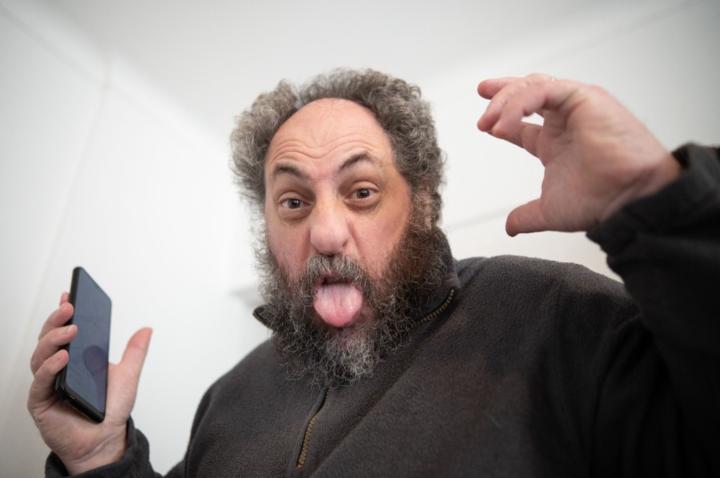
@ariel-elijovich-4450
Classical guitarist, performer of contemporary repertoire, and educator. Profesor at M. De Falla Conservatory in Buenos Aires, Argentina.
Active 138d ago
Joined Aug 24, 2025
Buenos Aires, Argentina