Activity
Mon
Wed
Fri
Sun
Oct
Nov
Dec
Jan
Feb
Mar
Apr
May
Jun
Jul
Aug
Sep
What is this?
Less
More
MA
Master Athlete Lab
36 members • Free
6 contributions to Master Athlete Lab

1 like • 23d
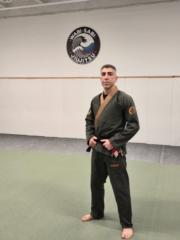
The classic “just one last round” when you’re already fatigued and class is pretty much over!
Jul 11 •
What Helps You Recharge?
Lately I've been thinking a lot about recovery. Not supplements. Not sleep. Not training. What actually helps you recharge? Could be a vacation. Could be a walk. Could be a UFC night. Could be dinner with friends. Could be sitting on the couch doing absolutely nothing. What's one thing that genuinely helps you recharge?
2 likes • Jul 17
Truthfully, I was waiting for @Josh Wang to mention seed oils so I could just like his post instead of admitting this myself. 😂 But since he didn’t, I guess I’ll take the hit. I’ll be the first to admit that I’m a total junk food addict. I love training and being active because it makes me feel amazing, but I think there’s also a part of me that trains so I can justify making room for the “occasional”indulgence. Junk food might not be the best thing for the body… but every now and then, it’s good for the soul, right? 😂
Jun 26 •
Injured doesn’t always mean stop
Just because you’re injured doesn’t mean you need to stop training completely most guys go all or nothing they get hurt, disappear for weeks, then come back at the same intensity and end up right back where they started it’s not the injury, it’s how you come back there’s usually a middle ground adjust the intensity, change your game, keep your reps in that’s how you stay consistent without restarting every time When you’ve been dealing with something, do you usually pull back too much or come back too fast?
1 like • Jul 17
Why do I feel like this topic was made for me? 😂 As many of you know, I hurt my ankle competing back in June. I gave myself about a week to actually rest, but after that I was back in the gym lifting weights, helping with the kids’ classes, watching instructionals… and, naturally, online shopping for new gis. 😂 For the first few weeks, all I could think about was getting back on the mats. Honestly, being sidelined was driving me crazy. Then after about three weeks, I realized I had two choices: keep stressing about everything I couldn’t do, or accept the situation and use it as a reset. So that’s what I did. Instead of rushing back, I started focusing on recovering properly and working on all the things I usually neglect—mobility, stability, strength, and fixing little imbalances that had probably been holding me back long before I got injured. I’m still counting down the days until I’m back training, but I think this mindset has made the whole process a lot easier. Hopefully when I do get back on the mats, I’ll be healthier, more balanced, and a better athlete than I was before the injury.
Jul 8 •
Structure vs Motivation
One thing I've realized over the years is that consistency has a lot less to do with motivation than most people think. The days I train the most consistently aren't usually the days I feel the most motivated. They're the days where the routine is already in place. Wake up. Train. Recover. Repeat. What's one part of your routine that's become almost automatic at this point?
2 likes • Jul 14
Taking my response a little outside the original topic, what has helped me stay consistent is committing to a weekly training schedule that I know I can realistically maintain for years—not just a few weeks. My training used to be all over the place, depending on my motivation, how much free time I had, and what else was happening in my life. One week I’d train six days, and the next week only once. What changed was my mindset. Instead of chasing the “perfect” week, I set a realistic training goal that I could consistently stick to over the long term. Ironically, training a little less—but doing it consistently—has led to far better progress than constantly swinging between doing too much and too little.
1 like • Jul 14
@Claudia Smithson juggling life is definitely the biggest challenge! 6am has been a game changer for me personally!
Jul 14 •
What Do Younger Athletes Get Wrong?
I don't think younger athletes need more motivation. I think they need better judgment. Most of us eventually learn the hard way that more isn't always better. What's a lesson you wish somebody had taught you 10 or 20 years earlier?
1 like • Jul 14
I think this mindset applies to so much more than just jiu-jitsu—it applies to work, finances, relationships, and how we spend our time. When I was younger, I acted as if my time, energy, and other resources were almost unlimited. I approached both training and life with that mentality. As I’ve gotten older, I’ve realized that’s simply not true. Time and energy are finite, so I’ve gradually trying to shifted my focus toward efficiency—getting the maximum return for the least amount of wasted effort. That doesn’t mean cutting corners or avoiding hard work. It means being intentional with where I invest my time and energy, and focusing on the things that produce the biggest long-term payoff.
1-6 of 6
