Activity
Mon
Wed
Fri
Sun
Jun
Jul
Aug
Sep
Oct
Nov
Dec
Jan
Feb
Mar
Apr
What is this?
Less
More
Memberships
Research Career Club
662 members • Free
8 contributions to Research Career Club
5d •
Why non-thinking time is important for your research
Most breakthroughs in your thinking happen when you’re not “doing research” at all — they show up when you’re painting a wall or scrubbing the kitchen. When you stop actively focusing on a problem and switch to something simple and physical, your brain shifts from focused work into what neuroscientists call the default mode network. This network kicks in when you’re doing low-demand tasks: showering, walking, gardening… or painting a room. In that state, your mind quietly replays ideas, makes unexpected connections, and spots patterns you missed at your desk. What looks like “not working” is actually your brain running a background computation on your research questions. For researchers, this is gold. You spend hours reading, coding, analysing data, writing — that’s loading your mental “buffer” with information. But consolidation and genuine insight often require off-line processing, where the system is free from the pressure to perform. If you never step away, you’re constantly stuffing more in without giving your mind time to organise it, which leads to the familiar feeling of staring at a problem and going nowhere. In my own work on carbon capture and process engineering, many of the cleanest model tweaks or paper angles have come to me while doing something completely unrelated, like DIY, walking, or tidying the house after a long day at the office. Most researchers respond to feeling stuck by forcing more screen time. But the real career impact often comes from trusting these “non‑academic” moments enough to step away and let your subconscious do its job. How about you? When you step away from your desk, what’s the one activity (like your painting) where good ideas quietly show up? Drop your answer below 👇
2 likes • 5d
I agree with you Doc 100%, the perfect statements i have written have come from such off manuscript write up. However I have not paid attention to that until you have mentioned.
Mar 16 •
Regardless how busy you are, make time to rest
I’m spending some time in my home town this week. I haven’t travelled here for a while so decided to make the most of it. This morning sat, I down on the bench near the main square and did nothing for a good 30-40 mins. I don’t remember when was the last time I did something like this. We’re always chasing something - papers, projects, deadlines. But we’re sacrificing our health and wellbeing. I’m here to tell you that it’s fine to take time off. The world isn’t going to end!
1 like • Mar 18
I don't know what is becoming of me; the more I clear things out of the way, the more they come. I try to stay away from my office, the more they keep piling. Maybe I am too generous to accept helping others. I don't know how you manage, Prof.
Mar 4 •
Ethical use of AI + GPTZero
Good news this week - I have just been invited to join the GPTZero ambassador programme and will be running a professional development session on ethical use of AI. Would you be interested in attending? P.S. GPTZero is one of the tools that we use to identify if text was created by AI or human - it's pretty advanced to the extent it can track which elements of the document were pasted and which were written.
Poll
25 members have voted
1 like • Mar 4
Thats is much of intrest Prof
Feb 16 •
What support do you need this year?
I’m about to finalise the training programme for this community - this is your last chance to share your input. Tell me what aspects of academic publishing and building your expert profile would you like to develop.
2 likes • Feb 17
Disease Modelling and obtaining a research grant
Feb 12 •
What’s your core research area?
Many of you are here to network but we don’t often know who is doing what - let’s change this: In a few words, please explain what is your core research area. Enjoy!
1 like • Feb 12
Yes, Prof, I have since responded to the message on the suggested time.
2 likes • Feb 12
@Dawid Hanak, please confirm if you have received my response.
1-8 of 8
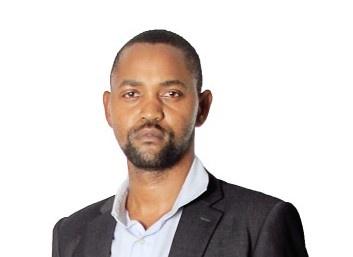
@allan-mayaba-mwiinde-8630
PhD Public Health with focus in Epidemiology with expertise in infectious diseases, epidemiology, modeling, and mixed-method health research
Active 5d ago
Joined Jan 17, 2026