Activity
Mon
Wed
Fri
Sun
Aug
Sep
Oct
Nov
Dec
Jan
Feb
Mar
Apr
May
Jun
What is this?
Less
More
Memberships
Technician Find Community
529 members • Free
35 contributions to Technician Find Community

15d •
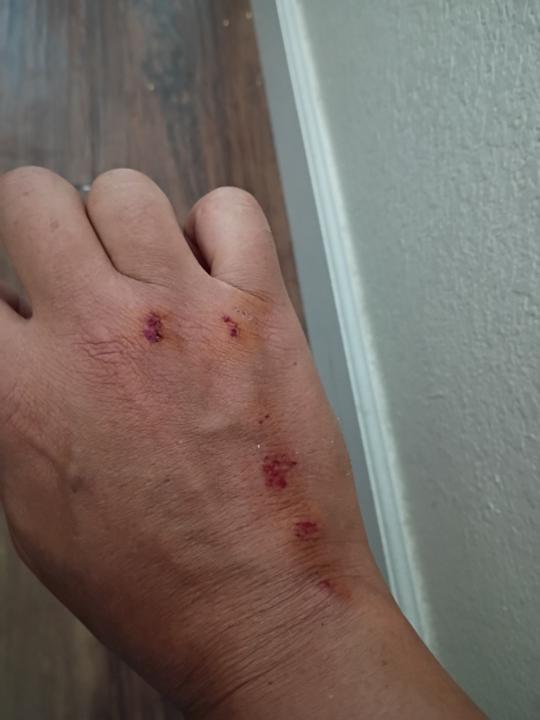
So I just ate it on the stairs at the beach in Oceanside.
Not a little stumble. A full send. Went down hard enough that my phone left my hand, cleared two steps, and kept going. I watched it bounce away like even it didn't want to be associated with me. Hand torn up. Leg torn up. And the first clear thought in my head, before any of the pain registered, was not "am I hurt." It was "how many people just saw that." The answer was a lot. The beach was packed. And the stretch right in front of me happened to be a row of very attractive women in bikinis, because of course it was. That's just how the math works when you're bleeding and trying to locate your phone. I'm not gonna lie to you. The version of me from a few years ago grabs the phone, does the fake "I'm fine, totally meant to do that" wave, and speed-limps straight to the car. Workout canceled. We don't talk about this again. But I'm standing there doing the math on the slink-away, and it just hit me that walking off bleeding would somehow be more embarrassing than what already happened. Like the fall was an accident. Quitting would've been a decision. So I got up. Wiped the blood on my shorts. And finished the run. In front of everybody. Looking exactly as graceful as you'd imagine. Anyway. We've all got a moment like this. Fell flat, whole world watching. What's yours? Tell me I'm not the only one. P.S. Phone lived. My dignity did not. Pics below after I got home and swabbed the wounds with iodine, you're welcome.

1 like • 13d
Glad you survived and impressed you kept on running!
Apr 1 •
You Built Something That Matters. Read This When You Forget.
Every shop owner I talk to tells me what’s broken. The bay that’s empty. The tech who ghosted. The ad that flopped. The Monday morning when nothing went right and everything felt like it was falling apart. Almost nobody tells me what’s working. Not because nothing is. But because you’ve trained yourself to scan for problems. You wake up looking for what needs fixing. You go to bed running tomorrow’s fires through your head. And somewhere in that cycle, you stopped noticing what you actually built. So I’m going to do something different today. I’m going to hold up a mirror. And I want you to look. ——— I talked to a shop owner who told me his best technician once said to him: “You are the best owner, the best boss, the best shop I’ve ever worked at.” And this owner’s response? “It doesn’t get better yet. That’s kind of what I strive to be.” That sentence right there is everything. Not “I’ve arrived.” Not “I’m the best.” But “it doesn’t get better yet” — which means he’s still reaching. Still pushing. Still trying to earn it every single day. If that’s you, you’ve built something real. ——— I talked to another owner who described his operating philosophy in one sentence: Customer first. Employee second. Me last. No mission statement committee produced that. No consultant handed it to him on a slide deck. That’s just how he runs. Every day. And his 82% repeat customer rate — the highest in a 65-store network — proves it works. If that’s how you operate, even when nobody’s watching? You’ve built something most people never will. ——— One owner told me he started his shop because he was tired of going to family reunions and feeling looked down on. He was the only guy with dirt under his fingernails. Even though he was making more money and carrying less debt than anyone else at the table. So he built a business with a single mission: bring honor back to the trade. Today, his technicians don’t apologize for what they do. They lead with it. That’s not just a shop. That’s a movement.
1 like • Apr 1
Honesty, Integrity and Transparency!
Mar 21 •
Short-staffed, scrambling, or stuck on hiring?
Here's what I've learned working with 200+ independent shops: Every owner I talk to is in one of three situations. And each one requires a completely different fix. Trying to solve the wrong one is why most owners stay frustrated. Here's how to figure out which one you're in — and what to do about it. 👉 SITUATION 1: “I need a tech. Yesterday.” Your bays are sitting empty. Your backlog is growing. Your best techs are burning out covering the gap. You’ve tried Indeed, ZipRecruiter, word of mouth. Nothing’s working. You need a hire, and you needed one three months ago. → This is what Technician Find solves. I only take 4 hiring clarity calls per week. Not a sales pitch. A diagnostic. We'll look at your market, your ads, and your pipeline and I'll tell you exactly what I'd change. Apply here: [HIRING CLARITY CALL] → Want the details on how Technician Find works? [HERE'S HOW WE FILL YOUR BAY] 👉 SITUATION 2: “We’re okay right now. But I never want to start from zero again.” You’ve been through the panic of losing a tech with nobody waiting in the wings. You swore you’d never let it happen again. But life got busy, and now your bench is empty. → EasyBench exists for exactly this moment. It’s the done-with-you bench-building system that keeps your pipeline warm when you’re not desperate. Details here: [EasyBench] 👉 SITUATION 3: “The problem is bigger than hiring.” You’re doing the revenue. But you’re exhausted. Your team is disengaged. You’re making reactive decisions because you’re running on fumes. The hiring problem might actually be a leadership-energy problem. → Life Calibration helps shop owners recalibrate before the wheels come off. Start with the diagnostic: [LIFE CALIBRATION DIAGNOSTIC TEST]
3 likes • Mar 23
Love this and spot on!
Feb 24 •
🚨 Heads up: New service drops Friday (8:00am PT) — Founding spots for first 20 shops
A shop owner told me something a while back that I haven't been able to shake. He said: "One of our techs lost his shit. Pushed a service advisor up against the wall. And quit." This was a tech he wanted to keep. A great producer. The kind of guy who made everyone around him better. But here's the part that wrecked the owner: He wasn't surprised. He knew this tech had been quietly suffering. Issues piling up. Frustrations brewing. But the shop was busy. Cars were stacked. And there was never a "good time" to have the hard conversation. So the tech blew up. Walked out. So the owner was left staring at an empty bay on a Monday morning with a full schedule and zero options. He called me that afternoon. Not because he wanted to hire. Because he had to. And that's the difference that will eat your lunch every single time. Here's what I've learned after nearly 8 years of helping shops hire — and over 500 conversations with owners just like you: The crisis is never the tech who leaves. The crisis is having nobody to call when they do. I hear it constantly in this community: "If I get one call out, it hurts." "Any time a tech is sick or on vacation it turns the whole place upside down." "I've depleted my bench." "I don't want to be in desperation." And then there's my personal favorite heartbreaker — the owner who told me: "Heavy sigh — maybe it's time for me to sell." All because a tech left for a dealer that promised factory training they'll never deliver. That's not a hiring problem. That's a bench problem. HERE'S THE BRUTAL TRUTH Most shops don't have a bench. They have a prayer. They're fully staffed today. Everything's running. Bays are full. And they think that means they're safe. But one resignation, one injury, one Monday morning no-show — and they're right back on Indeed. Sorting through the same junk. The Domino's driver who saw the salary and figured "how hard can it be to turn a wrench?" The C tech pretending to be an A tech who can't answer basic diagnostic questions.

2 likes • Feb 24
Bench!
Feb 7 •
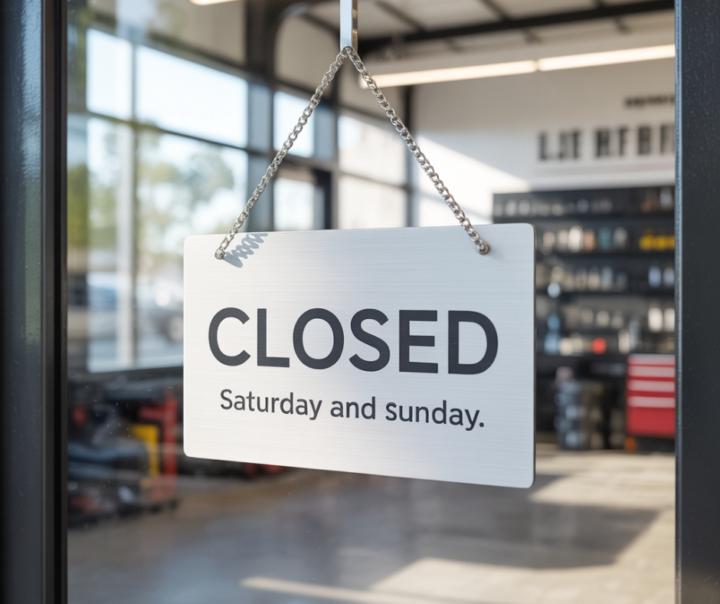
🔧 Swipe this. Save it. Post it. (dealers will hate you for this!)
The two images below are ready for your shop's Facebook page. Pick the one that feels right. Just one. HERE'S THE DESCRIPTION TEXT TO GO ALONG WITH THE IMAGE "We don't work weekends. That's time for family and the things you love. We want our employee's lives to work inside and outside of the shop." Here's your move: → Post it on your FB business page → Boost it for $20 — 10-mile radius → Come back here and tell us what happened This is passive recruiting. Stop telling technicians your culture is great. Show them. Every employed tech within 10 miles scrolling on Sunday will see it. Let that sink in. 👇
2 likes • Feb 11
Posted it and boosted it
2 likes • Feb 17
Just to update: I received 9K views, 5K reach, 69 clicks. I put the link to my open job as well and def saw an uptick in resumes.
1-10 of 35
@stephanie-walsh-6860
Driven Fleet Services is the maintenance & repair company that can manage your fleet. We bring technology, mobility, and fast turnaround times to you
Active 13d ago
Joined Feb 5, 2025
Powered by