Activity
Mon
Wed
Fri
Sun
Jun
Jul
Aug
Sep
Oct
Nov
Dec
Jan
Feb
Mar
Apr
May
What is this?
Less
More
Owned by Jessica
The Cozy Cat Creators Club is a warm and welcoming creative community for cat lovers, artists, journal makers, and vintage art enthusiasts.
Memberships
Skoolers
189.8k members • Free
Prompt-to-Print
6 members • Free
Simcha Healthcare
56 members • Free
Start a Business with No Money
389 members • Free
Simcha Hub of Pet Physiology
21 members • Free
Etsy & Digital Creators Studio
97 members • Free
Bio Builders
233 members • Free
Embrace Your Journey
107 members • Free
Feline Peeps
160 members • Free
12 contributions to Simcha Hub of Pet Physiology

🔥
2d •
The Physiology of Purring, Panting, and Tail Flicks
Your pet isn’t “expressing a mood.” They’re broadcasting metabolic data in real time. Most people think purring, panting, and tail flicks are “cute behaviors.” They’re not. They’re physiological readouts, the mammalian equivalent of a dashboard light, and your animal has been giving you a full report every single day without you realizing it. Today’s class is about teaching you to read the signals instead of guessing the story. PURRING: The Nervous System’s Morse Code Everyone thinks purring = happiness. But purring is a multi‑state regulatory mechanism, and the body uses it for far more than joy. What purring actually is: A vibrational frequency generated by the laryngeal muscles firing at 25–150 Hz, a range known to stimulate tissue repair, bone remodeling, vagal activation, and pain modulation. When cats purr, physiologically they may be: - Self‑medicating pain Purring increases endorphins and modulates nociception. If your cat purrs when injured, they’re not “being brave.” They’re activating an internal analgesic circuit. - Stabilizing their nervous system Cats use purring to downshift from sympathetic activation. Think of it as a built‑in vagus nerve stimulator. - Rebalancing respiratory mechanics The oscillation helps maintain airway patency and oxygenation during stress. - Repairing microdamage Those frequencies stimulate bone density and soft‑tissue healing. (Yes, your cat literally vibrates themselves back to health.) The red flag version: If your cat purrs while withdrawn, hiding, or refusing food, that’s not contentment. That’s compensation. PANTING: The Metabolic Pressure Valve Panting is not “they’re hot” or “they’re excited.” Panting is a thermoregulatory, respiratory, and acid‑base balancing maneuver that kicks in when the body needs to offload heat, CO2, or stress metabolites. Panting tells you about: - Heat load - Dogs don’t sweat like humans. Panting is their evaporative cooling system. - Cortisol spikes - Stress increases metabolic heat and CO2 production. Panting is the off‑ramp. - Blood pH shifts - Rapid breathing reduces CO2 to correct acidosis. (Yes, your dog is doing chemistry with their lungs.) - Cardiac strain - Panting at rest can indicate heart workload, poor oxygenation, or circulatory compensation. - Pain - Pain increases sympathetic tone = increases metabolic demand = triggers panting.


1 like • 2d
Some of our cats purr when we take them to the vet. I've always thought they're trying to self-soothe by doing this. They obviously don't want to go or be at the vet!
0 likes • 1d
@Dr. Peninah Wood Ph.D no, but I know sometimes it takes a while these days.
🔥
2d •
AN ANSWER TO A CAT QUESTION
"My cat drools big time when he’s on my lap. What does that mean?” Short version: Drooling is a parasympathetic overflow. Your cat’s nervous system is sliding so far into “rest‑repair‑digest” mode that the salivary glands turn on hard. But here’s the part most people don’t know: Drooling can mean two completely different physiological states, one healthy, one compensatory. Let’s decode both. 1. The Healthy Version: Deep Parasympathetic Drop Some cats drool when they’re: - extremely relaxed - deeply bonded - kneading - in a trance‑like comfort state - activating old kitten nursing pathways This is the “I feel safe enough to shut the world off” physiology. It’s the same reflex kittens have when nursing, salivation + kneading + purring. In adults, it shows up during deep relaxation with a trusted human. If the cat is: - loose in the body - slow blinking - purring softly - breathing steady - not hiding or withdrawing afterward this is a good drool. 2. The Red Flag Version: Compensation, Not Comfort Drooling can also be a stress‑relief maneuver when the body is trying to downshift from: - nausea - dental pain - GI discomfort - anxiety - motion sickness - sympathetic overload Here’s the physiology: When the vagus nerve is activated to counter stress or nausea, salivation increases. So drooling can be the body’s way of buffering discomfort. Red flags include: - drooling + tension - drooling + panting - drooling + hiding - drooling + swallowing repeatedly - drooling only in certain positions - drooling that starts suddenly in adulthood - drooling paired with bad breath or pawing at the mouth This is not comfort. This is compensation. How to tell which one it is Ask these three questions: 1. What does the body look like? Loose = parasympathetic Tense = compensation 2. What happens after the drooling? Returns to normal = safe. Withdraws, hides, or acts “off” = discomfort 3. Is it new or lifelong? Lifelong = normal pattern. New = investigate

1 like • 2d
Glad none of our cats drool...yet.
🔥
7d •
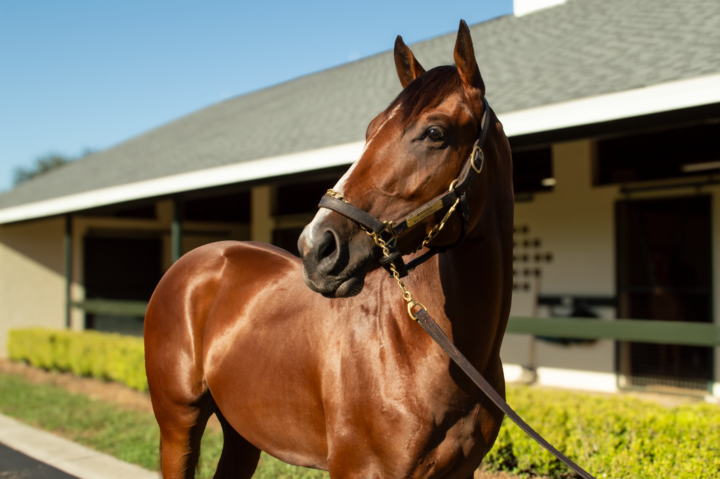
MUNNY PROBLEM
Another one of my horses. This is only his 2nd race. He just turned 3 in March! Watch what this boy does. He is #3. Kept me on the edge of my seat. https://www.facebook.com/reel/4330383997227974
0 likes • 6d
@Dr. Peninah Wood Ph.D yes, that's the one I tried again and still get the same unable to load message. Maybe it's something with your Facebook Reels setting, not sure, but still unable to view it.
1 like • 6d
@Dr. Peninah Wood Ph.D oh yes! This one I can. Sorry, I thought you meant you reposted a new link above to this post, so I clicked the link above again thinking it was a new link you were trying, if that makes sense!

1 like • 7d
This is EXACTLY how I feel!
2 likes • 7d
@Dr. Peninah Wood Ph.D and that would be too nice. I don't dare say what I'd do to them and it wouldn't be with what's in the image because that's too easy!
🔥
7d •
Could someone...
go into the classroom and click on the link to one of the microbiome tests and let me know that the link is working please? Thanks. It doesn't allow me to click on it. I guess because I am the owner?
1 like • 7d
When I click on any of them in the classroom it comes up like this for me so I can make a payment. I'm hoping this helps.
1-10 of 12

@jessica-fish-4992
🐱 I Create Vintage & Whimsical Cat Art For Commercial Use ✨ Perfect For Cozy Homes & Creative Souls ❤️ Cat Lover & Proud Cat Mom Of 6
Active 20h ago
Joined Apr 25, 2026
Mansfield, PA, USA
Powered by