Activity
Mon
Wed
Fri
Sun
Aug
Sep
Oct
Nov
Dec
Jan
Feb
Mar
Apr
May
Jun
What is this?
Less
More
Memberships
Webdialt AI Blueprint
644 members • $9/month
Gold Circle Academy
77 members • Free
92 contributions to Gold Circle Academy

2 likes • 9d
@Jerry Adams I see

17d •
🏆 Gold Circle Academy Update + AI COURSE
A huge thank you to everyone who has contributed, shared knowledge, asked questions, and helped make this community what it is becoming. 💛🌍 Current Top Contributors: 🥇 @Jerry Adams — Level 5 🥈 @Eleazer Bediako — Level 4 🥉 @Richardson Dughan — Level 4 Current Unlocks Level 2+ 🔓 or if you are a Premium or VIP member, Has access to the course: Increase Your Afro Brand Visibility with AI when you enter you can see if you are eligible! Comment below if you are starting your AI content posting journey! Shoutout also to: ⭐ @Allyne Mamattah (level 2) ⭐ @Joshua Odoi (level 2) ⭐ @Mensah Ebenezer (level 2) ⭐ @Daniella Afful ⭐ @Ekow Adjei ⭐ @Juno Entse ⭐ @Elegance travel, Tours and business services Every question, comment, post, introduction, and piece of knowledge shared helps strengthen the community and unlocks access to more knowledge, skills and future prizes.

1 like • 9d
Thank you so much it an opportunity

10d •
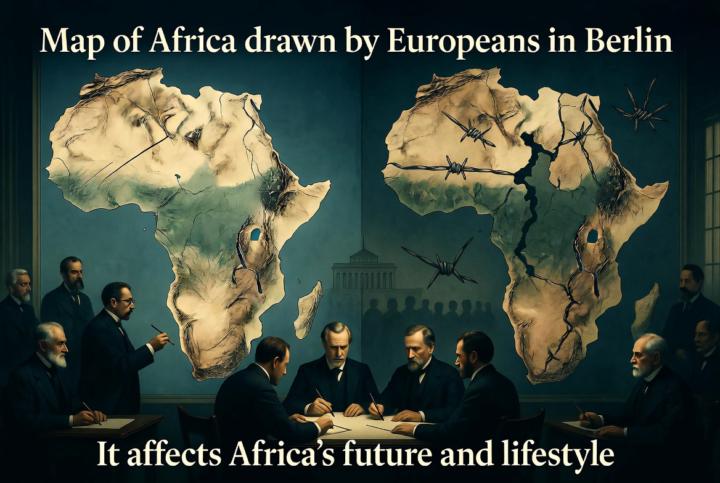
MAP OF AFRICA WERE DRAWN BY EUROPEANS IN BERLIN IT AFFECTS AFRICA'S FUTURE AND LIFESTYLE
The map of Africa we know today was largely drawn by European powers at the Berlin Conference of 1884–1885, where borders were created with little regard for ethnic groups, cultures, or local realities. More than a century later, those lines still influence our politics, economies, and identities. Africa's future, however, will not be determined by the borders others drew, but by the vision Africans choose to build together. What lessons do you think modern Africa should learn from its colonial-era boundaries? Share your thoughts below. 👇🌍
0 likes • 9d
I think we Africans should redefine our identities on our terms... so that we will know that, irrespective of the borders created, our development, security, and future depend entirely on ourselves.
9d •
Why Every Entrepreneur Needs to Understand Geopolitics (Even If You’re Just Starting Out)
Geopolitics is just a big word for how world math, money, and map lines affect real life. Think of the global market like a giant game of Monopoly where the rules, prices, and properties change every time two powerful countries argue. If you ignore it, you’re playing with your eyes closed. Here is how global fights hit real-world businesses every day: 1. The TikTok Drama (Tech Rules) The Concept: The internet isn't one giant, borderless playground. Countries build digital walls when they don't get along. The Real Example: Look at TikTok. Because the US government worried about a foreign power controlling user data, they passed a law forcing its parent company to sell its US operations to American investors or face a total shutdown. The Lesson: If your startup’s entire marketing plan relies on just one app, a single political argument could wipe out your customer reach overnight. 2. The PlayStation & iPhone Crisis (Supply Chains) The Concept: Advanced tech requires parts from all over the world. If two countries start a trade war, those parts stop moving. The Real Example: Most of the world's microscopic brain chips—the ones inside iPhones, PlayStations, and AI systems—are made by a single company in Taiwan called TSMC. Because of political tensions in that region, tech giants got so terrified of losing their chip supply that they had to spend billions of dollars to build brand-new factories in safer places like Arizona. The Lesson: You can’t just buy materials from the cheapest factory anymore. You have to buy from stable countries, or you'll run out of product. 3. The Expensive Dollar (Money & Inflation) The Concept: When global conflicts break out, investors get scared. They move their cash into "safe" currencies like the US Dollar, which can cause local money elsewhere to lose value. The Real Example: Recent conflicts in major shipping canals forced cargo boats to take massive detours. This caused global shipping costs to quadruple, driving up inflation worldwide. Small businesses suddenly found that importing simple goods became too expensive to make a profit.
1-10 of 92

Active 7d ago
Joined Jan 5, 2026