Activity
Mon
Wed
Fri
Sun
Jun
Jul
Aug
Sep
Oct
Nov
Dec
Jan
Feb
Mar
Apr
May
What is this?
Less
More
Memberships
Cellular Restoration Community
594 members • Free
Immune Resilience Lab
73 members • Free
Sandy Baker Wellness
82 members • Free
INFLAMELESS LIVING
96 members • Free
Women Beyond Diagnosis
284 members • Free
IFS Healing Circle
168 members • Free
The Holistic Health Lab
1.1k members • $15/month
Autoimmune Empowerment
99 members • Free
HobbyScool®
5.7k members • Free
6 contributions to INFLAMELESS LIVING

🔥
Feb 9 •
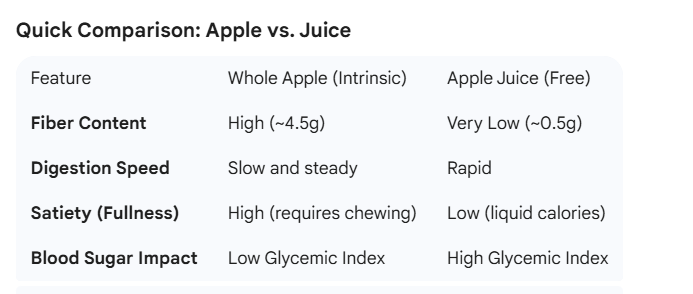
An apple vs a glass of apple juice
When you look at a whole apple versus a glass of apple juice, the sugar molecules (C12H22O11) are chemically identical. However, your body treats them very differently based on how they are "packaged." To understand this, we have to distinguish between intrinsic and free sugars. Intrinsic Sugars (The "Slow" Sugar) Intrinsic sugars are those naturally integrated into the cellular structure of whole fruits and vegetables. We eat these types of sugar since always. However, we have some pro benefits here: - The Fiber Shield: when you eat a whole apple, the sugar is trapped inside the fruit's cells. You also consume a significant amount of fiber. - The Metabolism: fiber acts like a speed bump in your digestive tract. It forms a gel-like layer in the small intestine that slows down the absorption of sugar into the bloodstream. - The Result: you get a slow, steady rise in blood glucose and a longer-lasting feeling of fullness (satiety). Your liver also has more time to process the fructose without becoming overwhelmed. Free Sugars (The "Fast" Sugar) "Free sugars" appeared when we, the humans, started to process foods. So, these types of sugar include any sugar added to food and the sugars naturally present initially but "refined" during processing in fruit juices, concentrates, and smoothies. And, guess what, we don´t get all the above benefits, but rather issues: - The Structure is Broken: when you juice an apple, you strip away the fiber and break the cell walls. This "liberates" the sugar from its cellular home. - The Metabolism: without fiber to slow it down, the liquid sugar rushes into your bloodstream almost immediately after drinking. - The Result: this causes a rapid insulin spike. Since it’s a liquid, your brain doesn't register the calories as effectively as it does with solid food, making it easy to consume the sugar of 3 or 4 apples in seconds without feeling full. Even if a juice bottle says "No Sugar Added," that juice contains "Free Sugars" because the natural processing has removed the fruit's original structure.

1 like • Feb 14
I don't think I've drank apple juice, or any juice, in years because of the effect on blood sugar. Enjoying a apple slices with peanut butter is a great snack!
🔥
Feb 4 •
FEBRUARY Week 1 Challenge: Switch to EVOO (and Actually Taste the Difference)
So, we are in the Week 1 Challenge and I´m here with a gentle (and looong) reminder. Quick swaps to make it effortless (I´m just saying, try it this week) - Instead of toast + butter → toast with EVOO + pinch of salt - Instead of mayo on sandwiches → EVOO + lemon + black pepper - Instead of store‑bought dressing → EVOO + vinegar + mustard - Instead of butter for roasting veggies → EVOO + herbs - Instead of butter in mashed potatoes → EVOO + garlic and a tsp of yoghurt - Instead of cream sauces → EVOO + sautéed garlic + pasta water - Instead of butter on popcorn → warm EVOO + smoked paprika - Instead of butter or seed oils for frying eggs → EVOO (they get crispy and glorious) Extra Virgin Olive Oil is an ingredient with personality: `peppery, greenish, tastes like heaven. This week’s challenge is simple: switch to EVOO for everything. Cooking, drizzling, dipping, roasting. Yes, even high heat. Yes, even your eggs. Because EVOO is an anti‑inflammatory strategy disguised as pleasure: polyphenols, antioxidants, flavor… it’s the easiest upgrade you can make without changing your entire life. Try it! And maybe it can overcome some barriers. If you’re still scared of cooking with EVOO, say it. The community will fix that :) Who’s in for the switch this week?

2 likes • Feb 14
For using on toast or sandwiches, do you pour the EVOO into a small container and add the herbs or spices and then spread on bread?
🔥
Feb 3 •
Pick your favorite and tell us why
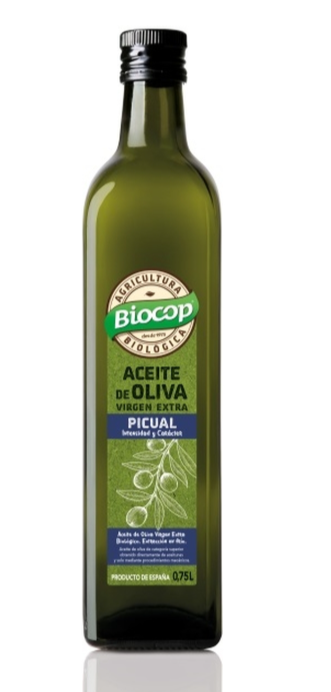
A reminder that we are in the week of shifting to EVOO (Extra Virgin Olive Oil) as the main fat in our kitchens. So, let's take a look at 4 bottles of olive oils and let's choose our favorites. Pick a number and say why you prefer that particular bottle. I know these brands are all from Spain, but I'm interested to see how you'll choose your oil right now in a supermarket. 1. Brand BIOCOP: Picual EVOO, glass bottle, 750ml, 9.50 Euro 2. Brand Carbonell: Light Olive Oil, plastic bottle, 1000ml, 6.99 Euro 3. Brand Hermida: Arbequina EVOO, pastic garaffe, 3000 ml, 21 Euro 4. Brand Carrefour Extra: AOVE, glass bottle, 750ml 13 Euro
1 like • Feb 14
I'd probably go with #2 for cost; unless I'd had #3 before. If I was willing to splurge 1 or 4. And I'm learning that I probably should splurge consistently.
🔥
Feb 2 •
What´s the difference between EVOO and VOO?
You go to the supermarket and you see Extra Virgin Olive Oil (EVOO) and next to it Virgin Olive Oil (VOO)? What´s the difference? Which one is better and for what ? As we started the February Challenge and this week is about transitioning to EVOO as main dietary fat , let´s take apart, piece by piece, why EVOO is the best fat to use. Let´s jump on a poll first and then I´ll share more good stuff with you! Have a great week!
Poll
6 members have voted

2 likes • Feb 14
I'm in the US...how do I tell which EVOO is really good?
🔥
Feb 1 •
February Challenge: 4 Kitchen Swaps
February is here so let´s make the most of it with a challenge. This month we focus on four simple upgrades that dramatically reduce inflammation. Each week brings one mini‑project you can implement and share with the community. 1️⃣ Week 1 — Swap Seed Oils for Extra Virgin Olive Oil Audit your oils and switch your daily cooking fat to EVOO. 2️⃣ Week 2 — Swap White Sugar for Whole‑Fruit Sweetness Upgrade one daily habit using mashed banana, dates, applesauce, or berries. 3️⃣ Week 3 — Swap Ultra‑Processed Snacks for Real Food Crunch Choose one snack category and replace it with a whole‑food option. 4️⃣ Week 4 — Swap White Carbs for Whole Grains and Legumes Trade white rice, pasta, or bread for fiber‑rich alternatives. Throughout February, post your photos, wins, and questions. Small swaps compound into big change. And the persons that engages the most wins my ebook. So let´s make February an interesting month!

1 like • Feb 14
We EVOO and avocado oil in cooking. Haven't used it to make dressings.
1-6 of 6

@dana-stoerkel-7199
Building my future one step at a time, just for me.
Active 17h ago
Joined Feb 14, 2026