
Write something
Pinned

Apr 18 •
Welcome to Google Travel Visibility. Here is exactly what this is.
This community exists because two groups of people are dealing with the same problem from opposite sides and nobody has put them in the same room before. Travelers are making hotel and restaurant decisions based on what is visible to them on Google, not what is genuinely best. They are overpaying, undersatisfied, and have no framework for reading search results critically. Businesses: good hotels, well-run restaurants, legitimate local operators are losing bookings every day to competitors who are objectively worse but better positioned on Google and AI search. They have a product problem only in the sense that their product is invisible. The insight that connects both sides: visibility is not the same as quality, but visibility determines outcomes as if it were. This community is structured around that insight. What you will find here: In the Network tab (where you are now): analysis posts, case studies, discussion, questions, and real breakdowns of actual hotel and business listings. No generic advice. No motivational content. If a post does not connect to a real mechanism, it does not belong here. In the Classroom tab: structured modules covering the fundamentals of Google Maps ranking, AI search visibility (AIEO), traveler decision-making psychology, and the frameworks we use to analyze and improve positioning. Who should introduce themselves: Drop a comment below and tell us: 1. Are you here as a traveler, a business owner, or both? 2. What is the one visibility question you most want answered? Every answer gets a real response. This is a small community right now and that means you get direct access to analysis, not templated replies. Welcome. Let's get into it.
1
0
Jul 25 •
Help me map the world (and come play my new game) 🗺️
Hey everyone, I've been quietly building something and I'd love your help with it. It's called Stay Quest. You open a beautiful old treasure map, travel anywhere on Earth, and real hotels appear as treasure chests you can collect, like Pokemon, but with real places. You build albums, save your dream stays, and the whole thing is built around booking hotels direct, supporting the actual hotels instead of the big booking sites that take a cut. Here's where you come in. Every place you explore gets added to the map for everyone. So when you go poke around your hometown, your favorite city, or the place you're dreaming of visiting, you're literally helping build a living world map that stays there for the next person. The more of us exploring, the richer it gets. What's in it for you: it's genuinely fun, you collect treasures and dream stays, and if you invite a friend you both get a bonus. There's a leaderboard too. And you'd be one of the first people ever to play something that I think could grow into a real app. So my ask is simple: 1. Play it for a few minutes and explore a couple of places you love: experience.360businesstour.com/stayquest-map 2. Tap the friends icon, save your passport, and grab your invite link. 3. Share it with a friend or two who love to travel. They map new places, you both get bonuses, and the world fills in. That's it. Go find some treasure and tell me what you think 👇
1
0

Jun 17 •
WEBSITE DESIGN
Hi everyone 👋 I design high converting websites for businesses and online communities. I’m currently offering a few free quick website previews showing how your structure and messaging can be improved for better conversions. If you want one, just comment or DM “WEBSITE”
0
0
Jun 13 •
The OTA Dependency Trap: Who Really Wins?
Booking, Google, and TripAdvisor don’t just compete, they collide. Each platform promises value: Booking for direct bookings, Google for visibility, TripAdvisor for trust. But the data tells a different story. I n Granada, a hotel served 739 guests via Booking, yet only 419 of them left reviews on Google. That’s a 43% review gap. Why? Because travelers don’t care about ratings unless prompted, and platforms don’t align incentives. Hotels pay for visibility, but get no control over how their reputation is built. Travelers are overwhelmed by inconsistent pricing and fragmented trust signals. The result? A system where hotels are trapped in algorithmic dependency, and travelers struggle to find real value. What would happen if both sides stopped chasing platforms and started building trust directly? #travel #hotelbusiness #googlemaps #travelindustry #directbookings
Jun 12 •
What a hotel's review numbers really say
Quick teardown from this week's audits. A 3.5★ hotel in Aalst had 14,347 reviews on Booking.com, but only 123 on Google. Guests clearly love them. But that trust is locked inside Booking.com (who take 15-25% per booking) and nearly invisible on Google, where new guests actually search. The fix isn't more marketing, it's moving a slice of that existing trust onto Google and the hotel's own site, to capture direct bookings they're already earning. Where do most of your reviews live, Booking.com or Google? #hotelmarketing #directbookings #googleranking #hotelbusiness #hospitalitymarketing
1
0
1-16 of 16
powered by
skool.com/360-business-tour-4870
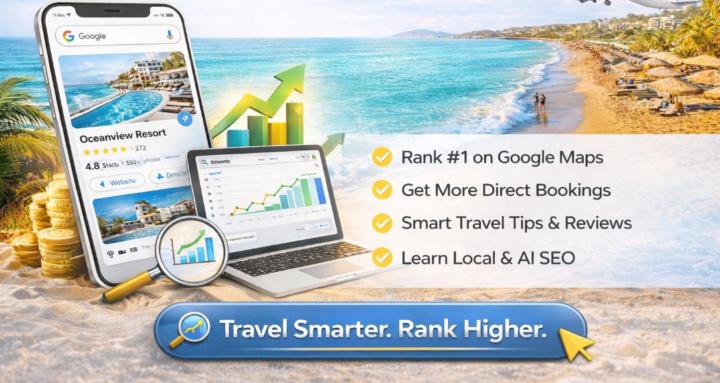
Travel smarter with real data & reviews. Learn Google Maps SEO, AI SEO & visibility systems to rank higher and get more direct bookings.
Suggested communities
Powered by