10d (edited) • General discussion
Communication Is Key
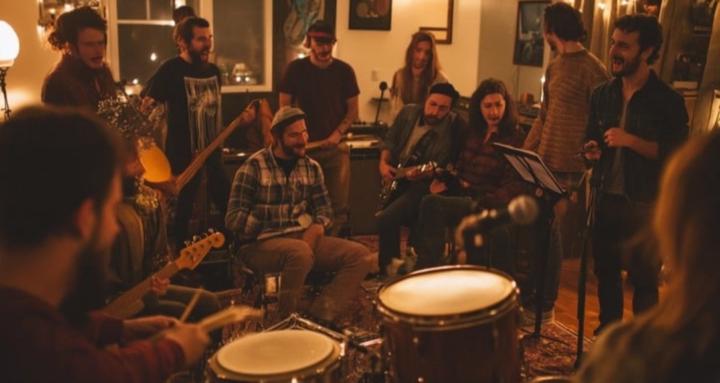
When you're putting together a jam session, there's always that tension: you want it open for anybody, but there are certain people you know you don't want to show up.
And I have to set that boundary—no judgment, I don't think I'm better than anybody. It's just that there comes a time where you have to deal with setting boundaries with who you jam and rehearse with.I learned this the hard way. We had a band room with an open-door policy. Anyone could come hang out and play. But as we got serious—needing to practice two, sometimes three one-hour sets—we had to lock the doors during rehearsal. One guy in particular didn't take it well. He'd bang on the door as loud as he could, call us names, act like a complete asshole. All we were trying to do was work on our music.
After we rehearsed, we'd open the doors again. Isn't that fair? Apparently not to him.
Here's the thing: open jam and closed rehearsal are opposite universes. Open jam is pure improvisation—no preconceived ideas, just creative flow. Closed rehearsal is like orchestra class—going over the same section again and again, getting tight, getting professional. They serve different purposes.
So I'm very clear about what each one is. I tell people: leave your ego at the door—just like I learned from Quincy Jones. Mike Longo, Dizzy Gillespie's musical director and pianist for several years, would say the same thing about creative music: there's no place for ego. If you're in a bad mood or dealing with something heavy, either leave it outside the band room or communicate it so we can talk it out. Don't let your unresolved stuff inform the group dynamics.
The fear I have? That someone's going to show up with an issue—with another person or something that happened to them—and it's going to blow up the session. I get triggered by disrespect and narcissism. When I see someone being disrespectful to people or their surroundings because of their own pathology, something in me snaps. I'm afraid I'll lose my temper and say something I'll regret later. I'm the gatekeeper, and I'm okay with that. But I worry people will think I'm uptight—folks who don't know me, people I'd actually love to meet and play music with. I'm afraid I'll get talked about in a way that doesn't land well with them.
But here's what happens when boundaries are in place: people can joyfully co-create in an open musical environment. Without the drama. Without the toxicity.
That's worth protecting.
2
0 comments
Communication Is Key