Write something
Mar 19 •
Taking a break.
An idea always starts out shiny — full of promise — but the path to making it real can get frustrating. Building a band room here in town has been just that: a mix of excitement, disappointment, and hard lessons. A couple of people, like Arlene and Jeff, have really stepped up and shown what real support looks like. But too often, the energy fades when it’s time for follow-through. I hoped we could create a space where musicians could practice seriously, collaborate, and treat music as a craft, not a hobby or free promotion for businesses. Lately, though, it feels like I’m pushing uphill alone. That’s why I’m pausing for now — selling some gear, refocusing on study, and reflecting on what matters most. Still, I’d love to hear from anyone who believes we can build something different — a professional rehearsal space that keeps our standards and spirit strong. What would it take for you to get involved?
0
0
Mar 14 •
Meet and Eat
“We don’t meet if we don’t eat!” The best jam sessions I’ve ever been part of always had great food! Whenever I host a jam, I make sure there’s something good to eat — there’s no sense trying to play on an empty stomach. Sharing a meal helps everyone transition out of the hectic world we’re coming from and into the focused, collaborative energy of making music together. I’ll never forget being in a band with a member from Chile who cooked dinner for us all before rehearsal. We’d sit down, eat, share stories, and then play for a couple of hours. Musicians need creative fuel, and what better way to fill up than with a good meal before playing? Bon appétit !
0
0

Mar 5 •
How Focused Bass Practice and Written Music Can Transform Your Playing
If you want to improve your music, you have to make it your first priority. You need to wake up, pick up your bass, and practice—using written music and applying what you’ve learned harmonically and academically. Work from reliable pedagogical sources, like Jeff Berlin’s bass education program. I’m currently on Package Five, studying approach notes in Lesson One, and it’s been helping me a lot as I work on songs like Waste by Phish. That song has Mike Gordon on bass, and he’s a great example—his harmony and rhythm are both solid, as is the rest of the band’s playing. To really understand the song, I have to break down each section, learn the form, and know which notes fit the chord changes. That takes repetition and an ear for what sounds harmonically correct within the groove. I play through the song several times, stopping and starting when needed, to fix mistakes or sections where I get lost. My current setup makes this process easy. I use my bass amp with headphones and an auxiliary connection to my laptop, so I can practice early in the morning without disturbing my two roommates—one upstairs and one across the hall. I’m really grateful to Ampeg for designing a bass amp with both a headphone jack and an auxiliary input. It’s an incredible practice tool that lets me hear both my bass and the track clearly through headphones. So, going back to where I started: if you want to get better, you have to put in the time. But more importantly, make sure that the time you spend is productive. There’s a lot of “quick-start” material out there that can help you get familiar with your instrument, but long-term growth comes from learning written music and applying those lessons directly to the songs you love—just like I’m doing right now with Waste by Phish.
2
0
Feb 28 •
First Donation!
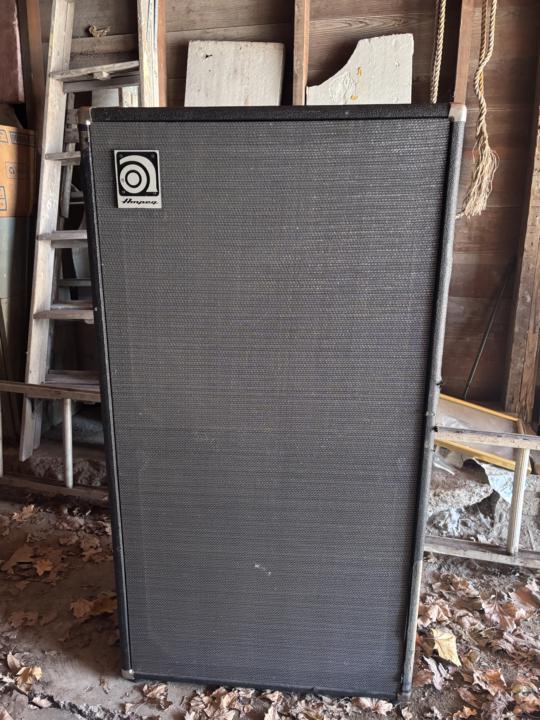
First donation to the band room! We’ve got our first piece of gear — a bass cabinet colossus! This 8x10 Ampeg powerhouse will make sure there are zero issues hearing the bass in the Fairfield band room. Next up, I’m hoping to pair it with the quintessential bass head: the all-tube Ampeg SVT Classic. Project update: I had a great meeting with the owner of the building where I’d love to set up a dedicated band room here in Fairfield. The space I’m eyeing rents for about $300/month per bay, and utilities will likely run around $300–400/month (rough estimate). One of the bays already has hookups for a shower and kitchen—a huge plus! Each bay also has its own garage door, which makes the layout super practical for a shared music space.
Jan 13 •
From One Craigslist Post to Three New Possibilities (And a Reminder to Just Hit Send)
You know that moment before you jam with someone new? You're trying to figure out—do we even like the same music? Are we on the same page? Will this be awkward? Yesterday I had a phone call with Band Room member @JeffCarey from Cedar Rapids. We spent time just talking—what he's into (JJ Cale came up), what kind of setup he's imagining. And here's where it got interesting. As I'm explaining the Band Room concept—thinking I'm just clarifying the vision—Jeff mentions he actually knows of a couple places that already exist in the Southeast Iowa are doing something similar. Then drops this: he used to work with someone here in Fairfield who has a building, and thinks there might be space that could work. He's willing to come down and meet both of us for lunch to talk it through. One post. One conversation. And suddenly we're looking at: • Lebowski's in Washington, Iowa – bowling alley with rehearsal/jam space already built in• A 151 in Fairfax – another spot doing something similar• A potential Fairfield location through Jeff's connection Here's what this taught me: When you put something out there with clarity—even if it's still just a concept—you'll be surprised how much support comes out of the woodwork. People in the exact same situation. People who want to help make it real. The bigger picture? Take the simple action. Post on Craigslist. Post on social. Clearly state what you're up to. Let it go and see what comes back. One post turned into three leads. So here's my question for you: Who's one musician you've been meaning to text this week?Someone you used to jam with? Someone you've been curious about collaborating with? We're networking online here—but what can we do offline to move this forward? I'm driving up to Washington this week to check out Lebowski's. Just to see it. See how long the drive is. Check out the town. Small action, but it's a step. What's yours? P.S. I also had an awesome Google Meet recently with Band Room member @IvanNistarov. Looking forward to sharing what we discussed in the next post. It was a long 2 hour convo so i am still processing exactly what it is i want to share. 🙏

1-30 of 37