
Write something

Mar 16 •
Writer’s Question of the Day
If you could give one piece of advice to someone just starting their writing journey, what would it be?
0
0

Mar 2 •
The Children I Left Behind
How do I trust myself again… when survival meant shutting parts of me down? When silence was safety, numbness was wisdom, and the parts of me that felt were liabilities I couldn’t afford. What do you do… when your body adapted to war, but your soul is begging for peace? I don’t remember when I stopped trusting myself. Only that one day, silence felt safer than speaking. Stillness felt smarter than wanting. And disappearing…well, that felt like strategy, not surrender. See, when survival becomes the goal, your body learns to cut costs. Hope? Too expensive. Desire? Dangerous. Emotion? A luxury for the safe. So I split. I severed. I simplified. I became efficient. Sharp. Unreachable. And it worked. I stayed alive. But now? Now I’m trying to live. And the things I once buried are knocking. Not like ghosts More like children I left behind in the storm. Still waiting for me to come back. Still believing I will. Here’s the hard part: They don’t want an apology. They want reintegration. They want me to feel again. Risk again. Trust again. But how do I trust the very instincts I once had to betray in order to survive? And how do I bring those parts of me to a God I was afraid of trusting too? Because sometimes I thought Jesus only loved the version of me that looked holy, not the one that hid in the corner just trying to breathe. But I’m learning something new. Maybe He didn’t just wait for me at the finish line. Maybe He walked with me through the splitting. Sat with me in the silence. Whispered to the parts I abandoned, “You’re still Mine.” Maybe the answer isn’t to go back to the self I was. Maybe it’s to honor the one who adapted, thank the one who endured, and invite Jesus to sit with the one who’s still whispering beneath the armor. I don’t have it figured out. But I think trust begins in the quiet. When I stop asking myself to be perfect and start asking if I’m willing to be present. And maybe that’s enough, for now. Maybe that’s where He begins too.
Mar 4 •
The Sentence That Almost Didn’t Make It
Some of the most powerful lines I’ve written almost got deleted. We second-guess. We tone down. We soften what was meant to be bold. But writing requires risk. What’s a line you wrote that scared you a little but you kept anyway?
0
0

Mar 4 •
The Draft Isn’t Confusing. The Decision Is.
Most writers think they have a writing problem. They don’t. They have a decision problem. You can feel it when: You keep rewriting the same chapter but nothing feels “resolved.” Feedback sounds helpful… but leaves you more uncertain. You’re not sure if the issue is pacing, character depth, or something bigger. You’re working hard, but not moving forward. Here’s what’s really happening: You’re trying to improve a story without first deciding what the story is about at its core. If the character’s true want isn’t sharp, if the stakes aren’t emotionally defined, if the direction of the story isn’t settled, every rewrite becomes surface-level. You polish. You adjust. You tweak. But the weight stays. Because clarity doesn’t come from effort. It comes from identifying the one thing the story is actually built around. And most burnout isn’t creative exhaustion. it’s the fatigue of carrying too many unanswered story questions at once. So here’s something to think about: If you had to name one thing your story is struggling with right now, not everything, just one, what would it be?
0
0

Feb 23 •
Clarity, Structure, and Moving a Manuscript Forward
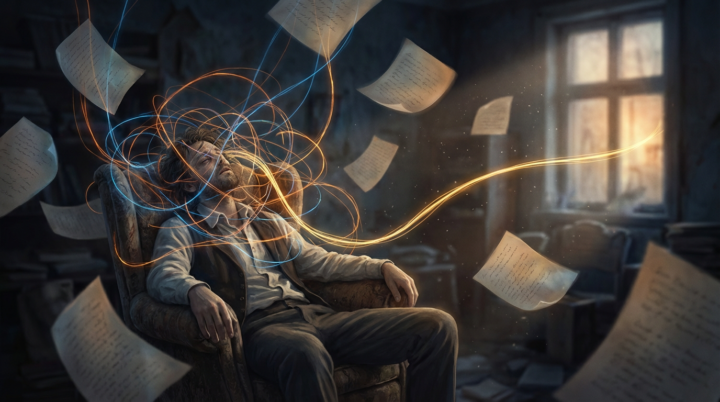
Many writers assume that feeling stuck means something is wrong with the story. In long-form projects, I’ve found it often means the manuscript is asking a different question than it was at the start. As eBooks and novels develop, themes sharpen, characters shift, and what once felt clear can begin to feel uncertain. In my work supporting long-form writing, progress at this stage usually comes from realigning the draft with what the story has become, not forcing it to match the original plan. I’m curious how others here approach this moment. When a manuscript starts evolving beyond the initial outline, what helps you regain clarity and direction?
1-30 of 102
powered by
skool.com/writing-7584
Your place on Skool to build a steady writing habit with other humans. If you use words, you're welcome here!
Suggested communities
Powered by