
Write something
Pinned

Dec '25 •
🟢 New Members: Start Here 🟢
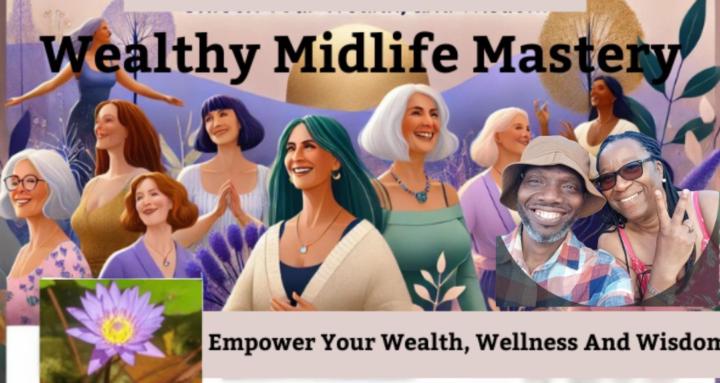
Midlife Warriors,... Welcome to Wealthy Midlife Mastery — the community where powerful midlife women learn to reclaim their authentic self, be seen without burnout, and thrive in their next chapter with clarity, confidence, and inner peace. In this space, we help you: ✨ Break free from midlife burnout ✨ Stop feeling invisible and rediscover your authentic identity ✨ Create the life, energy, and boundaries that match the woman you’re becoming And we do it by focusing on simplicity, soul, and 10 minutes a day. We’ll accomplish this through 3 core elements: 💚 Our 7-Day, 10-Minute Midlife Mastery ChallengeA guided transformation that helps you reconnect with your true self without overwhelm. 💚 The Midlife Mastery Method™A blend of identity work, spiritual wellbeing, feminine boundaries, and nervous system restoration. 💚 Daily Micro-Wins & Soulwork RitualsSmall, doable practices that rebuild confidence, presence, and energy without draining your life. 🌿 Your Community Tour 📘 Programs & Challenges:Click Here → https://www.skool.com/wealthy-midlife-mastery-7492/classroom 📅 Live Coaching & Support:Click Here → https://www.skool.com/wealthy-midlife-mastery-7492/calendar Inside this circle, you’ll also receive: ✨ New trainings ✨ Midlife mastery tools ✨Energy-reset practices ✨ Weekly guidance—all designed to help you feel seen, supported, and unstoppable. 🌟 Let’s Get You Up & Running 👉 𝐒𝐭𝐞𝐩 𝟏: Introduce yourself in the comments below (no links).Share who you are and the #1 question you have about becoming the most powerful, visible, burnout-free version of yourself.(We’ll use your questions in the weekly live sessions.) 👉 𝐒𝐭𝐞𝐩 𝟐: Visit the Calendar tab and add all live calls to your schedule.With thousands of women who’ve gone through our work, the #1 predictor of transformation is simple: Show up for the calls. 💫 Action Steps 👇 Please introduce yourself below!
1
0
Pinned
Dec '25 •
✨ Your Midlife Glow-Up Starts Here — Enter the Challenge & Win the Grand Prize
🍄 Grand Prize Valued at $997 - Enter below Let the games begin, Midlife Warriors. ✨ Every single month we run our 30-Day Midlife Mastery Challenge giving you a powerful structure to rebuild your energy, reclaim your authenticity, and step back into your life with clarity and confidence… …and yes you get a chance to win our Grand Prize every month. 🌟 Our Grand Prize = The Midlife Glow-Up Bundle (Value: $997) This includes: 💎 A Private 1:1 Midlife Mastery Coaching Session: Reset your identity, gain clarity, and map your next chapter with expert guidance. 💎 The Midlife Energy Restoration Toolkit: Breathwork, grounding rituals, and feminine nervous system practices designed to end burnout and restore daily vitality. 💎 A Personalized Midlife Archetype Breakdown: A deep-dive into your Awakener / Reclaimer / Radiant / Visionary profile so you know exactly how to grow. There will be 3 winners selected every month, tracked automatically right here inside the community. 🎯 How to Earn Points + Rise in the Leaderboard You’ll automatically earn points inside your profile as you participate. Engage → Grow → Win. You get points for: ✨ Starting a new post ✨ Sharing your wins, micro-shifts, or updates ✨ Leaving meaningful comments on other posts ✨ Upvoting or liking posts The more you engage, the higher you climb. You can see your ranking anytime inside the Leaderboard tab in the top navigation (or the sidebar on desktop). 💖 The Formula Is Simple Show up for yourself + Share your progress → Earn points → Win your Midlife Glow-Up This challenge is designed to help you: ✔ Reclaim your energy ✔ Feel visible and grounded ✔ Build momentum in just 10 minutes a day ✔ And reconnect with the woman you were always meant to be 🌿 If You Accept This Challenge… If you’re ready to rise, reconnect, and rebuild your inner fire 👇 Comment “Glowup” down below to begin. Let’s make this your season of becoming. ✨
Pinned

Nov '25 •
Completion of Challenge
Wealthy Midlife Mastery 7 Day Challenge Day 7: Celebrate Your Mastery I realise that success does not have to be grand gestures, but small consistent efforts done intentionally, promotes sustainable success and better results.
Jan 13 •
🌿 Weekly Check-In Ritual, A Moment Just for You
Welcome to our Weekly Wealthy Midlife Check-In 🤍 This is a quiet pause inside the noise, a place to arrive as you are, without fixing, explaining, or pushing. No long answers required, no wisdom needed, one word is enough. Take a deep breath… then when you are ready respond to one or more of the prompts below: ✨ What's one word that describes this week for you… ✨ What are you tired of carrying right now? ✨ What feels a little lighter, even just 1% this week? You’re not here to perform, you're here to be witnessed. Your words matter. Your presence matters, and sometimes, naming what’s true is the most powerful step forward 🌸 Drop your response below in the comments section, we’re listening 💖
0
0
Jan 8 •
The Midlife Revolution: Why Old Rules Don’t Work and What Actually Does
There is a strange paradox that happens in midlife, just when women have more wisdom, insight, and lived experience than ever before, society expects them to shrink, fade into the background, or “settle” into quiet acceptance. We’ve been conditioned to believe that aging means declining relevance, that midlife is a crisis to survive, and that we should settle into less ambitious roles rather than stepping into our full power. But here’s the truth many women are discovering, that midlife isn’t a problem to fix — it’s a transition to master. The old beliefs and practices that once guided women are no longer effective. What used to work or seemed normal often leads to exhaustion, resignation, invisibility, or self-compromise. It’s time to call out outdated practices in women’s midlife experience and replace them with smarter, evidence-based, soul-aligned alternatives that actually deliver results. Outdated Practice #1: “Midlife Means Slowing Down and Stepping Back.” For decades, the dominant cultural narrative has been that midlife is a time of retreat; a period to “take it easy,” accept your limits, and step out of the spotlight. Women are told to quiet their ambition, focus on caregiving, and make peace with reduced visibility. Why It No Longer Works: This narrative ignores the reality that midlife women are more capable, poised, and ready than ever before. A lifetime of experience doesn’t disappear at age 40, 50, or 60 it evolves. Modern neuroscience shows that adults in midlife can maintain and even sharpen cognitive function with purpose, challenge, and social engagement. Emotional intelligence also peaks around this age, giving women greater relational acumen and self-awareness than they had in their 20s or 30s. Smarter Alternative: Midlife is a time to pivot, not plateau. Rather than stepping back, women can step forward in new directions intentionally, sustainably, and with their energy preserved. This means investing in personal growth, curiosity, and reinvention with self-trust, not self-doubt.

1-30 of 42
powered by
skool.com/wealthy-midlife-mastery-7492
🟢🔥 NEW: Join the 10 Minutes Midlife Mastery Challenge. Free for the first 50 members🟢🔥
Suggested communities
Powered by