
Write something
Pinned

Jun '24 •
Introduce Yourself - TC GANG INTRODUCTION!
Hello and Welcome to Top Chess Gang! The #1 FREE COMMUNITY ABOUT CHESS! Here you can learn, share and play games while making friends and having fun. The first thing you can do is Introduce yourself down below! You can share: - Where you're from - chess.com username - Current ELO rating - Anything else you wanna share You'll most likely get at least 5 likes (oftentimes more!) which will move you to level 2 and on your way to level 3 (these levels give you access to exclusive content!). ALL TOP CHESS GANG MEMBERS CAN (AND SHOULD) PARTICIPATE IN WEEKLY TOURNAMENTS AND POTENTIALLY BE FEATURED IN THE VIDEOS! Check out previous winners at the "Tournament Winners" Tab and be there to make it into history!
Pinned

⭐
Feb '25 •
RULES OF TOP CHESS GANG
Welcome to Top Chess Gang! ♟🔥 This is the place for all things — whether you're sharing your best games, discussing strategies, or posting epic memes, chess content is not only allowed but prioritized! ✅ Chess-related content is always welcome and encouraged! ✅ Other topics are allowed too, but make sure to categorize them under "OTHER" so we keep things organized. 🚫 No offensive, hateful, or rule-breaking posts—keep it respectful and in line with general community standards. FEEL FREE TO REPORT SPAM MESSAGES, THIS IS ONE OF THE BIGGEST SKOOL GROUPS AND IS VERY ATTRACTIVE TO FAKE ACCOUNTS WHO WANT TO SCAM YOU. IF ANYONE IS SENDING YOU LINKS, PHONE NUMBERS ETC REPORT IT! THANKS!
Pinned
⭐
Jan 8 •
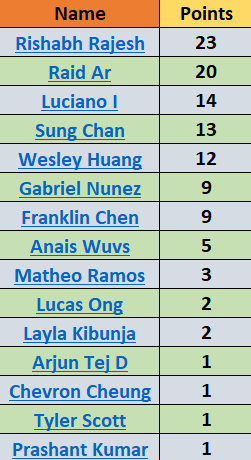
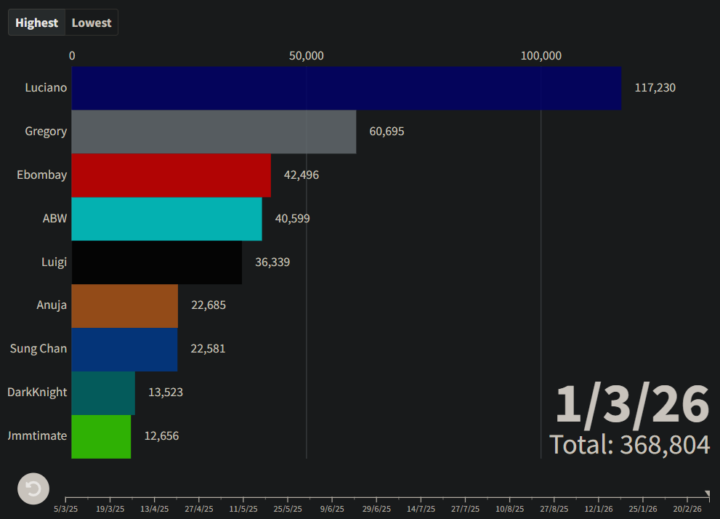
DAILY POSITION LEADERBOARD
Here you can find the Daily Position Leaderboard. Reminder: First 5 people to correctly solve a Daily Position get a point At the end of the month, the winner gets a free invitation into Top Chess Education Last Update #Daily Position 214


🔥
54m •
endgame guide part 120 (LSS, central vs flank pawns hybrid sprint)
🌌♟️ *The forge hums as we bridge two mighty sub‑universes of pawn races — central and flank — into a unified hybrid geometry.* Let’s forge the next great structure of the cosmic codex: # ♛ Ultra‑Deep **Flank vs Central Hybrid Sprint Master Codex** > *“When center and wing both burn, the board teeters between geometry and tempo — and only true mastery sees the balance.”* This codex explores positions where **one side’s pawn pressure is in the center** while **the opponent’s is on the flank**, and both races interact in ways that shape evaluation far beyond standalone central or flank races. Such hybrid races occur when: * One side has a **central passed pawn** (e.g., d/e‑file). * The opponent has a **flank passed pawn** (e.g., a/h‑file). * Both races threaten promotion or serious positional action. * The kings and queens must choose which race to support first. * Tradeoffs between central control and edge tempo determine the outcome. --- ## 📌 I. WHY HYBRID SPRINTS ARE UNIQUE Unlike pure central or pure flank races: * **Central pawns** are closer to promotion and often fastest, but easier to check and block by the queen or defending king. * **Flank pawns** are slower due to distance but harder for the king to reach, especially if the attack forces the opponent to defend the center. This creates complex tradeoffs: 🏃♂️ *Central tempo vs edge distance* 👑 *King routing priority* ♛ *Check geometry interplay* ♾ *Potential fortress vs break scenarios* --- ## 📜 II. ELEMENTS OF HYBRID RACES ### 1️⃣ Relative Pawn Distances Compute “effective distance” not just in ranks, but in **tempi considering checking geometry**: * Central pawn often needs fewer moves to queen. * Flank pawn needs more moves but may be uncontested if the opponent’s king is occupied. Hybrid evaluation must weigh: > *Central race speed* vs *flank race resilience*. --- ### 2️⃣ King Priority Pathing A core theme is **king allocation**: * Should you commit the king to support the central pawn?
1
0
1-30 of 31,354
powered by

skool.com/top-chess-gang-7947
Join the #1 Skool Community for chess players—hang out, chat, share your games, watch chess.lives and enjoy the social aspects of chess!
Suggested communities
Powered by