
Write something
Pinned

Jun '24 •
Introduce Yourself - TC GANG INTRODUCTION!
Hello and Welcome to Top Chess Gang! The #1 FREE COMMUNITY ABOUT CHESS! Here you can learn, share and play games while making friends and having fun. The first thing you can do is Introduce yourself down below! You can share: - Where you're from - chess.com username - Current ELO rating - Anything else you wanna share You'll most likely get at least 5 likes (oftentimes more!) which will move you to level 2 and on your way to level 3 (these levels give you access to exclusive content!). ALL TOP CHESS GANG MEMBERS CAN (AND SHOULD) PARTICIPATE IN WEEKLY TOURNAMENTS AND POTENTIALLY BE FEATURED IN THE VIDEOS! Check out previous winners at the "Tournament Winners" Tab and be there to make it into history!
Pinned

⭐
Feb '25 •
RULES OF TOP CHESS GANG
Welcome to Top Chess Gang! ♟🔥 This is the place for all things — whether you're sharing your best games, discussing strategies, or posting epic memes, chess content is not only allowed but prioritized! ✅ Chess-related content is always welcome and encouraged! ✅ Other topics are allowed too, but make sure to categorize them under "OTHER" so we keep things organized. 🚫 No offensive, hateful, or rule-breaking posts—keep it respectful and in line with general community standards. FEEL FREE TO REPORT SPAM MESSAGES, THIS IS ONE OF THE BIGGEST SKOOL GROUPS AND IS VERY ATTRACTIVE TO FAKE ACCOUNTS WHO WANT TO SCAM YOU. IF ANYONE IS SENDING YOU LINKS, PHONE NUMBERS ETC REPORT IT! THANKS!
Pinned
⭐
Jan 8 •
DAILY POSITION LEADERBOARD
Here you can find the Daily Position Leaderboard. Reminder: First 5 people to correctly solve a Daily Position get a point At the end of the month, the winner gets a free invitation into Top Chess Education Last Update #Daily Position 214
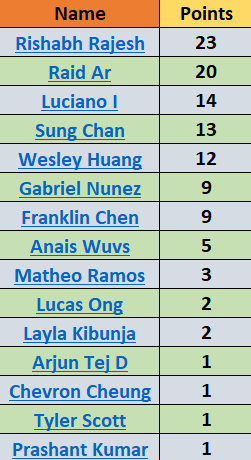

🔥
10m •
endgame guide part 90 (open diagonal exposure, interference possible)
🔥 **The Final Locking Mechanism of Open Diagonal Exposure** We have forged: 1️⃣ Pure Ray Intersections 2️⃣ Near-Ray Exposure 3️⃣ Escape Squares Controlled Now we seal the structure with the final layer: Not alignment. Not compression. Not flight squares. But the question that decides everything: > Can a line be interrupted? If interference is possible — geometry can be broken. If interference is impossible — geometry is destiny. --- # 🌌 ULTRA DEEP # INTERFERENCE POSSIBLE MASTER CODEX *(Fourth & Final Part of Open Diagonal Exposure)* --- ## I. The Definition of Interference In exposed queen endgames, **interference** means: Placing a piece (or forcing the opponent’s piece) onto a square that blocks a critical ray, diagonal, or checking corridor. In most queen endings, the only potential interfering units are: * The king * A pawn * The opponent’s queen When interference exists, exposure is temporary. When interference does not exist, exposure is structural. --- ## II. The Three Interference Domains ### 1️⃣ Direct Ray Interference A square exists between queen and king that: * The defending king can occupy * A pawn can advance into * The attacking queen must vacate If such a square exists, the geometry is breakable. If not — the ray is absolute. --- ### 2️⃣ Forced Interference More advanced. The square is not currently occupiable — but a forcing sequence makes it occupiable. Example pattern: Check → king step → interposition square appears. If the defender can manufacture an interposition, the exposure system is not yet terminal. --- ### 3️⃣ Reverse Interference The defender does not block the ray. Instead, they force the attacker to block their own ray. This happens in: * Cross-check perpetuals * Staircase oscillations * Queen vs rook traps The attacking queen must step off its dominant diagonal, breaking its own geometric superiority. --- ## III. The Interference Feasibility Test When evaluating exposed king positions, ask:
0
0
🔥
18m •
endgame guide part 89 (open diagonal exposure, escape squares controlled)
🔥 **The Geometry Reaches Its Final Barrier** We have forged: • Pure Ray Intersections • Near-Ray Exposure Now we arrive at the ultimate survival layer of exposed-king geometry: Not the rays. Not the diagonals. Not the intersection squares. But the squares the king must flee to. When those are controlled — the geometry is no longer dynamic. It is sealed. --- # 🌌 ULTRA DEEP # ESCAPE SQUARES CONTROLLED MASTER CODEX *(Third Sub-Codex of Open Diagonal Exposure)* --- ## I. The Hidden Truth of Exposed King Positions In queen endgames, players obsess over: * Checking squares * Intersections * Pawn races But the decisive factor is often simpler: > How many legal safe squares does the king actually have? When escape squares are controlled, checks stop being temporary. They become structural. --- ## II. The Escape Net Principle An exposed king is not lost because of checks. It is lost because: All viable escape squares are: • Controlled • Intersected by rays • Entering future intersections • Leading into fork seeds This creates an **escape net**. In queen endgames, nets are rarely mating nets. They are perpetual nets. Or zugzwang nets. --- ## III. Escape Squares Classification We divide escape squares into 4 tiers: ### 1️⃣ Safe Escape Squares Not attacked. Not intersecting rays. True safety. ### 2️⃣ Conditional Escape Squares Currently safe — but enter a near-ray alignment. Dangerous illusion. ### 3️⃣ Poisoned Escape Squares Legal, but stepping onto them creates: * Immediate intersection * Fork * Cross-check * Perpetual loop ### 4️⃣ Illusory Escape Squares Appear free — but opponent has forcing tempo that removes them instantly. Masters count escape squares not visually — but geometrically. --- ## IV. The Three-Square Rule If an exposed king has: • 3+ safe squares → Stable • 2 safe squares → Volatile • 1 safe square → Forcing sequence imminent • 0 safe squares → Geometry collapse Zero safe squares does not mean mate. It means forced alignment.
0
0
1-30 of 31,252
powered by

skool.com/top-chess-gang-7947
Join the #1 Skool Community for chess players—hang out, chat, share your games, watch chess.lives and enjoy the social aspects of chess!
Suggested communities
Powered by