
Write something

Mar 5 •
Cultivation classes!!
HEY GUYS!!!! Super excited to let you know the ETG cultivation classes are up and running now!!!! I have put a lot of time and effort into these classes! We will be dropping new classes every Monday from now on! To access them please sign up for our premium tier and all classroom content will be instantly unlocked!!!! Why do we charge 10$ a month for premium tier? These classes take a lot of resources time and effort to produce at the high quality level we strive for! Running a skool page is not free for us. we have priced this at 10$ a month to keep entry low for all 33 cents a day. At that price there the knowledge and access to direct help from us is a no brainer...seriously a pack of seeds cost more than 6 months of access in most cases. Save one plant with the knowledge you gain and its more than paid for itself!! Please if anyone has any questions feel free to comment or reach out to me personally!!!! Have a great day Happy growing everyone!!!!
0
0
Mar 2 •
Powdery Mildew Prevention in an Indoor Grow Tent
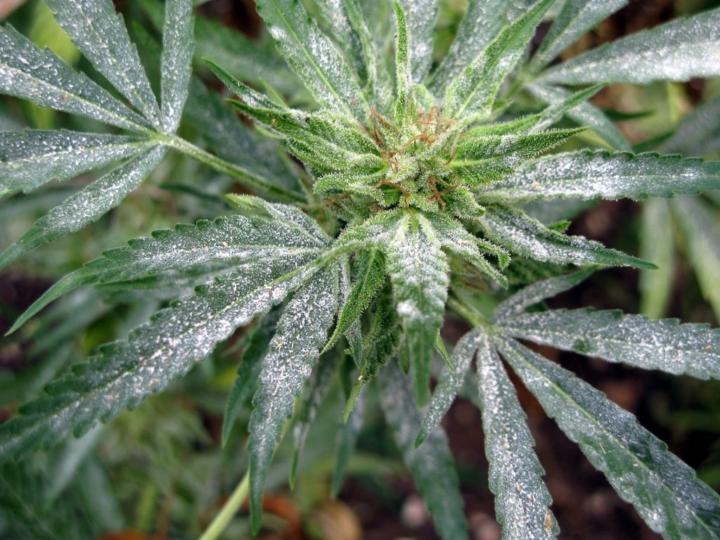
Powdery mildew in an indoor grow tent is one of the most common and destructive problems growers face. It appears as a white, powder-like fungus on leaves and spreads quickly in controlled environments if conditions are right. The good news? Prevention is straightforward when you understand the science behind it. This guide covers real, proven preventive measures to keep powdery mildew out of your indoor grow. What Causes Powdery Mildew in Grow Tents? Powdery mildew is caused by airborne fungal spores. These spores are always present in the environment, but they only establish themselves when conditions favor growth. In indoor grow tents, powdery mildew thrives when: - Relative humidity stays above 55–60% - Air circulation is poor - Leaf surfaces remain cool and stagnant - Plants are overcrowded - There are temperature swings between lights on and lights off Unlike many fungi, powdery mildew does not require standing water to infect plants. High humidity alone is enough. 1. Control Humidity (Most Important Preventive Step) Ideal humidity for preventing powdery mildew: - Vegetative stage: 50–60% RH - Flowering stage: 40–50% RH Use a calibrated hygrometer inside your grow tent. If humidity rises above 60%, spores can germinate within hours. Prevention tools: - Dehumidifier in the lung room - Proper exhaust fan sizing - Increased air exchange rate - Avoid overwatering plants Lower humidity makes it significantly harder for spores to establish. 2. Maintain Strong Airflow and Air Exchange Powdery mildew spreads in stagnant air. To prevent it: - Use oscillating fans inside the tent - Ensure constant air movement across leaf surfaces - Install an exhaust fan with proper CFM rating - Maintain negative pressure in the tent Airflow disrupts spore settlement and keeps leaf surfaces dry. This is one of the most effective indoor grow tent powdery mildew prevention strategies. 3. Manage Plant Spacing and Pruning Dense canopies trap humidity. Preventive steps:
0
0
Feb 28 •
COMMUNITY SUGGESTIONS!!
As we build our cultivation courses what are some of the main things you guys would like to see in there? I am excited to release these soon i think everyone will really like the way they are put together!!

Feb 28 •
Why Your Grow Tent Needs a Lung Room
If you’re running a grow tent and struggling with: • Humidity swings• Temperature spikes• Slow growth• Mold issues• Weak airflow Your problem might not be your tent… It might be your lung room. What Is a Lung Room? Your lung room is the room your grow tent sits in. Your tent pulls intake air from it.So whatever that room feels like — your plants feel too. If the lung room is: - Too humid → your tent fights mold - Too dry → VPD gets thrown off - Too hot or cold → unstable environment - Stale air → low CO₂, slower growth Your tent can’t fix bad air. It can only adjust what it’s given. The Principle Most Growers Miss A lung room acts as an environmental buffer. Instead of your tent fighting outdoor weather, it only has to fine-tune a stable indoor space. Stable lung room = stable grow tentStable grow tent = healthier plantsHealthier plants = bigger yields It’s that simple. Why This Matters for Indoor Cultivation Serious indoor growers understand: Environmental control is everything. Lighting matters.Genetics matter.Nutrients matter. But none of it performs properly without air stability. And that starts outside the tent. This is just surface level. Inside the ETG Cultivation Course, we go deep into: • Advanced lung room design• Precision VPD control• Seasonal environmental adjustments• Full indoor ecosystem building If you’re ready to stop guessing and start engineering your grow properly… That’s where we take it further. 🌱
1
0
Feb 26 •
Maximize Your Harvest: The Lolli popping Guide for High-Yield Plants
Lollipopping is a precision pruning technique designed to dramatically increase the yield of indoor and greenhouse plants. By removing lower, underdeveloped growth, cultivators can direct a plant's limited resources towards creating larger, denser flower or fruit clusters at the top. This strategic redirection of energy is key to maximizing your final harvest. The Science Behind the Lollipopping Technique In a standard growing canopy, lower branches are often shaded, receiving minimal light and restricted airflow. These parts of the plant become an energy drain, consuming valuable resources while producing only small, subpar, and often airy growth. Lollipopping eliminates these low-performing sections entirely. This process focuses all available nutrients, water, and photosynthetic energy into the premium bud or fruit sites in the upper canopy, where light is abundant. Key Benefits of Lollipopping for Maximum Grow: - Significantly Bigger Yields: Redirected energy leads to substantial increases in the weight and density of the final harvest. - Improved Air Flow: Reducing dense foliage at the plant’s base enhances air circulation, which is critical for managing humidity and lowering the risk of mold or pests. - Focused Resource Allocation: All nutrients and water are used only by the highest-performing sections of the crop. When to Lollipop Your Plants Correct timing is critical for success. For most varieties, the ideal moment is just before the flowering or fruiting stage begins. This gives the plant adequate time to recover from the stress during its crucial transition period, allowing all subsequent energy to be focused solely on reproduction rather than healing. A lighter pruning can also be done earlier in the vegetative cycle to establish the basic shape. Serious growers who demand the highest quality and maximum weight from their setups rely on lollipopping as a core plant cultivation technique to achieve peak performance. Always use clean, sterile tools and approach pruning with caution. Done correctly, it is a proven method to unlock a plant's ultimate yield potential.

1-7 of 7
powered by

skool.com/the-unbound-nest-5400
Home of ETG cultivation course. Expert homesteading, DIY skills & food independence. 100% veteran-owned Master self-reliance through messy action.
Suggested communities
Powered by