The Peptide Pipeline
Private
69 members
Free

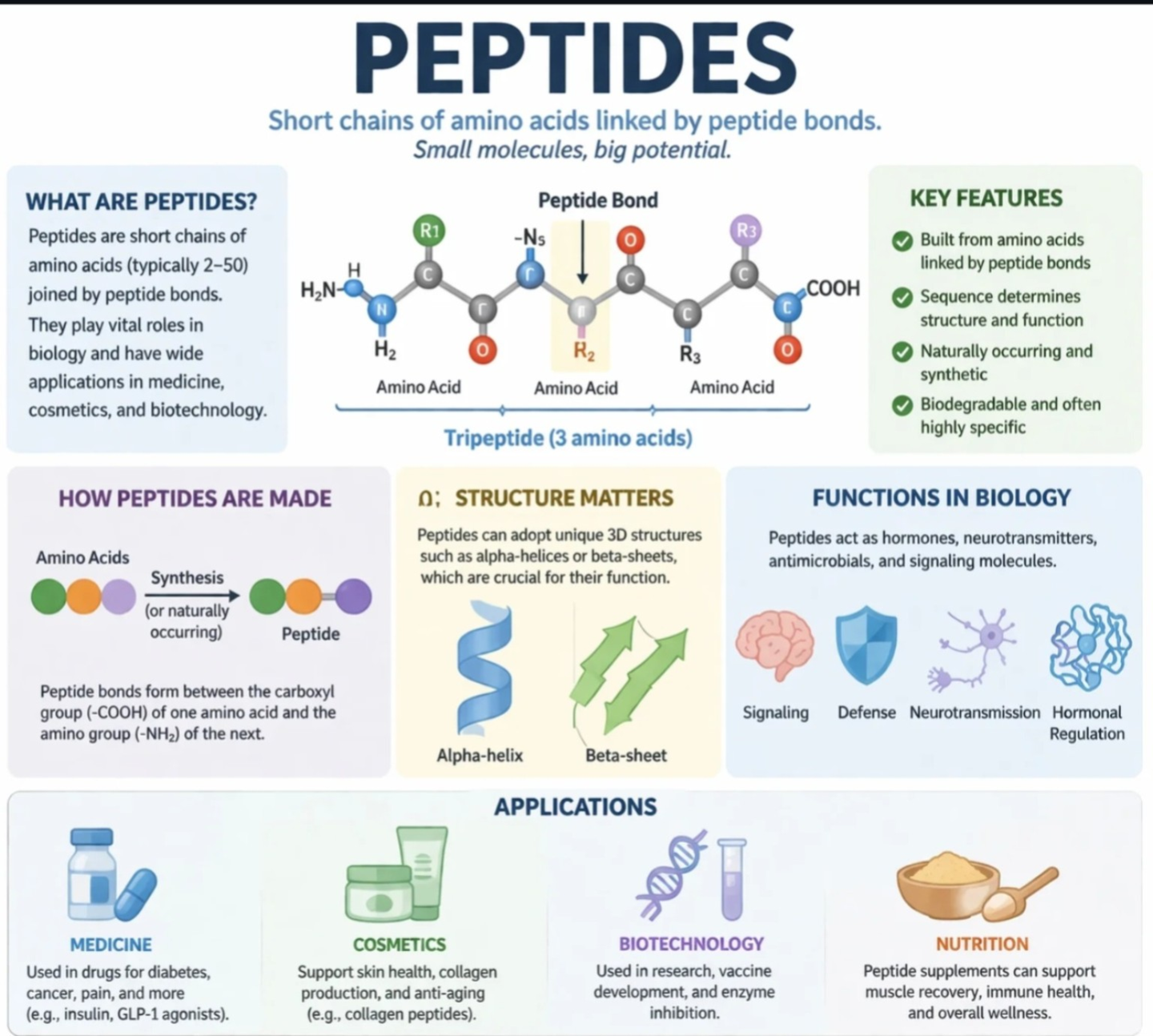
Peptides are short chains of amino acids, which are the building blocks of proteins. They act like messengers in the body, helping cells communicate and signal different biological processes. Depending on the peptide, they may be involved in areas such as recovery, tissue repair, metabolism, immune function, skin health, hormone signaling, sleep, inflammation response, and overall performance research. Some peptides occur naturally in the body, while others are created synthetically for research purposes. Their effects can vary widely based on structure, purity, dose, and intended research use. In simple terms, peptides are small but powerful compounds that help researchers better understand how the body heals, adapts, performs, and maintains balance. Research peptides should be handled responsibly, with proper education, quality awareness, and a clear understanding that they are not a replacement for medical advice, diagnosis, or treatment.
powered by
skool.com/the-peptide-pipeline-3916
The Peptide Pipeline: Peptide research education, protocol discussion, and trusted sourcing insight for performance-minded members.