
Write something

7d •
The small misses usually tell the truth first.
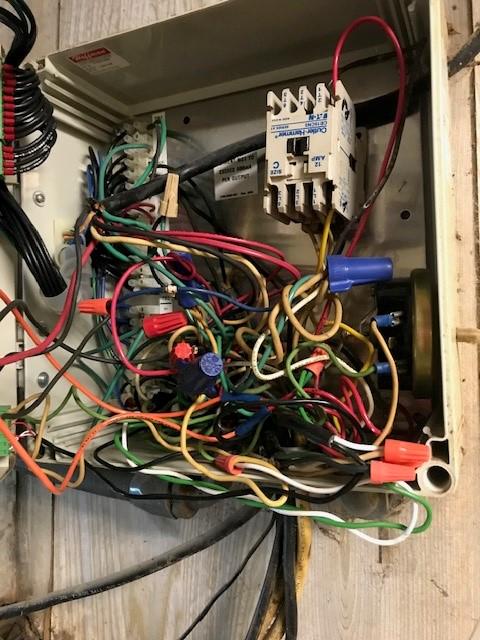
Most problems on a dairy don’t show up all at once. They start as little things. A dip cup not filled quite right. A liner that should have been changed last week. A fresh cow that “seems fine” but isn’t eating like she should. A service call that gets handled, but nobody writes down what changed. A team member who knows the routine, but not the reason behind it. None of those feel like a crisis by themselves. But small misses are often early warning lights. Not proof that someone failed. Proof that the system needs attention. That’s true whether you’re running a dairy, installing equipment, managing route service, or trying to grow a business without everything living in your head. Good owners don’t just ask, “Who missed this?” They ask better questions: What made this easy to miss? Where did our routine break down? Is this a training issue, a communication issue, or a design issue? Do we have a repeatable way to catch this earlier next time? The best farms and service businesses are not perfect. They are observant. They treat small problems as cheap lessons before they become expensive ones. Takeaway: This week, pick one small recurring miss and fix the system around it, not just the symptom.
12h •
Calendar beats Crisis!
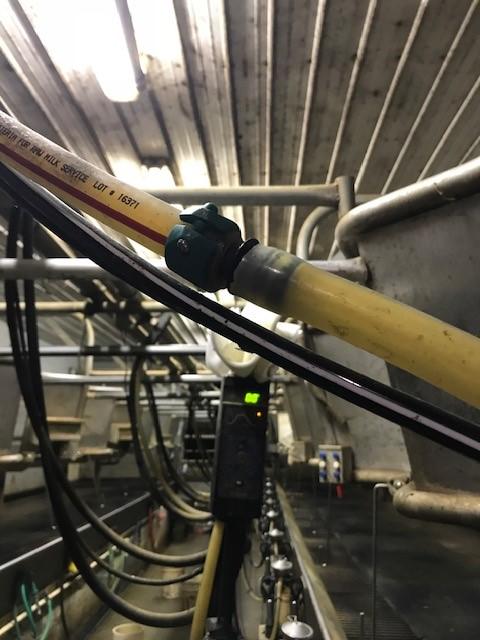
Last week we talked about how small issues become big issues when we don’t have the time, systems, or routines to catch them early. That’s the hard part of running a farm or service business. It’s not that people don’t care. It’s that the urgent stuff keeps getting louder. The trash doesn’t usually get taken out because it’s “scheduled.” It gets taken out because cans are spilling over the top, the bag is overfilled, and now the simple job has become a messy one. The same thing happens in bigger, more expensive ways. This past week, one of our farm customers was dealing with an elevated PI count, which is a bacteria count that can point toward cleanliness, cooling, equipment, or milk contact surface issues. Our route specialist started thinking through possible causes. While looking things over, he noticed the milk hose and asked a simple question: “When was the last time you changed your milk hose?” The answer was one we hear more often than we should: “It’s only been a few years.” So he checked the system. It was 2017. That hose was rated for 12 months and had been on the farm for almost 10 years. Wow. And honestly, that raises a few fair questions. Where did the time go? Why did nobody think of it sooner? Should we have pressed harder since we had the data? Should the farm have had it scheduled on the calendar, the same way inflations are changed on a routine? Here’s the tricky part: the farmer didn’t think the hose was the culprit. Something else had to be causing it. But he decided to try it anyway. A few days later, our route specialist got a text: “I owe you a steak dinner. The PI counts came down immediately!” We love that. We’re thankful for customers who appreciate good work, and we’re always glad when a practical fix helps that quickly. But here’s the bigger point: The real win would have been if the PI count never went up in the first place. That’s what we’re trying to build toward. Not a business where every task waits for a problem prompt. A better question is:
8d •
Milk Cooling - why it's so important!
This is going to be a brief on cooling milk. Raise your hand if you just love the taste of an ice-cold glass of fresh milk. Ahhhh. For those of you that work with harvesting or producing dairy products, you know first hand the panic that ensues when the tank or chiller isn't cooling. One key thing to learn about this is this rule of thumb. Bacteria in milk will double about every 15 -20 minutes at about 50 deg. F.. This means the following. Safe @ 5000 PI count. In 2 hours, here is where that goes: Starting point =5000, 10,000, 20,000, 40,000, 80,000, 160,000 and after 2 hrs., at 20-minute intervals, we're at a whopping 320,000. Add an additional hour and we're easily above 2.5 million. WOW! And, not to mention, gross! Yeah, I said it. It's gross. But, this is why it matters so much. So, what is your goal for cooling? Set temp? Time to cool? Do you use a plate cooler? Drop a question below and I'll do my best to walk you through any cooling or tank questions to help you be equipped for success on your milk cooling and milk quality! Info from Google search:https://www.journalofdairyscience.org/article/S0022-0302(16)30023-6/fulltext Here is what a quick google search AI result showed: Bacteria in milk reproduce exponentially via binary fission. The rate of growth heavily dictates the shelf-life and safety of the milk and is dictated strictly by storage temperature. [1, 2] - \(< 40^\circ\text{F} \ (4^\circ\text{C})\) (Refrigeration): Growth is radically restricted. Milk can last up to 7–21 days depending on processing. [1, 2, 3, 4, 5] - \(40^\circ\text{F} \ - \ 140^\circ\text{F} \ (4^\circ\text{C} \ - \ 60^\circ\text{C})\) (The "Danger Zone"): Bacteria thrive, with populations doubling in as little as 20 minutes. For example, at \(40^{\circ }\text{F}\) it might take 68 days to reach spoilage levels, but at \(50^{\circ }\text{F}\) (\(10^{\circ }\text{C}\)), it takes just 10 days. [1, 2] - \(> 145^\circ\text{F} \ (65^\circ\text{C})\) (Thermal processing): High heat effectively destroys most bacteria and pathogenic organisms. Standard pasteurization (HTST) holds milk at \(161^{\circ }\text{F}\) (\(72^{\circ }\text{C}\)) for 15 seconds. [1, 2]
0
0
8d •
What is your 100-mile goal this year?
I have recently decided that I want to do a 100-mile ride. A few key takeaways from that are worth sharing. 1. I shared this out loud - this made it more than an idea. 2. One of the people who I shared this with, offered to do the ride with me. 3. I have had challenges. Do you relate with any of these takeaways? While it can be misconstrued as bragging, my objective in saying it outload is it causes more accountability to the goal. Folks will ask "how is your training going" or "when is that ride". I'll be way more likely to do the training. I'm not doing it for other folks but I said I was going to do it and barring any legitimate reason not to, I will. I would hate to have lied to all those people. Next, I would look like a fool letting my friend train and come September, when we're doing the ride, tell him "well, I forgot I said that and so I didn't train - let's try out best". Oh boy, what a disaster that would be. Instead, he and I occasionally text each other milestones of our training. "I rode 12 miles today" or "it shaved 5 minutes off my normal ride". I did not train the way I wanted to. Weather, broken bike, sick, weather again, busy, etc. You know the feeling. You know what though, I am still finding ways to get back on the bike and keep training. So, what is your "century" that you're pressing for in 2026? Who is in your corner? Who is both challenging and encouraging you? Find that person - connect - build! Let's ride!
0
0
8d •
Drowning the noise - moving the needle!
If there's one thing I've observed in the dairy industry, it's that we tend to follow norms and generally accepted practices without asking enough questions. That's not always a bad thing. Experience matters. Proven practices matter. But humor me for a minute. We work in an industry where far too many farms operate at a loss—or barely above it. Stress is high. Morale is often low. If that's the reality, shouldn't we be willing to challenge some of the assumptions that got us here? Start with your "why" Before you change anything on the farm, you need clarity. What do you actually want? "I want to dairy farm." Sure—but that's the starting point, not the destination. A better answer might be: "I want to build a dairy that supports my family, gets us out of debt, gives us financial freedom, and creates something worth passing on." Now we're getting somewhere. Research suggests you're significantly more likely to accomplish goals that you write down. I'm over here struggling to consistently post on Skool, so trust me—I understand the challenge. Write it down anyway. Grab a notebook. Open the notes app. Put it on a whiteboard. Make it real. And remember, goals can evolve. They should. Just don't leave them floating around in your head. (If goal setting is something you'd like to dive deeper into, let me know in the comments. I could talk about that subject for hours.) Question the metric Here's a classic example. "I want my herd averaging 100 pounds of milk per cow." Why? Seriously...why? Does that goal actually support your vision? Does it improve profitability? Does it reduce stress? Does it move your family closer to the life you want? Maybe. Maybe not. I can't answer that for you. What I can tell you is that some of my most profitable customers are not the highest-producing herds. I've also watched farms intentionally reduce production because it improved the spread between feed costs and milk revenue—and they made more money. That's an uncomfortable idea for some people.
0
0
1-7 of 7
powered by
skool.com/the-milk-barn-8263
Join dairy owners, managers & experts sharing real advice, resources & innovation at Milk Barn Dairy Hub. In our community, we aim to encourage you!
Suggested communities
Powered by