
Write something

15d •
Ik zoek een Nederlander.
Ik ben van plan om met mijn ontwikkelteam de Nederlandse markt te betreden. We staan echter voor een aantal uitdagingen, te beginnen met de taalbarrière. Ik ben momenteel op zoek naar iemand die in Nederland woont en mij wil ondersteunen. Programmeervaardigheden zijn een pluspunt, maar niet vereist. Beheersing van meerdere talen is bijzonder wenselijk. Dit is geen kortlopend project; ik zoek iemand die een langetermijnvisie deelt. Het gaat hier niet om gratis werk. We kunnen de details via DM bespreken. Ik stel een snelle reactie op prijs.
0
0

May 22 •
ADJUSTMENT OF STATUS JUST BECAME HARDER
USCIS just issued a new policy memo titled "Adjustment of Status is a Matter of Discretion and Administrative Grace, and an Extraordinary Relief that Permits Applicants to Dispense with the Ordinary Consular Visa Process." The memo indicates that adjustment of status will be seen as the exception instead of the rule, and that aliens, with few exceptions, are expected to return to their home country to go through the consular process in order to obtain their immigrant visa. USCIS website adds: "Nonimmigrants, like students, temporary workers, or people on tourist visas, come to the U.S. for a short time and for a specific purpose. Our system is designed for them to leave when their visit is over. Their visit should not function as the first step in the Green Card process. Following the law allows the majority of these cases to be handled by the State Department at U.S. consular offices abroad and frees up limited USCIS resources to focus on processing other cases that fall under its purview, including visas for victims of violent crime and human trafficking, naturalization applications, and other priorities. The law was written this way for a reason, and despite the fact that it has been ignored for years, following it will help make our system fairer and more efficient." It is yet unknown whether categories like the National Interest Waiver (EB-2 NIW) will be added to the exception list when adjudicating adjustment of status, or what kinds of RFEs and NOIDs we can expect to see as a result of this policy memo. What we can say so far is that applicants will be expected to "prove" why consular processing would not be applicable or feasible in their situation. People choose adjustment of status over consular processing for a few reasons, convenience being the biggest factor. Another factor that people weigh is that consular processing is even more discretionary, and a denial at the consulate cannot be appealed. For those who were planning to adjust their status, be prepared for higher scrutiny, or even the possibility that you may need to go through a consulate abroad.
1
0
May 20 •
Looking for a partner based in Netherlands.
Currently I am working as senior software engineer and founder, I am looking for a partner based in Netherlands. For expanding my development business and cooperation with partner, I have clear idea. Programming skills are preferred but not mandatory. Let's talk in dm in more details.
1
0
May 5 •
If USCIS downplays your publications and citations, what else do you have to show them?
Many people on social media (Reddit especially) are in awe when USCIS issues them an RFE questioning the second prong. They probably thought: "How come? I have hundreds/thousands of citations! That is more than enough!" Is it though? If 95% of your Prong 2 is about your publications and citations, and if those are downplayed by the officer, what else do you have to show them? Are you aware of what Prong 2 actually means and how Dhanasar was found well-positioned? SPOILER: it wasn't only through his publications and citations. Based on Google Scholar, Dr. Dhanasar had around 20 citations when his case was adjudicated (he now has 127). But if you look at the precedent decision, it was both his leading role in important projects AND the governmental interest in his specific research, supported by letters from NASA and AFRL, that made him well-positioned. His education, experience, and publications were just a fraction of the totality of evidence. This goes to show that when it comes to the second prong, publications and citations cannot be the only pillar of your petition, because if they are questioned, you won't have anything else to show. RFEs generally list several types of evidence considered when making a decision, including expert letters, media coverage, patents, letters of interest from U.S. parties, evidence that the work has influenced the field, a model of future activities, a professional or business plan, and evidence of progress in achieving the endeavor, among other types of documentation. Building a case is like building a house. You need several pillars and a solid foundation to make it stand.
2
0
Apr 8 •
How Much Does the Green Card Process Cost? Part 2
In my previous post, I broke down all of the governmental fees associated to the green card process, from start to finish. Now, let's talk about attorney fees. Based on current rates, you can expect to pay anywhere from $6,000 to $14,000 USD+. The difference between the lower, average, and higher end of this range is due to the type of firm you hire and the estimated amount of work based on your profile. High-volume firms usually charge less, but they tend to select customers based on their own niche. For example, some firms are specialized in working with scholars and researchers who have publications and citations, so if you ever get rejected by these types of firms, it does not necessarily mean you are not eligible or that you have a weaker case. It might be just that they have their own customer base niche. For these firms, you may not get the personalized attention you need, as they process high-volume applications. For the higher-end range, the fees are justified by a combination of highly personalized customer service and more challenging situations, where more work is needed in order to prepare a strong petition. But if you are an accomplished industry/corporate professional or an entrepreneur, who may not have academic publications, and you have a solid career in the industry, corporate, or an entrepreneurial environment, you can expect a reasonable range between $8,000 USD to $12,000 USD in legal fees, and you can still get the personalized service you need. If you are in that category, we recommend Gewählt Law (www.gewahlt.com/contact). In part 3, I will discuss all other expenses you can expect apart from governmental and attorney fees. Stay tuned!
4
0
1-10 of 10
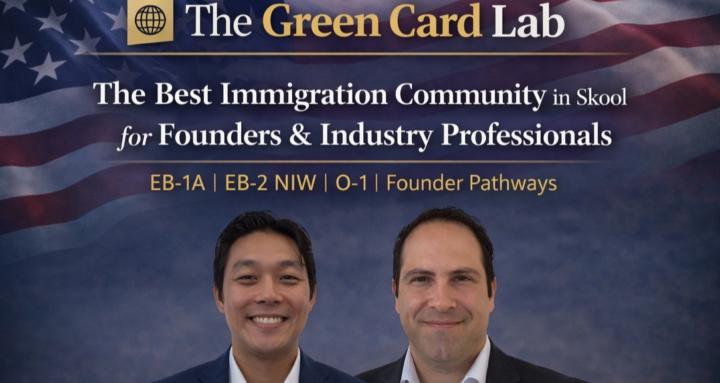
skool.com/the-green-card-lab
The best U.S. immigration community on Skool for founders and industry professionals!
Powered by