
Write something
Jan 17 •
Social Saturday Welcome 🫶
🐾 Welcome to The Cat Grooming Academy 🐾 Whether you’re here to learn, refine your skills, or simply understand cats better in a grooming environment—you’re in the right place. This space has been created for cat-focused groomers and professionals who want to work with the cat, not against them. We’ll be covering: • Feline behaviour and body language • Safe, ethical handling and restraint • Coat care, matting management & realistic expectations • Equipment choices and technique refinement • Groomer wellbeing, confidence, and professionalism Everything shared here is based on real salon experience, not theory alone. Cats are not small dogs—and once you truly understand that, everything changes. Use this group to: ✔️ Ask questions (no judgement here) ✔️ Share experiences or challenges ✔️ Learn at your own pace ✔️ Build confidence working with cats There’s a lot coming, but for now—introduce yourself below 👇 Tell us: • Where you’re based • Your grooming background • What you’d love to feel more confident with when grooming cats Welcome to a calmer, safer, more cat-centric way of grooming 💚🐈⬛
Jan 19 •
Let’s talk Products …
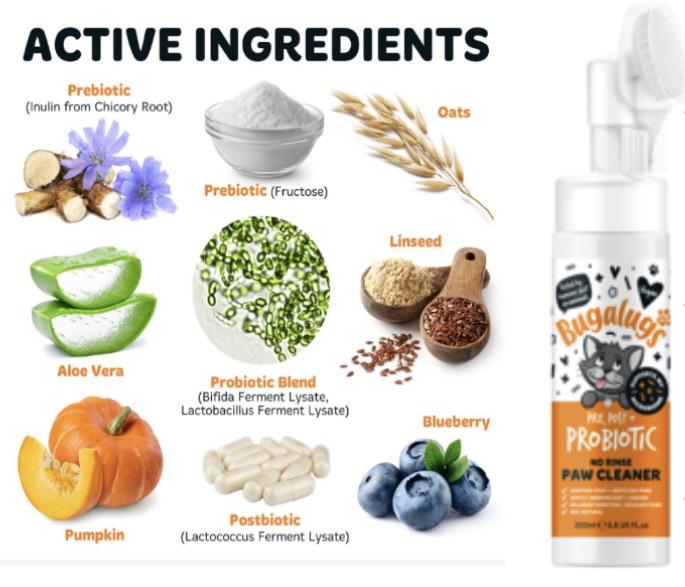
I was asked today what’s my go to cat product at the minute and I’ve been keeping this one back until I had tried it on every paw in the house 🫠🤣🙌 No more mucky litter filled paws… and it actually works! I’ve found a brilliant everyday essential for cats and kittens – the Bugalugs Paw Cleaner. This no-rinse, waterless foam gently removes dirt, bacteria and allergens without stressing your cat or stripping natural oils. The soft silicone brush helps clean between toes and around nail beds, making it ideal for quick clean-ups after outdoor adventures or those all-too-common litter tray mishaps… including poopy paws. What really sets it apart is the ingredient blend: • 🔬Prebiotics (Inulin & Fructose) to support healthy skin and protect the paw barrier • 🔬Probiotics & Postbiotics to help balance the skin microbiome • 🍃Aloe Vera to soothe and hydrate sensitive paws • 🌱🎃Pumpkin, Oats & Linseed to nourish and protect • 🫐Blueberry extract for antioxidant support and odour control Gentle, effective, and suitable for even the most sensitive paws. Simply pump, massage, wipe dry – no rinsing needed. Perfect for keeping paws clean, hygienic and your home (and nose) much happier. AND IT SMELLS AMAZING 😻 You can get it here 👇 https://bugalugspetcare.com/collections/cat-grooming/products/pre-post-probiotic-no-rinse-paw-cleaner-for-cats
1
0
Jan 18 •
😈🐾 CALLING ALL CAT OWNERS 🐾😈
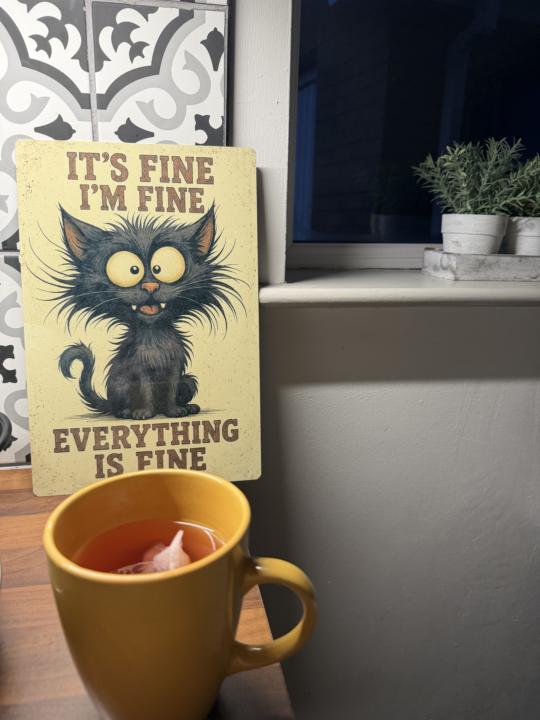
It’s time to expose them. No filters. No excuses. No lawyers present. 📸 Post a photo of your cat 📝 Confess the WORST thing they’ve ever done We’re talking: - Crimes against furniture - 3am screaming with no explanation - Pushing things off shelves while maintaining eye contact - Choosing violence for absolutely no reason This is a judgement-free zone (for owners… not for cats 👀). Let the comments become a full-blown crime scene 🐱🚨 ⬇️ Drop your evidence below ⬇️ Mary says she’s done ABSOLUTELY NOTHING …. and I would believe her with that face 🤣
0
0
Jan 15 •
Following on from yesterdays post 🐾
I wanted to take a little time to expand on the topic I touched on yesterday, as it’s one that often comes up quietly in our industry and is worth exploring in more depth. Cat grooming sits at a very unique intersection of animal welfare, owner education, emotional sensitivity, and professional responsibility. Unlike many other areas of pet care, the condition of a cat’s coat is rarely a simple reflection of effort or neglect. More often, it’s the visible outcome of things owners can’t always control — illness, pain, arthritis, obesity, age-related decline, behavioural changes, anxiety, household stress, bereavement, new babies, financial strain, or simply not being taught how to groom correctly in the first place. When we see: - Severe matting - Greasy, impacted coats - Excess dandruff or skin debris - Cats that suddenly can’t tolerate handling What we’re often seeing is a cat who needs help — not an owner who needs shaming. As professionals, we carry a lot of influence. The language we use, the way we explain coat condition, and how we approach difficult conversations can either build trust or shut it down completely. Education works best when it’s calm, factual, and compassionate. Owners are far more likely to maintain a coat properly when they feel supported rather than embarrassed or judged. At the same time, it’s also important to say this clearly: Compassion does not mean lowering professional standards. Advocating for the cat sometimes means: - Saying no to unsafe or inhumane grooming requests - Explaining when clipping is the kindest option - Refusing to demat when it causes pain or stress - Setting boundaries around handling, time limits, and sedation referrals Good grooming is not about aesthetics — it’s about welfare, comfort, and dignity. For groomers, especially those early in their cat grooming journey: - You are allowed to protect your body, your mental health, and your ethics - You don’t need to “prove yourself” by pushing a cat past its limits - Skill is shown in decision-making, not just in how much coat you can save
0
0

Jan 14 •
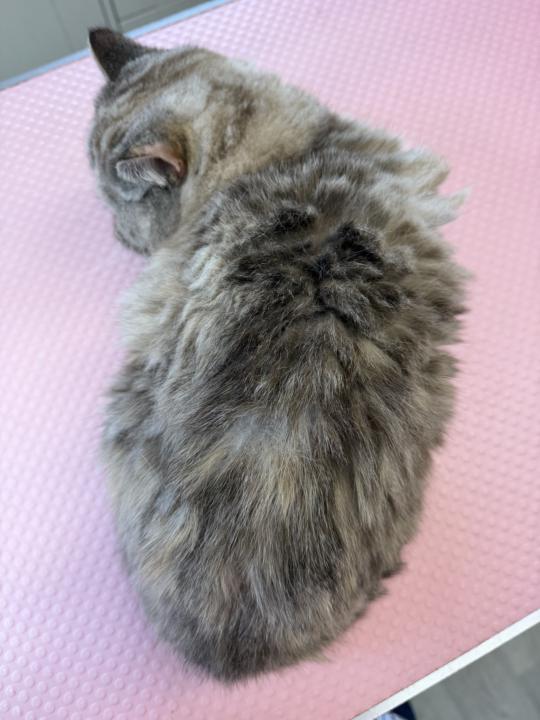
Short hair cats and grooming… GARLIC CLOVE FUR ???….
🐱 “But they’re short-haired… they don’t need grooming, right?” This is one of the biggest myths in cat care. Short-haired cats can and do mat — and sometimes a lion cut is the kindest, safest option. ✂️ Why a short-haired cat might need a lion cut Short coats can become: • Densely compacted with dead undercoat • Greasy at the root, causing hair to stick together • Painful and restrictive, especially around the hips, tummy, armpits, and chest When matting sits close to the skin, brushing can be uncomfortable or even painful. In these cases, a lion cut: ✔️ Removes discomfort immediately ✔️ Restores skin health and airflow ✔️ Prevents tearing and bruising of the skin ✔️ Allows the coat to regrow evenly and healthily This is always about welfare first, never aesthetics. 🧄 “Garlic glove fur” have you heard cat owners talk about this in cat groups recently ? — let’s clear this up The term “garlic glove fur” is often used to describe: • Clumpy • Sticky • Slightly crunchy or greasy patches 👉 This is NOT harmless texture 👉 This is the very beginning of matting Cat owners have been led to believe that this is the sign of a healthy hydrated coat …. What you’re feeling is: • Dead coat trapped at the skin • Sebum build-up • Hair starting to felt together Left untreated, this quickly progresses into full matting that cannot be brushed out humanely. 💡 Early action makes all the difference Regular professional grooming: • Removes impacted undercoat safely • Keeps the skin healthy • Prevents painful shave-downs later A short coat does not mean a low-maintenance coat. Kindness is doing what the cat needs — not what looks best to us. If a lion cut is recommended, it’s because it’s the gentlest option for your cat’s comfort and wellbeing 🐾💛
1
0
1-9 of 9
powered by
skool.com/the-feline-grooming-academy-5859
The Cat Grooming Academy Of Uk & Ireland
Professional Cat Grooming training by Maria of Bark&Claw ,International Master Cat Groomer.
Suggested communities
Powered by