
Write something

May 24 •
What does your early childhood centre feel like?
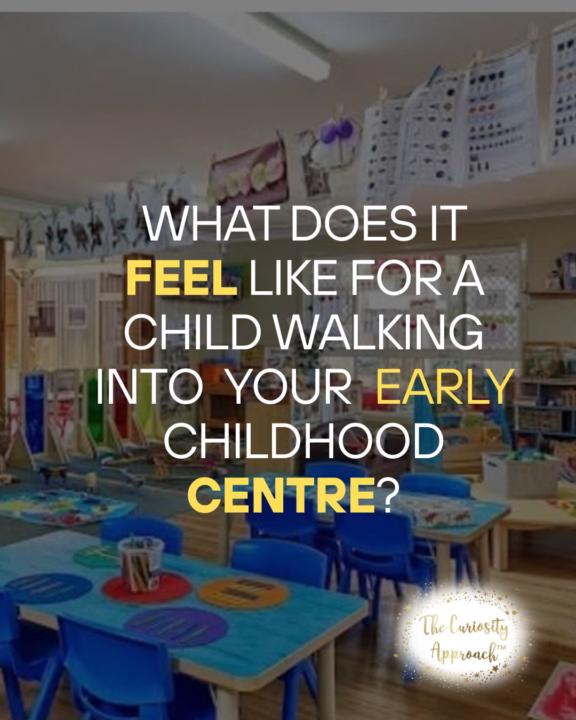
Take a moment to look around your room right now. Notice the soft textures, the warm lighting, the way your shoulders naturally drop when you feel at home. Now, think about our littlest learners. Research from Carnegie Mellon University shows that when children are placed in overly decorated, institutional spaces, they spend nearly “40% of their time distracted and off-task” Overwhelmed, over stimulated and defending their senses from all the visual noise! Young children’s brains don’t have the filters to shut out the visual noise of bright plastic, harsh fluorescent lights, and walls cluttered with commercial posters. What we often call a “stimulating environment” is actually sensory warfare for a child, triggering quiet anxiety and restlessness. When a child spends 30+ hours a week in our care, they shouldn’t feel like they are clocking into a corporate institute, academic college or waiting in a clinical lounge. They deserve an “extension of home” ❤️🥰🙏🏼 By embracing The Curiosity Approach, we step away from the sterile and school vibes into the sacred. We replace the clutter with ▪️Soft, ambient lighting and gentle, grounding tones. ▪️Intentional spaces that lets a child’s mind rest and focus. Where they FEEL safe, nurtured and secure! ▪️Authentic, natural treasures that invite genuine wonder. Spaces children THRIVE not just survive 🥰🎉 Let’s stop designing school classrooms and start creating sanctuaries. Let’s build spaces where children feel deeply safe, emotionally regulated, and truly at peace. What does your setting FEEL like? Comment below and remember this is a safe space to share your sticking points your challenges. Need help? Comment below Images from Morayfield West ( Curiosity Approach academy member )
1
0
May 21 •
Beauty in early childhood play spaces
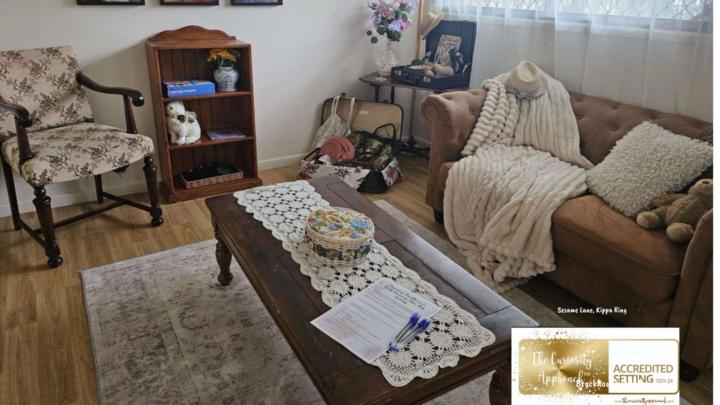
Why do we create beautiful tranquil play spaces for children? At The Curiosity Approach®, we move away from institutionalised environments and look to create play spaces that offer up beauty, art, and aesthetics. Beauty is innate within us all. Young children are very aware of this and are drawn to it too! Our resources, invitations, and provocations within our settings reflect beauty; from the delicate authentic resources to the wondrous natural objects, all declaring, all showing their beauty! We look to create enchanted pockets of learning that have a visually appealing manner, which highlight the magic, wonder, and possibilities of the resources on offer, inviting the children to become curious about them. As educators, we should always be seeking to encourage the child’s natural sense of awe and wonder. We aim to create a place of many beauties, but most importantly, the beauty of a childhood being lived to its potential, a beauty that is indeed deep in the eye of the beholder. “If we thought more about childhoods and less about needs, some of our programs would look less like schools and more like homes and children’s museums, or like fields and parks. We might develop varied places with a genuine sense of beauty; places where adults and children delight at times in simply being together.” Jim Greenman “The environment should act as a kind of aquarium that reflects the ideas, ethics, attitudes, and cultures of the people who live in it. “ This is what we are working toward. Quote by Loris Malaguzzi At The Curiosity Approach®, the children’s play spaces offer a calm, tranquil feel, which is a spacious, ever-evolving learning environment that is respected and cared for by the children and adults. We feel it emulates a children’s wondrous museum filled with natural light, plants, and order. John Dewey, Rudolf Steiner, and Lev Vygotsky all believed in the importance of arts and aesthetic education for young children. At The Curiosity Approach®, we use the statement that our settings “should feel like an extension of home and not a watered-down version of school,” stepping away from the academic feel of a traditional bright and overstimulating Early Childhood provision.
1
0

May 16 •
Why we must reclaim childhood
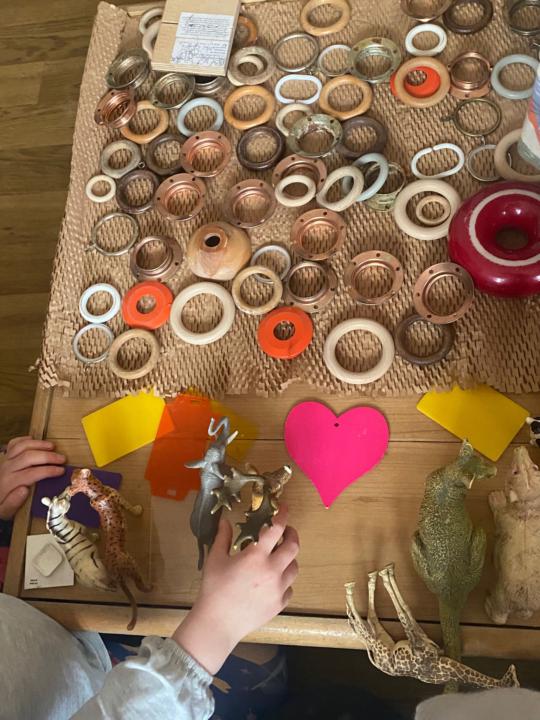
Somewhere along the way, childhood became rushed. Children are being asked to sit still sooner, learn faster, and spend more time indoors and on screens than ever before. Play is often squeezed into the gaps between routines, assessments, and adult expectations. But childhood was never meant to be hurried. At The Curiosity Approach®, we believe children deserve something different. They deserve: ✨ Time to wonder ✨ Time to explore ✨ Time to get muddy ✨ Time to build, create, and imagine ✨ Time to simply be children When we reclaim childhood, we are making a conscious decision to slow down and trust the natural process of development. We are choosing: ❤️ Play over pressure ❤️ Curiosity over compliance ❤️ Connection over control ❤️ Authentic experiences over plastic distractions ❤️ Childhood over hurry This is not about going backwards. It is about moving forwards with greater intention. It is about creating environments that feel calm, meaningful, and full of possibility. It is about giving children the rich, sensory experiences they need to build strong brains, healthy bodies, and joyful hearts. And perhaps most importantly, it is about protecting something precious. Because childhood is not a race. It is a fleeting, magical chapter that lays the foundation for everything that follows. If we get childhood right, we give children the greatest gift of all: A love of learning. A sense of belonging. And the confidence to become exactly who they are meant to be. If you believe children deserve more play, more nature, more wonder, and more time to develop at their own pace, you are in the right place. Welcome to our community. Together, we are changing the story of childhood, one childcare centre, one environment, and one curious child at a time. 💛
May 13 •
Welcome👋🏼
Hello and welcome to The Curiosity Approach community. We are excited to start sharing inspirational hints and tips and practical strategies to help transform your early childhood environment and your practice too. To gain inspiration that can be used to adopt a slower pace and play based approach. Looking to learn about loose parts, opened resources? Looking to move away from academics and schoolification? Ready to be motivated and inspired? We cannot wait to share ideas ith you. Let’s kick start off your journey with us? Answer the question below. 👇🏽
Poll
3 members have voted
May 13 •
More Than a Beautiful Classroom
When many people first discover The Curiosity Approach, they are often drawn to the warm lighting, authentic resources, natural materials, and calm environments. And while these elements are important, they are only the visible part of something much deeper. The Curiosity Approach is not about creating a classroom that simply looks beautiful. It is about creating an environment that thinks carefully about childhood. An environment that says: ✨ You are welcome here. ✨ Your ideas matter. ✨ There is time to explore. ✨ You do not need to rush. ✨ Wonder is valued. At the heart of our approach is a belief that children learn best when they feel safe, connected, and deeply engaged in meaningful play. We draw inspiration from pioneers such as Maria Montessori, Loris Malaguzzi, and Emmi Pikler, alongside contemporary research into child development, neuroscience, and the importance of slowing down. This means: Less over stimulation, more meaningful play, richer language and communication, stronger emotional well-being, deeper levels of curiosity and concentration We often say: “The environment is the third teacher.” When we look closely at our spaces, resources, routines, and interactions, we begin to understand that every decision sends a message to children. What message is your environment sending today? We would love to hear what first attracted you to The Curiosity Approach and what changes you have made in your own setting...
3
0
1-5 of 5

skool.com/the-curiosity-approach-7674
A community for early childhood educators who are looking to transform provision and practice. To gain helpful hints, tips and ideas.
Powered by