
Write something

Jul 10 •
🚨 Business Owners: Stop Losing Money to Chargebacks!
Let’s be real… some people are just out here scamming. And when you report them, you’ll find they have a pattern of it and no integrity. Remember when people went to jail for check fraud? Buying furniture with checks, knowing there was no money in the bank? Credit card fraud works the same way. But if you run a business, you don’t have to just take it. You fight back with evidence, not emotion. When someone files a chargeback, their bank assigns a reason code—“product not received,” “not as described,” “unauthorized.” Your response should rebut that specific claim, nothing more. Then submit hard documentation: → Proof of delivery or access—signed contracts, login timestamps, download logs → The signed agreement and refund policy they accepted at checkout → Communication records where they acknowledged receiving the product → Evidence that matches the reason code—if they claim “never received it,” show them using it Keep it factual. The bank doesn’t care that you’re frustrated—only whether your evidence contradicts the claim. Let the paper trail do the talking. Because integrity leaves a trail—and so does the lack of it.

Jul 20 •
My clients paid between $30,000 and $100,000 to be in the room where this conversation happened.
You can watch it for free. We just wrapped an identity retreat — the kind where we go deep on who you have to become to scale, not just what you have to do. I handled the game on making real money in your business. Then my clients took over, and what they dropped was worth the price of admission by itself. How to turn extra cash into actual wealth. How to buy property with no money down. How to make sure you don't lose money while you're doing it. The three types of insurance every business owner needs — and the waiting periods that quietly cost people thousands when they don't know they exist. At one point I'm sitting there taking notes on my own retreat, realizing I need a $10 million policy. 🤯 I have pages of notes now. My clients and I are about to run a wealth challenge together to get every one of our assets in order, and I'm genuinely excited about it. Here's the part that gets me: these women paid five and six figures to be in this room and share this. The fact that you can hear the whole conversation for nothing is kind of unreal. Watch it. Take notes. More coming. https://youtu.be/G0GK-pzEIVc?is=eF-hFwj-kAUrUmxB P.S. This is a raw uncut convo. My videographer wasn’t even there I just recorded it on my osmo because it was so good! Like, literally it was 🤯🤯

Jun 23 •
Looking to schedule coffee chats
Hi everyone! I'm looking to connect with those of you that are small business owners with employees. I'm doing market research about the realities of small business owners supporting an employee through addiction recovery without an HR department.
1
0
Jun 22 •
Join the Make More Sales Show Episode 11
https://www.youtube.com/live/fuqpQNTvleI?si=xgPpAGl87j3sUe7l We're live right now. Episode 11 of the Make More Sales Show is happening — Black Women Sell Live attendees in the guest chair, real coaching, real visibility. Don't wait for the replay. Be in the room while it's happening. 👉 Watch live now:https://www.youtube.com/live/fuqpQNTvleI?si=Krh0isAu12djLwgH Pull up a seat. See you inside.
1
0
Feb 3 •
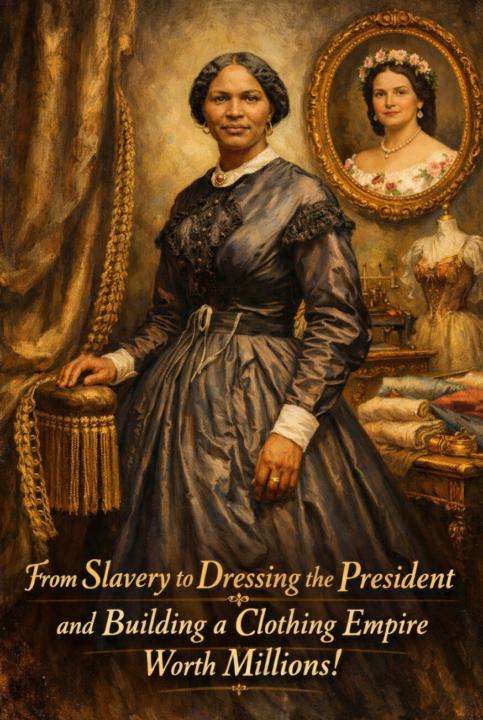
"How do you buy your freedom…when you're not allowed to keep a single dollar you earn?"
Elizabeth Keckley did it, then went on to build a million-dollar clothing empire. Born enslaved in 1818, Elizabeth watched her enslaver force her mother to work as a seamstress to support his entire household. When she was old enough, Elizabeth asked to take on the work herself — to spare her mother. Her enslaver agreed, but not out of kindness. He sent her to work in a dress shop where she served clients, built a reputation, and generated enough income to support a 17-person household — but legally, every cent belonged to the people who owned her. She had clients. She had skill. She had a business — but couldn't keep a single dollar she earned. When she asked to buy freedom for herself and her son, they named an impossible price: $1,200 — around $45,000 in today's money. But what he didn't expect was this: Keckley was so good at what she did that her clients loaned her the money to buy her freedom. Her needle created INCOME for others. Her relationships created FREEDOM for her. Once free, she moved to Washington, D.C., built a luxury dressmaking business, hired around 20 seamstresses, and dressed Mary Todd Lincoln and the political elite on both sides of the Civil War. She paid back the loan, but it took years. She exemplifies how UNSTOPPABLE Black women really are. Here's the framework I want you to steal from Elizabeth: The Keckley Leverage Method™ 1️⃣ Be great in any state. Your environment can be unjust, but your performance standard is about you. 2️⃣ Relationships are currency. Elizabeth's clients became her "investors" — the bridge between no legal wages and a $1,200 freedom loan. 3️⃣ Don't build a one-woman factory. Once she was free, she hired ~20 seamstresses and scaled. If you're the most skilled and still doing everything, you're capping your revenue at your energy. 4️⃣ Market your proximity to power. Elizabeth didn't stay a secret. She intentionally served high-profile women; their visibility became her marketing. If your clients are heavy hitters but no one knows, you're hiding your best proof.
1-30 of 88

skool.com/sywtc
Learn to land 5-6 figure corporate contracts & sell more services. This is where experts learn to sell more services!
Leaderboard (30-day)
1

+29
2

+26
3
+19
4
+14
5
+14
Powered by