
Write something

Aug 22 •
Personality and the Soul Journey
Personality is the human face of the soul. It is the collection of traits, habits, beliefs, emotional responses and protective strategies through which we experience life. Our personality influences how we relate, communicate, protect ourselves, respond to challenges and search for meaning. From a spiritual perspective, however, personality is not the entirety of who we are. It is the vehicle through which the deeper self travels. The personality asks: “How can I remain safe, accepted and in control?” The soul asks: “How can I become more conscious, loving and authentic?” Neither is wrong. The journey is about bringing them into alignment. How Personality Develops Our personality emerges through a combination of: - Natural temperament - Childhood relationships - Family and cultural influences - Experiences of acceptance and rejection - Trauma, loss and adversity - Beliefs we form about ourselves - Strategies we develop to feel safe - The choices we continue to make Some parts of the personality express our authentic nature. Other parts were formed as protection. For example: - Independence may reflect genuine confidence—or fear of needing anyone. - Kindness may come from love—or fear of disappointing people. - Achievement may express purpose—or a need to prove personal worth. - Withdrawal may honour a need for solitude—or protect against rejection. - Reassurance-seeking may express a desire for connection—or fear of abandonment. The behaviour alone does not reveal its deeper meaning. We must compassionately explore what is driving it. Personality Is the Protector, Not the Enemy We sometimes try to eliminate the parts of ourselves we dislike. Yet many difficult patterns originally developed to protect us. The withdrawn person may have learned: “If I stay distant, I cannot be hurt.” The dissociated person may have learned: “If I stop feeling, I can survive this.” The reassurance-seeking person may have learned: “If I hold on tightly, I will not be abandoned.”
0
0

Aug 3 •
How would you like your life to be different
As you connect mirrr deeply with your soul your life path and purpose declutteres automatically
1
0

Aug 2 •
Feed Your Soul
Benefits of Eating a Vibrationally Light Diet 🌿 A vibrationally light diet generally focuses on fresh, nourishing foods such as vegetables, fruits, legumes, whole grains, nuts, seeds and plenty of water. ✨ May support steady energy and vitality 🌱 Provides essential vitamins, minerals and antioxidants 🦠 Supports healthy digestion and gut function 🧠 May promote clearer thinking and concentration 💛 Can help support a more balanced mood 🔥 May reduce the heavy, sluggish feeling caused by highly processed foods 🛡️ Supports immune function and long-term health 💧 Encourages hydration and healthy elimination 🧘 May help you feel more present and connected to your body 🌸 Encourages mindful eating and greater awareness of what your body needs From a spiritual perspective, some people describe fresh, minimally processed foods as helping them feel lighter, calmer and more energetically aligned. “Vibrationally light” is not a medical term, but the physical benefits of eating a varied diet rich in whole plant foods are well supported. A l diet should still be nourishing and satisfying..
1
0
Jul 26 •
Don’t Forget to celebrate the Wins
Celebrating a few days of real commitment to myself. 🌙✨ Slowing down, listening inward, choosing peace over noise. These days weren’t about doing more — they were about being more present with my own soul. Grateful for the stillness, the reflection, and the reminder that self-connection isn’t selfish — it’s sacred. When we come home to ourselves, everything else flows better. Here’s to honoring the quiet wins. 🤍
0
0

1-26 of 26
skool.com/sync-your-soul-with-anita-9181
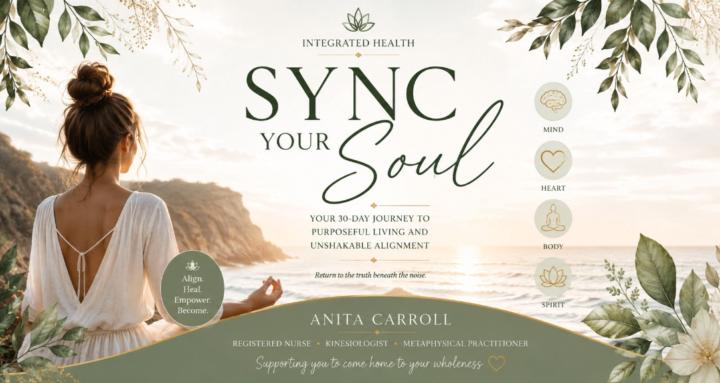
Return to the truth beneath the noise. A 30-day guided journey to purposeful living — mind, heart, body & spirit. Align. Heal. Empower. Become.
Powered by