
Write something
Apr 10 •
Build A business You Can Sell
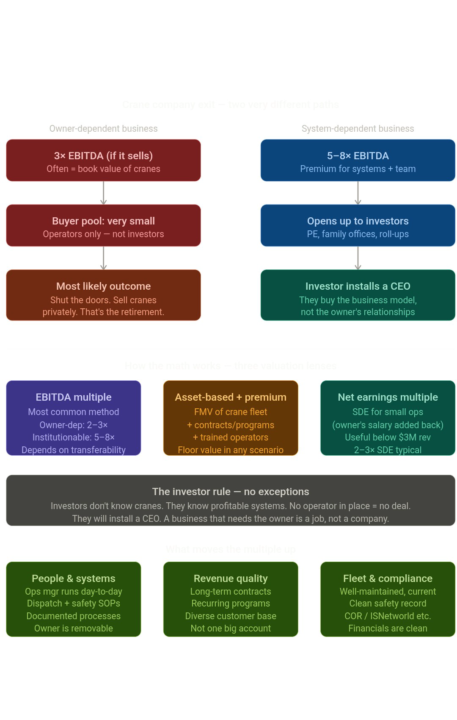
The three valuation methods and when they apply EBITDA multiple is the standard for any business a buyer expects to operate without the seller. The multiple itself is the market's opinion on risk — a business that collapses when the owner leaves is high risk, and 2–3× reflects that. A business with real management depth, recurring contracts, and documented systems is low risk, and 5–8× reflects that. In practice, most small crane companies never get to prove the higher number because they never build the infrastructure to support it. Asset-based plus a premium is the floor. Fair market value of the fleet, plus something for customer relationships, standing programs, trained operators, and safety records. This is effectively what happens when the EBITDA path doesn't work — you get your cranes back, plus a small goodwill kicker if the buyer sees value in the book. Many owners end up here anyway. Seller's Discretionary Earnings (SDE) multiples are used for very small operations where the owner's salary is a meaningful chunk of the profit. You add the salary back to get a truer picture of cash flow, then apply 2–3×. Useful for single-operator or two-crane shops. The harsh reality of the owner-dependent business Most crane companies in the small segment run this way — the owner is the salesperson, the scheduler, the estimator, the guy clients call at 6am, and the one who knows every operator's strengths and weaknesses. When that person walks out the door, the business genuinely doesn't exist in the same form. Buyers understand this immediately. The ones who would buy it are other crane operators who want to absorb the fleet and maybe a few customers — and they're not going to pay a meaningful premium over what those cranes are worth on their own. So the honest math is: if your EBITDA is $400K, a 3× multiple gets you $1.2M. If your crane fleet is worth $900K on its own, you took a lot of risk and stress for a $300K premium. Many owners figure this out late and just liquidate privately — which often nets a similar or better outcome with less hassle.
1
0
Mar 24 •
A Million Dollar Sale Pitch
The Big Shift in Sales Most businesses make the mistake of positioning themselves as the hero. They talk about: • how many cranes they own • how long they've been in business • how great their equipment is • how experienced they are But customers do not care about that first. Customers care about their problem. In sales conversations, the structure should always be: Customer = HeroYour company = Guide You are not the hero. You are the experienced guide helping them solve a problem. When you adopt this mindset, sales stops feeling like selling. It starts feeling like helping.
1
0

Mar 9 •
Business On A Mission
Most crane companies have goals, but not a real mission. They say things like: - “We want to provide great service.” - “We want to be the best.” - “We care about safety and customers.” - “We want to grow.” Those statements sound fine, but they do not help a team make decisions on Monday morning. A real mission statement should help a crane business answer questions like: - What are we trying to accomplish? - By when? - Why does it matter? - What should the office, dispatch, operators, and leadership actually do because of it? If the mission is vague, the team stays reactive.If the mission is clear, the team can align around it. In the crane industry, this matters even more because so many owners are still operating by memory, urgency, and instinct. They are booking jobs, solving problems, answering calls, moving cranes, and putting out fires, but they are not building toward a clearly defined destination. Your mission statement should fix that. What a Good Mission Statement A strong mission statement gives the business: - a clear destination - measurable targets - a deadline - a reason the work matters - a filter for decision-making - alignment for the team It should help solve problems like these: - You feel like you are winging it - You are making up priorities as you go - Your team is busy but the business is not growing - Your office and operators do not understand the bigger goal - You are hiring based on gut feeling instead of clear standards - Everybody is working hard, but not in the same direction - You are chasing short-term revenue with no long-term plan In a crane company, the leader’s job is not just to keep the jobs moving.The leader’s job is to define the destination and keep the company moving toward it. Why Most Mission Statements Fail Most mission statements fail for three reasons: 1. They are not specific They use fluffy language like “excellence,” “integrity,” or “customer service” without defining what success actually looks like.
1
0

Jan 15 •
How The(Screen-Recording System) Has Transformed Our Training
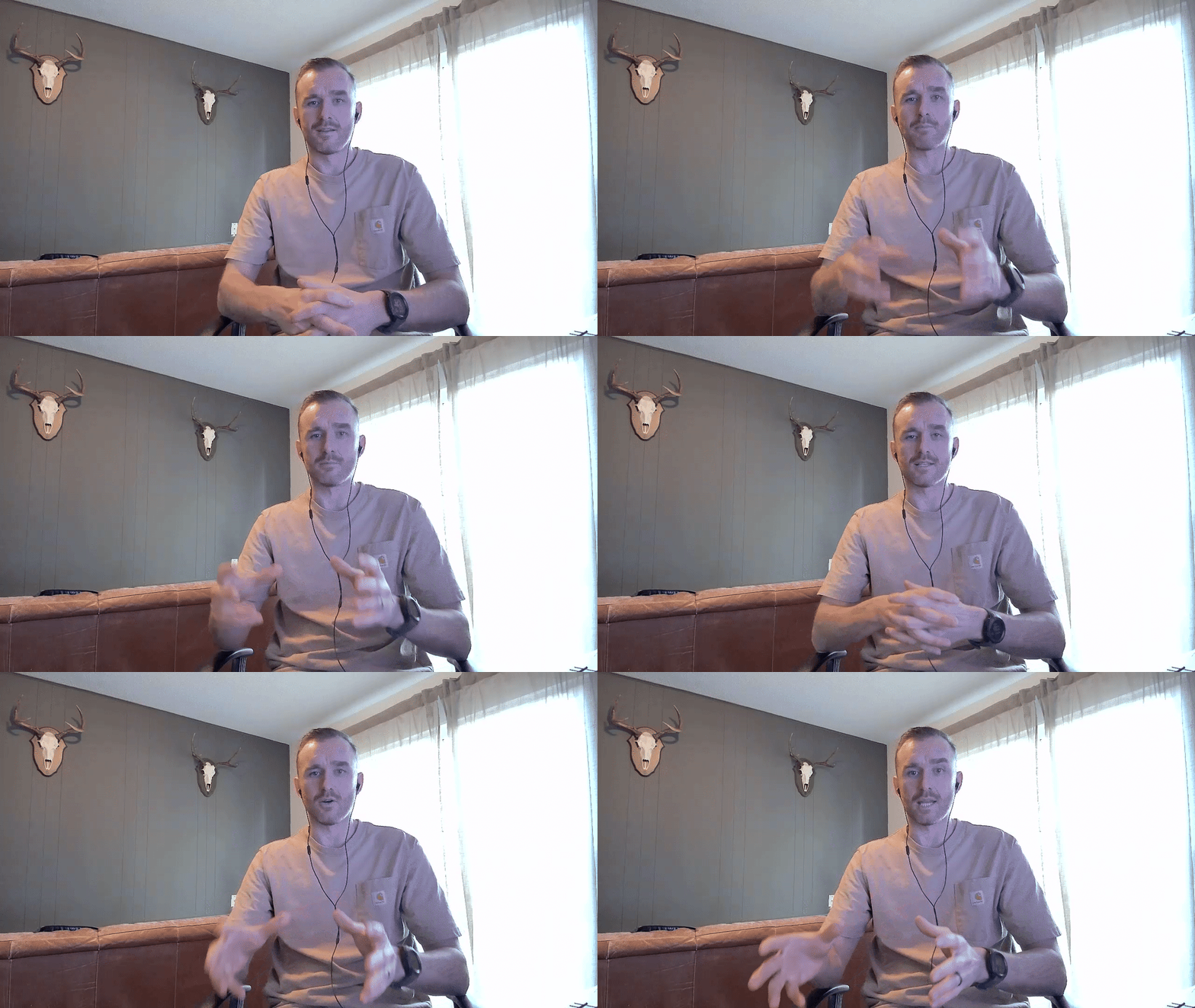
The camcorder method—screen-recording real work while verbally explaining each step—has fundamentally changed how we train and scale our office team. Instead of relying on live, one-on-one training sessions that interrupt daily operations, we now capture the exact process once, in real time, with full context. Every click, decision point, and system interaction is recorded, narrated, and stored alongside written SOPs and visual workflows. The result is clear, repeatable, and consistent training that does not depend on someone being physically present in the office. This approach works because it mirrors how the job is actually done. New employees see the screen exactly as they will see it on day one—where to click, what fields matter, what common mistakes look like, and why certain decisions are made. By slowing the explanation down during recording, we transfer not just what to do, but how to think through the task. That context is what normally takes weeks of shadowing to absorb. From an execution standpoint, the system is simple and scalable: 1. Record the screen while completing the task end-to-end. 2. Narrate every step, including assumptions, checks, and “why this matters.” 3. Save the video inside the SOP or workflow where the task lives. 4. Assign the SOP to the role—not the person. 5. Update or add a short follow-up video whenever a step changes or was missed. Over time, the training library compounds. New hires onboard themselves by following the same videos every prior employee used. If someone leaves tomorrow, the knowledge does not leave with them. A replacement can step in and reach baseline competency quickly without pulling leadership or senior staff away from revenue-generating work. Most importantly, this removes the bottleneck of the owner or manager as the trainer. I no longer have to stop my business to explain the same process again. Everything I would say is already recorded, visual, and standardized. If something improves, I record a new clip. Eventually, the system trains the employee—consistently, accurately, and faster than live training ever allowed.
0
0
Jan 1 •
Get More Crane Jobs in 2026? Fix the One Thing You’ve Been Ignoring
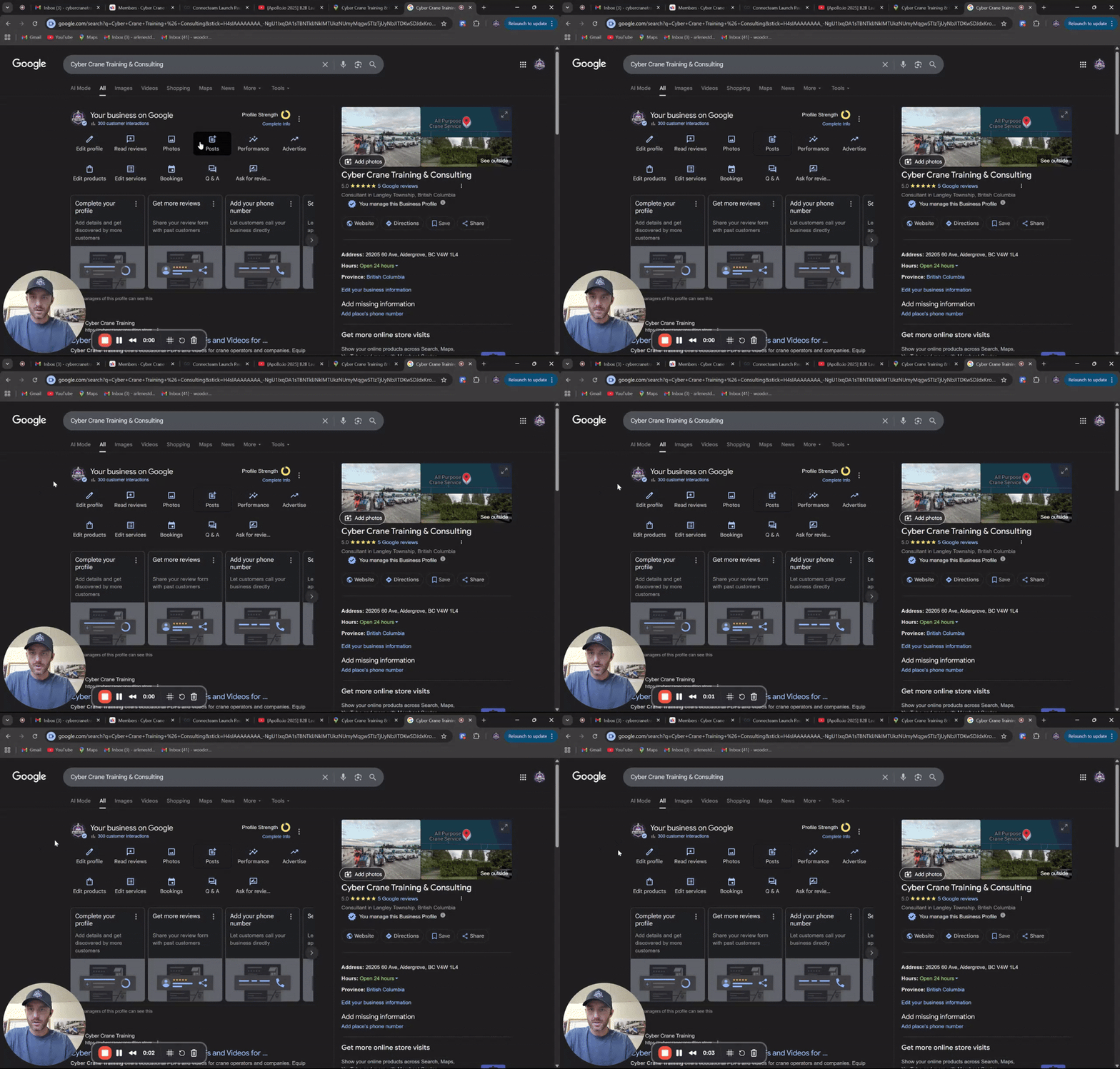
If you set up your Google profile once and forgot about it, it won’t cut it in 2026. Google AI wants maximum info to recommend you and to see you’re active. Search on chatgpt "what are the top 50 crane rental searches on google?" Copy and paste each one and put it under CUSTOM SERVICES and stack outcomes into categories so you pop up on crane searches. Add FAQs like service areas, crane types, and industries to build trust without a website visit. POST WEEKLY!!!!!!!. Your not going to get likes your going to get more calls!!!!! More profile data = more inbound leads and more booked jobs.
0
0
1-8 of 8
powered by
skool.com/simon-wallker-4002
"A community for crane owners shifting from operator grind to CEO mindset—systemize, scale, and build sustainable, profitable businesses."
Suggested communities
Powered by