
🔥
27d • DAILY CLASS
Medication Monday Myth: Thyroid Meds Fix Hypothyroidism
Why Thyroid Meds Don’t “Fix” Hypothyroidism
Most people think hypothyroidism is a hormone deficiency problem.
But the deeper truth is: Hypothyroidism is usually a safety problem.
Your thyroid slows down when your body believes it’s unsafe to run at full speed.
And no amount of T4 replacement can override a system that is intentionally hitting the brakes.
Let’s go deeper into the physiology that keeps people symptomatic even on medication.
But first let's explain what T3 & T4 are:
T4 (Thyroxine)
- This is the storage or inactive thyroid hormone.
- Your thyroid makes mostly T4.
- It doesn’t do much on its own, it’s like having money in a savings account.
- Your body has to convert T4 into T3 for it to actually work.
Think of T4 as the hormone your body stores so it can use it later.
T3 (Triiodothyronine)
- This is the active thyroid hormone, the one that actually runs your metabolism.
- T3 is what your cells use to:
- make energy
- regulate temperature
- support mood
- grow hair
- run digestion
- stabilize heart rate
- maintain menstrual cycles
- Most T3 is made outside the thyroid, in the liver, gut, and inside cells.
Think of T3 as the hormone your body spends to actually function.
The Key Insight
You can have plenty of T4 (especially if you’re taking medication)…
but if you’re not converting it into T3, or your cells aren’t responding to T3
you’ll still feel hypothyroid.
This is the entire reason people can have “normal labs” and still feel awful.
1. The Thyroid Isn’t the Boss, It’s the Messenger
We treat the thyroid like the CEO.
It’s actually middle management.
The real “bosses” are:
- the immune system
- the mitochondria
- the HPA axis
- the nutrient status
- the inflammatory load
- the metabolic safety sensors
When any of these systems detect threat, they downshift metabolism, and the thyroid simply carries out the order.
This is why replacing T4 doesn’t fix the underlying signal.
2. T4 Is a Prohormone, Not the Active Hormone
Levothyroxine gives you T4.
But T4 is basically a storage form.
The real metabolic driver is T3, and T3 is produced locally inside tissues.
Here’s the deeper truth:
Each tissue controls its own T3 levels independently.
Your brain, liver, muscles, gut, and immune system all decide how much T3 they want, regardless of what’s in your bloodstream.
So you can have “normal” T3 on labs while your cells are starving for it.
3. Conversion Isn’t Just a Nutrient Problem, It’s a Safety Algorithm
People think poor conversion is about low selenium or zinc.
That’s part of it, but the deeper mechanism is this:
When the body senses threat, it intentionally reduces T3 production to conserve energy.
Threat can be:
- chronic stress
- blood sugar swings
- inflammation
- infection
- trauma
- sleep deprivation
- calorie restriction
- overtraining
- environmental load
- chronic pain
- emotional overwhelm
Your body isn’t broken.
It’s protecting you.
4. Reverse T3 Isn’t “Bad," It’s a Brake Pedal
Reverse T3 is not a mistake.
It’s a metabolic safety brake.
When your body feels unsafe, it increases reverse T3 to slow you down so you don’t burn through resources you don’t have.
This is why people can take thyroid meds and still feel like they’re moving through molasses.
The medication is pushing the gas.
The physiology is slamming the brakes.
Guess who wins?
The brakes.
5. Cellular Resistance: The Hidden Layer Most People Never Hear About
Even if you have enough T3, your cells may not respond to it.
Why?
Because thyroid hormone receptors are exquisitely sensitive to:
- cortisol
- inflammation
- mitochondrial stress
- nutrient depletion
- chronic illness
- toxins
- trauma physiology
This is why people say, “My labs look great, but I feel awful.”
The hormone is present.
The receptors are offline.
6. Hashimoto’s: The Immune System Is the Real Story
Most hypothyroidism is autoimmune.
But the thyroid isn’t the problem, the immune system is confused.
And here’s the deeper truth:
You can’t fix an immune miscommunication with a hormone replacement.
Thyroid meds don’t:
- reduce antibodies
- calm immune activation
- repair gut permeability
- lower inflammation
- address triggers
- restore tolerance
- heal the root cause
They just replace the hormone the thyroid can’t produce.
Helpful? Yes.
Sufficient? Rarely.
7. Mitochondria Decide Your Metabolic Speed, Not Your Thyroid
This is the deepest layer.
Your mitochondria, the energy factories, decide how fast you’re allowed to live.
When they sense danger, they downshift metabolism before the thyroid ever shows it.
This is why people with chronic stress, trauma, infections, mold exposure, or long‑term inflammation often develop “hypothyroid symptoms” long before labs change.
The mitochondria slow down.
The thyroid follows.
The medication replaces the hormone.
But the mitochondria stay in low‑power mode.
So symptoms persist.
Thyroid meds aren’t the villain.
They’re just incomplete.
They replace a hormone.
They don’t repair the system that decided to slow down in the first place.
When you understand the deeper physiology, you stop blaming your thyroid
and start supporting the body that’s been trying to protect you all along.
What Functional Medicine Actually Does for Hypothyroidism
Functional medicine doesn’t ask,
“How do we raise T4?”
It asks, “Why did the body decide to slow down in the first place?”
Because hypothyroidism is rarely a thyroid problem.
It’s a system problem with the thyroid caught in the crossfire.
Here’s the real process, the one that actually moves the needle.
1. Identify the Root Pattern: Autoimmune, Conversion, or Cellular Resistance
Functional medicine starts by mapping the type of hypothyroidism:
A. Autoimmune (Hashimoto’s)
The immune system is attacking the thyroid.
The thyroid is the victim, not the culprit.
B. Conversion Issue (T4 > T3)
The body is under‑converting because it feels unsafe.
C. Cellular Resistance
Hormone is present, but cells aren’t responding.
Each pattern has a different physiology and a different plan.
Traditional medicine treats them all the same.
Functional medicine doesn’t.
2. Assess the “Big 6” Drivers of Thyroid Dysfunction
These are the six systems that actually determine thyroid function:
A. Inflammation
Inflammation blocks conversion and increases reverse T3.
B. Blood Sugar Stability
Volatility = cortisol spikes = suppressed thyroid signaling.
C. Nutrient Status
You cannot make or activate thyroid hormone without:
• iron
• selenium
• zinc
• iodine (in the right amount)
• B12
• vitamin D
• magnesium
D. Gut Integrity
70% of T4 > T3 conversion happens in the gut.
Leaky gut = immune activation = Hashimoto’s flare.
E. HPA Axis Stress Load
Chronic stress tells the body to downshift metabolism.
F. Mitochondrial Capacity
If mitochondria are in “danger mode,” metabolism slows regardless of labs.
Functional medicine evaluates all six, because the thyroid is downstream of all six.
3. Look Beyond TSH: The Full Thyroid Panel
Functional medicine doesn’t stop at TSH.
It looks at the actual physiology:
- Free T4
- Free T3
- Reverse T3
- TPO antibodies
- TG antibodies
- SHBG (a proxy for cellular thyroid activity)
- Ferritin
- CRP
- Cortisol rhythm
- Insulin
- Vitamin D
- B12
- Selenium, zinc, magnesium
- Lipids (thyroid affects cholesterol clearance)
This isn’t “more labs for the sake of labs.”
It’s mapping the system.
4. Calm the Immune System (Hashimoto’s)
If antibodies are elevated, functional medicine focuses on:
- gut repair
- reducing inflammatory load
- identifying triggers (gluten, dairy, infections, stress)
- restoring immune tolerance
- stabilizing blood sugar
- supporting micronutrients
- improving sleep
- reducing environmental load
Because you cannot medicate your way out of an immune miscommunication.
5. Restore Conversion (T4 > T3)
Functional medicine supports the enzymes that convert T4 into T3 by addressing:
- stress physiology
- inflammation
- nutrient deficiencies
- chronic infections
- liver function
- gut health
- calorie restriction or overtraining
- sleep deprivation
This is how you get the active hormone back online.
6. Repair Cellular Sensitivity
This is the layer almost no one talks about.
Functional medicine improves cellular response to thyroid hormone by:
- lowering cortisol
- reducing inflammation
- supporting mitochondrial function
- stabilizing blood sugar
- improving micronutrient status
- addressing trauma physiology
- reducing oxidative stress
Because you can have perfect labs and zero cellular response.
7. Rebuild Safety in the System
This is the deepest layer.
Functional medicine asks:
“What made your body feel unsafe enough to slow down?”
And then it works to restore safety through:
- nervous system regulation
- circadian repair
- metabolic stability
- inflammation reduction
- gut healing
- mitochondrial support
- emotional and trauma‑pattern unwinding
- environmental detoxification
- restoring rest, nourishment, and capacity
When the body feels safe, the thyroid stops hitting the brakes.
The Functional Medicine Reframe
Thyroid meds replace a hormone.
Functional medicine restores the system that makes the hormone matter.
It’s not about “fixing the thyroid.”
It’s about rebuilding the physiology that allowed the thyroid to struggle in the first place.
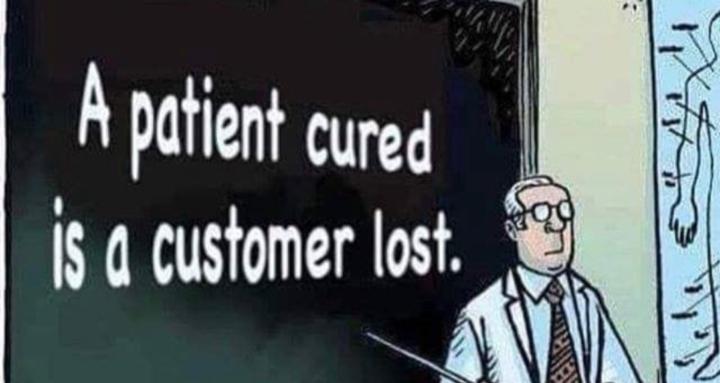
Follow the Dollars: The Thyroid Edition
If fixing hypothyroidism were as simple as replacing T4, the industry built around not‑fixing it wouldn’t exist. Here’s the quiet part no one says out loud:
1. Levothyroxine is one of the most prescribed drugs in the U.S.
Not because it solves the problem
but because it creates a lifelong customer.
When you give someone a medication that replaces a hormone
but doesn’t address the reason the hormone dropped
you guarantee they’ll need it forever.
That’s not conspiracy.
That’s business.
2. The system financially rewards “normal labs,” not restored health.
TSH is cheap to test.
Levothyroxine is cheap to prescribe.
Insurance reimburses both.
But the things that actually improve thyroid function
nutrient repletion, gut repair, stress physiology, immune modulation
aren’t billable in the same way.
So the system keeps doing what pays, not what works.
3. Hashimoto’s is the real root for most people, and autoimmune care isn’t profitable.
There’s no blockbuster drug for:
- reducing inflammation
- healing the gut
- stabilizing blood sugar
- lowering stress load
- restoring immune tolerance
So the system doesn’t invest in it.
Instead, it treats the thyroid like the problem
because the thyroid has a billable solution.
4. The industry makes money on the symptom loop:
Cold
Tired
Foggy
Anxious
Gaining weight
Losing hair
Depressed
Inflamed
Each symptom becomes a new prescription.
A new specialist.
A new copay.
A new revenue stream.
When you treat downstream symptoms instead of upstream physiology,
you don’t just miss the root cause, you create a profitable cycle.
5. The real fix doesn’t make anyone rich.
Supporting:
- mitochondria
- micronutrients
- gut integrity
- immune balance
- stress physiology
- sleep
- metabolic safety
doesn’t generate recurring revenue.
But it generates something the system can’t monetize: actual health.
If you want to understand your thyroid outside the system that profits from keeping you confused, I'm glad you're here.
I follow the physiology.
I follow the patterns.
And yes, I follow the dollars, because the money trail always reveals the truth.
3
4 comments
Medication Monday Myth: Thyroid Meds Fix Hypothyroidism
skool.com/simcha-healthcare-3222
What happens when your body begins to fail, and no one can tell you why? What happens when you're sick & your doctor tells you everything is normal?
Leaderboard (30-day)
1

🔥
+19
2

+14
3

+12
4

🔥
+11
5

🔥
+8
Powered by