User
Write something
Sometimes, it likely IS to good to be true
Quick PSA. I spend a lot of time on X looking for real value to bring back to this community. Along the way, I’ve gotten pretty good at spotting the difference between content that’ll actually help you and content that’s just fishing for clicks. Sharing the cheat sheet because I know a lot of you are newer to this and the noise can be overwhelming. A few patterns to watch for in the lower-quality stuff: 1. The “this guy literally” hook. “This guy literally broke down the simplest way to make money with X.” When a post leads with that energy, it’s usually more about the click than the content. 2. A screenshot of someone else’s success. A YouTube dashboard, a Stripe screenshot, a follower count. Look closely, it’s often lifted from someone else to imply the poster is the one winning. 3. A vague “simple system.” “You don’t need fancy gear, just a system.” Cool, what’s the system? Real teachers actually tell you. Hype posts keep it just out of reach. 4. The bait click. Link goes somewhere that turns out to be AI filler, recycled advice, or a funnel into a paid course. 5. The cartoon thumbnail. Yellow background, cartoon dude with a phone, floating dollar bills, “EASY TO START” tags. Once you see the pattern, you can’t unsee it. Now, here’s the good news, real signal looks really different: • Someone showing their actual workflow with their actual work • Free educational content with no upsell (like the Karpathy video I posted yesterday) • People being honest about what didn’t work, not just what did • Specific, technical, sometimes boring details The truth is real revenue comes from solving real problems for real people who pay you real money. That path is slower and less sexy than “passive income with AI,” but it’s the one that actually works. And the good news is, once you train your eye for the real stuff, you’ll find a ton of it out there. There are seriously brilliant builders sharing for free every single day. Build real things. Trust real signal. You got this What’s the best piece of free content you’ve found lately? Drop a link below, let’s share the good stuff
New Achievement! “Let’s Get Serious”
Alright y’all, it’s time to get the most out of this. I’ve got plans and things figured out. And it starts Friday. Starting Friday, the first 10 people get access to my guarantee differently than anyone else will. A 21-day sprint where you ship a real product, ready to earn your first dollar. Working payment. Auth. Database. Deployed. Real. Or I work with you 1:1 until you do. Plus weekly live office hours, my starter repo, my Cursor rules, my CLAUDE.md, and the prompt library I actually use. This is for you if: • You’re stuck in prototype hell with Cursor or Claude Code • You can sell but you can’t ship • You haven’t started but you’re ready to This isn’t for you if: • You want passive income without the work • You’re expecting “$10K MRR in 30 days” promises (those are scams) Friday morning, doors open. 10 spots. Drop a comment if you have questions. I’ll answer all of them before Friday. What’s different for the first 10? They get a lifetime discount, locked in at $47/mo. After the first 10 fill or June 1 hits, the price goes up. Permanently. This is a thank you to those who started with me from the beginning. This starts Friday! Let’s build. P.S. If you’ve been lurking, I’m so happy you’re here, this is your shot. Comment below or DM me.
1
0
Andrej Karpathy$2,000 masterclass. For free
If you don’t know who Andrej Karpathy is, here’s the short version: he was a founding member of OpenAI, ran AI at Tesla, and now runs his own AI education company. The dude is a literal legend in the space. He just dropped a 3.5 hour video called “Deep Dive into LLMs like ChatGPT” and it’s free on YouTube. Here’s why it actually matters for us: Most of us are out here vibe coding, prompting, building stuff, and hoping it works. When it breaks, we don’t really know why. We just try a different prompt and pray. This video fixes that. It’s not about prompts. It’s not about tricks. It’s about understanding the actual machine you’re talking to every single day. He covers: • How these models actually learn (pretraining) • Why ChatGPT hallucinates and what to do about it • Tool use, memory, and how the model “thinks” • Why models are weirdly good at hard stuff and weirdly bad at simple stuff (he calls it “jagged intelligence”) • RLHF, AlphaGo, DeepSeek, the whole stack The reason I’m pushing this so hard: if you understand even the basics of what’s happening under the hood, your prompts get sharper, your debugging gets faster, and you stop being surprised when Claude messes up the same thing 3 times in a row. You don’t need to be technical. He literally made it for a general audience. Watch it once just to take it in. Watch it twice to actually start applying it. Here’s the link: https://www.youtube.com/watch?v=7xTGNNLPyMI If you’re serious about going from vibe coder to actual builder, this is one of the single best free resource I’ve seen this year.
1
0
Unlikely to happen to 99.99% of us. But if we eventually go big...
Claude-powered AI coding agent deletes entire company database in 9 seconds ... sandboxing is a useful tool to help prevent this. Overall: - The risk for solo users is low but real. - The danger comes from giving the AI too much access, not from it acting randomly. - Biggest problems are accidental deletions, bad commands, and weak backups. - Safer use means limiting permissions, reviewing actions, and keeping backups separate.
Straight from the TOP
Boris Cherny works at Anthropic. He literally built Claude Code. he sat down and walked through his actual workflow, and it’s kind of nuts Here’s the part that hit me hardest: Most people use Claude Code like a fancy autocomplete. Boris uses it like he’s managing a whole team of employees. That right there is the difference between people building cool little projects and people building stuff that actually makes money. A few things he does that I’m stealing: He runs like 10 Claudes at once. Not one at a time. He’s got terminals open, browser tabs open, even sessions running on his phone. He’s not waiting on Claude. Claude is waiting on him. Wild reframe. He never lets Claude code first. He plans first. Always. Talks through the whole approach with Claude before a single line gets written. Then he hits go and Claude usually nails it on the first try. The biggest reason builds go sideways? Letting Claude run wild before you’ve actually agreed on what you’re building. He keeps a “memory file” for Claude. Anytime Claude messes something up, instead of fixing it 50 times, he just writes down the rule once. Now Claude remembers. Genius and obvious at the same time. If he does something twice, it becomes a shortcut. Same prompt twice? Turn it into a command. Boom, never type it again. The whole vibe of his setup is less “I’m using AI” and more “I’m running a small company of AI workers.” That’s the shift. And honestly, it’s the same shift I’m trying to make in my own builds. Watch the full 30-min workshop here (worth every second, especially if you’re newer to this stuff): https://www.youtube.com/watch?v=eWUjyyMdsow
1
0
1-30 of 35
powered by
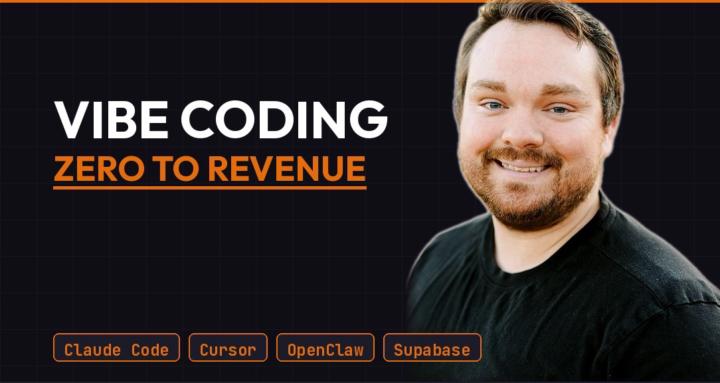
Vibe coding : Zero to Revenue
skool.com/service-righter-5590
Build with Claude Code, Cursor, OpenClaw, Supabase & more. No coding experience needed. From zero to your first paying customer.
Build your own community
Bring people together around your passion and get paid.
Powered by