
Apr 13 (edited) • Ideas for Sensory Ladders
Any comments on how to improve this...thoughts?
What Sets Sensory Ladders® Apart from Other Self-Regulation Approaches
There is growing interest in tools and approaches that help children, young people and adults understand their feelings, manage distress, and find ways to move through difficult moments. That is a positive shift. It reflects a wider recognition that regulation matters, that lived experience matters, and that support needs to be more thoughtful, more relational, and more respectful.
At the same time, not all self-regulation approaches are built in the same way.
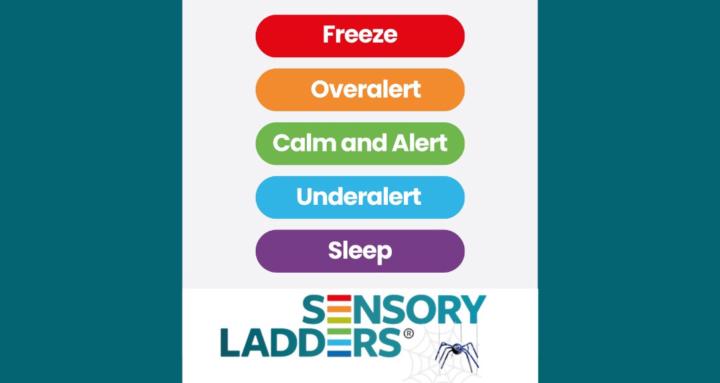
Some tools are designed around broad categories or stages. They may group experience into colour zones, emotional levels, or expected states, then suggest a matching strategy. These approaches can offer helpful structure, especially when someone is first beginning to notice patterns in their day. They can give adults and teams a shared language. They can also support consistency across home, school, and care settings.
But many of these approaches remain adult-defined. They often begin with an external framework and ask the person to fit themselves into it.
Sensory Ladders® were developed differently.
Sensory Ladders® are not simply a regulation chart, a behaviour support tool, or a list of calming activities. They are a co-produced, person-led way of exploring how sensory experience, arousal, emotion, action, meaning, and participation connect in daily life. They begin not with a category, but with the person.
That distinction matters.
Starting with the person, not the framework
What sets Sensory Ladders® apart most clearly is that they do not ask, “Which box are you in?” They ask, “What is this like for you?”
That change in starting point opens up a very different kind of conversation.
Rather than reducing experience to fixed labels such as calm, over alert, or dysregulated, Sensory Ladders® make space for the person to describe their own internal world in their own way. For one person, early signs of overload may feel like buzzing skin, muddled thoughts, or needing to move. For another, it may feel like going quiet, losing words, or suddenly needing to leave. For someone else, it may not feel distressing at first at all. It may feel exciting, fast, funny, intense, or confusing.
Sensory Ladders® allow those differences to be seen.
They are not about teaching someone to perform a standard version of regulation. They are about supporting understanding of a unique sensory pattern and creating a shared language around that pattern over time.
More than regulation
Another important difference is that Sensory Ladders® are not only about helping someone calm down.
Many self-regulation tools focus mainly on reducing distress or bringing someone back to a socially acceptable state. While safety and settling matter, everyday life is about much more than appearing calm. It is about being able to join in, connect, rest, learn, play, work, recover, create, and participate in ways that are meaningful.
Sensory Ladders® were designed with participation in mind.
They help us ask not only, “How do we lower distress?” but also, “What supports this person to do what matters to them?” That may be getting through the school day with dignity. It may be joining a family meal. It may be coping with the sensory demands of work, friendship, travel, intimacy, study, grief, parenting, or recovery.
This means the focus shifts from managing the person to understanding the fit between the person, the environment, the activity, and the support around them.
Co-produced, not prescribed
Sensory Ladders® are also different because they are built with people, not simply for them.
Many self-regulation resources come ready-made. A professional downloads them, prints them, fills them in, or explains them. Even when they are used kindly, they can still sit mainly in adult hands.
Sensory Ladders® are strongest when they are co-created through conversation, reflection, noticing, trial, revision, and shared learning. The ladder grows through relationship. It develops through listening to what the person says, what their body shows, what their actions communicate, and what daily life reveals.
That means the process is just as important as the finished tool.
A person may choose their own words, images, colours, symbols, objects, or examples. They may identify what helps at different points, what makes things harder, who helps, what kind of support feels intrusive, and what kind feels safe. Their Ladder can then be revisited and changed as life changes.
This is one reason Sensory Ladders® often feel more respectful and more meaningful. They do not impose a single interpretation of experience. They invite personal meaning-making.
Relational at their core
Self-regulation is often talked about as if it is something a person should do alone. That can accidentally create shame.
It can suggest that success means becoming independent from support, that needing another person is a sign of failure, or that distress is simply a skill deficit to be corrected.
Sensory Ladders® take a more relational view.
They recognise that regulation is shaped through connection, safety, co-regulation, familiarity, trust, timing, and context. Many people do not move toward safety because someone handed them a strategy card. They move toward safety because they were understood, given space, supported with care, and offered the right kind of sensory and relational input at the right time.
A Sensory Ladder® can include sensory supports, environmental changes, relational responses, meaningful occupations, and practical adaptations. It may show that what helps is not only deep pressure, music, movement, or quiet, but also a known person, reduced language, slower pacing, humour, leaving early, clearer transitions, or permission to opt out.
That makes the Ladder more human.
It acknowledges that support is not only about tools. It is about how we are with each other.
Rooted in sensory experience
A further difference is that Sensory Ladders® explicitly honour the role of sensory integration and sensory processing in daily life.
Some self-regulation approaches focus mainly on emotions, thoughts, or behaviour. Sensory Ladders® recognise that for many people, the body tells the story first. The nervous system may already be working hard before the person has words for what is happening. The environment may already be overwhelming, understimulating, unpredictable, painful, or effortful in ways that are not obvious from the outside.
Sensory Ladders® help bring that sensory reality into view.
They help people notice the sensory conditions that support participation and the sensory mismatches that make participation harder. In doing so, they move us away from blaming actions and toward understanding the embodied experience underneath them.
This is especially important for people whose communication may be missed, misread, or reduced to labels such as challenging, avoidant, non-compliant, anxious, or dysregulated. Sensory Ladders® can offer a gentler and more accurate route into understanding.
Flexible, living tools
Another thing that sets Sensory Ladders® apart is that they are not meant to stay static.
A printed chart can easily become fixed. It can end up describing who a person used to be, what once helped, or what adults assume is still true. Real life does not stay still like that, and neither do people.
Sensory Ladders® are living tools.
They can change with age, context, health, relationships, trauma, development, confidence, hormonal change, culture, demands, and new understanding. What helped in early childhood may not fit adolescence. What works at home may not work at school. What supports someone in recovery may not match what they need in a busy workplace or during family stress.
Because Sensory Ladders® are designed to evolve, they are more able to hold complexity and change.
This makes them especially valuable across the lifespan.
Not about compliance
Perhaps most importantly, Sensory Ladders® are not designed to make a person look settled for the comfort of others.
They are not about pushing someone toward a “good” state, forcing emotional conformity, or rewarding stillness over authenticity. They are not there to hide distress, silence difference, or train people out of their sensory reality.
Instead, they are there to support shared understanding, reduce shame, increase safety, and help people participate in ways that feel possible and meaningful.
That is a very different purpose.
It shifts the question from, “How do we get this person under control?” to, “How do we understand what is happening here, respect the person’s experience, and respond in ways that genuinely help?”
That is why language matters.
And that is why Sensory Ladders® matter.
A more respectful way forward
In practice, many approaches can be useful when they are used thoughtfully. This is not about dismissing every other regulation model. It is about recognising that some tools offer a starting point, while others offer a deeper, more collaborative framework for understanding lived experience.
Sensory Ladders® sit in that deeper space.
They honour the body.They honour context.They honour relationship.They honour participation.Most of all, they honour the person.
That is what sets them apart.
They do not just organise support around someone. They help create understanding with them.
And in a world where too many people are still misunderstood, managed, or spoken for, that difference is not small at all.
5
7 comments
Any comments on how to improve this...thoughts?
skool.com/sensory-project
All about Sensory Ladders, Spiders, Trackers and Grids. Tools for home, work and school - making meeting sensory needs everyone’s business.
Powered by