
Write something

May 19 •
Deschooling: The Step Nobody Talks About
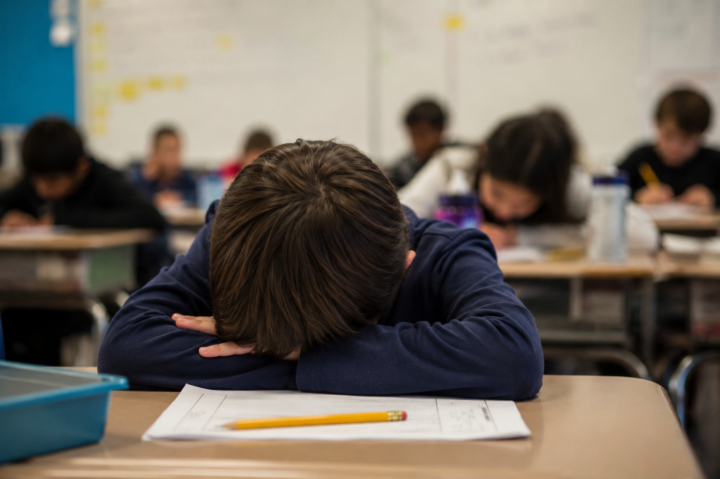
When most families make the leap into homeschooling or unschooling, they spend a lot of time thinking about what they are going to do. What curriculum to buy, what their schedule will look like, how they will cover all the subjects, whether they are doing enough. What almost nobody talks about is the step that needs to come first. Deschooling. What It Actually Is The term was coined by philosopher Ivan Illich in his 1971 book Deschooling Society, but the concept has been expanded and lived by unschooling families ever since. In its simplest form, deschooling is the period of transition, for both children and parents, during which the deeply conditioned beliefs about what learning is supposed to look like begin to loosen their grip. It is the process of unlearning the idea that learning only counts when it looks like school. John Holt, one of the earliest and most influential voices in the self-directed learning world, observed that children who leave school often need significant time to simply decompress before their natural curiosity begins to surface again (Holt, 1964). The stress response that school can create, the performance anxiety, the learned helplessness, the association between learning and evaluation, does not dissolve overnight. It needs time, safety, and the consistent experience of not being assessed in order to begin to heal. A commonly cited guideline in the unschooling community is one month of deschooling for every year a child spent in conventional school. There is no peer reviewed study behind that specific number, but the principle it points to is well supported: this takes longer than most people expect, and rushing it undermines everything that comes after. The Part Nobody Warns You About Here is what catches most families off guard. Deschooling is not just for the kids. Parents who grew up inside the conventional school system, which is almost all of us, carry an enormous amount of internalized belief about what education is supposed to look like. We were assessed, ranked, scheduled, and rewarded or penalized for compliance for the majority of our childhoods. That shapes us. It shapes what we instinctively reach for when we feel anxious. It shapes what we interpret as progress and what we interpret as falling behind.
0
0
May 17 •
When the People You Love Don't Get It
Can I be honest with you about something? Some of my hardest days as an unschooling parent have had nothing to do with my kids. They have had everything to do with the look on someone's face when I explain what our days look like. The quiet pause before a family member asks "but what about socialization?" The offhand comment from a stranger that lands harder than it should. The creeping worry that the people who love us think we are getting this wrong. I don't think I'm alone in this. And I don't think it's weakness. I think it's what happens when you are doing something that genuinely goes against the grain, while caring deeply about getting it right. So let's talk about it, because the research here is actually really interesting, and also because I think we all just need to hear that this part is hard for everyone. Why Judgment Hits So Hard Human beings are wired for belonging. Neuroscientist Matthew Lieberman, author of Social, argues that our need for social connection is as fundamental as our need for food and shelter, and that social pain, including the pain of being judged or excluded, activates the same neural pathways as physical pain (Lieberman, 2013). In other words, when a family member questions your choices or a stranger raises an eyebrow, the discomfort you feel is not oversensitivity. It is your nervous system doing exactly what it was designed to do. What makes this particularly complicated for homeschooling families is that the judgment often comes from people who love us and are genuinely worried. Not from malice, but from a framework that most of us were raised inside and never had reason to question. School is so deeply embedded in our cultural understanding of childhood that choosing something different can read, to people on the outside, as risk. As neglect, even. It is worth remembering that their worry usually comes from the same place ours does. Love. The Confidence Gap Is Real, And Normal Research on minority stress, originally developed to understand the experience of marginalized groups navigating dominant culture, offers a surprisingly useful lens here. Psychologist Ilan Meyer found that people whose lives differ significantly from the cultural mainstream carry a particular kind of chronic low-grade stress, not from anything going wrong in their own lives, but simply from the ongoing experience of being different in a world that keeps reminding them of it (Meyer, 2003).
0
0
May 16 •
What Happens When We Push Kids to Read (And What to Do Instead)
Picture this. A child who used to beg for bedtime stories. Who carried books around the house, who wanted one more chapter, always one more chapter. And then school happened, or a well-meaning adult happened, or a reading level assessment happened — and somewhere in the pressure and the extra practice and the quiet message that they were behind, that child stopped loving books entirely. Maybe that child is yours. Maybe that child was you. This is one of the most common and most heartbreaking things I hear from families in the unschooling world, and it is also one of the most misunderstood. Because when a child resists reading, the instinct of almost every caring adult is to intervene. To add more practice. To find the right program. To make it a priority. And almost every time, it makes things worse. Here is what the research says is actually happening — and what it tells us to do instead. What Pressure Does to a Learning Brain When a child who is struggling with reading is subjected to repeated pressure, extra drills, and the experience of being identified as behind, something very specific happens neurologically. The activity becomes associated with stress, failure, and the loss of autonomy, three conditions that directly suppress the brain's capacity for learning and curiosity. Edward Deci and Richard Ryan's decades of research on motivation show that human beings have three core psychological needs: autonomy, competence, and connection. When all three are violated at once, as they are when a child is pressured into an activity they find difficult, in front of adults who are visibly worried about them, intrinsic motivation does not just decrease. It can collapse entirely, sometimes for years (Deci & Ryan, 2000). This is not a character flaw in the child. It is not laziness or defiance. It is a predictable neurological response to conditions that are fundamentally incompatible with joyful learning. Researchers call it motivation damage, and the painful irony is that it is almost always caused by the very interventions designed to help.
0
0
May 13 •
How Children Learn Best: What the Research Actually Says
If you have ever felt quietly certain that there must be a better way than pressure, compliance, and curriculum, you are not alone, and you are not wrong. Decades of research in developmental psychology, motivational science, and cognitive neuroscience point consistently in the same direction. Here is what the evidence actually says about how children learn best. 1. They Learn Best When They Feel Safe and Connected Before any learning can happen, the brain needs to feel safe. Developmental psychologist John Bowlby's foundational work on attachment theory established that secure relationships with caregivers are the single most important factor in healthy development — cognitive, emotional, and social (Bowlby, 1969). A child whose attachment needs are met is neurologically open, curious, and willing to take the risks that learning requires. Gordon Neufeld, author of Hold On to Your Kids, extended this research to show that children are most open to influence and guidance from the adults they feel most securely connected to (Neufeld & Maté, 2004). Put simply: connection is not separate from learning. It is the foundation that makes learning possible. 2. They Learn Best Through Intrinsic Motivation Edward Deci and Richard Ryan's Self-Determination Theory — one of the most cited frameworks in all of psychology — identifies three core human needs: autonomy, competence, and relatedness. When these needs are met, intrinsic motivation flourishes naturally. When they are violated through pressure, control, or external reward, motivation collapses — even in children who were previously enthusiastic (Deci & Ryan, 2000). In a landmark series of studies, Deci and colleagues found that offering external rewards for activities children already enjoyed decreased their subsequent interest in those activities — a phenomenon known as the overjustification effect (Deci, Koestner & Ryan, 1999). Learning that is driven from the inside out is not only more enjoyable — it is more durable, more transferable, and more likely to continue into adulthood.
0
0
May 11 •
How to Invite Your Child Into New Topics Without Force, Bribery, or a Curriculum
An evidence-based guide for unschooling families One of the most common fears parents carry into unschooling sounds something like this: *"What if my child never wants to learn math? What if they spend their whole childhood doing only one thing? What if I'm failing them by not making them learn the things they need to know?"* These are not small fears, and they deserve a real answer — not just reassurance, but actual evidence. The good news is that developmental science, motivational psychology, and decades of research on how children learn all point in the same direction: coercion is one of the least effective ways to create lasting learning, and there are gentle, relationship-centered approaches that work far better. This article will walk you through what the research says and what it looks like in real life. --- First, Understanding Why Coercion Doesn't Work Before we talk about what to do, it helps to understand why force and pressure consistently backfire — even when they appear to produce short-term results. Psychologists Edward Deci and Richard Ryan spent decades developing what is now one of the most cited frameworks in all of psychology: **Self-Determination Theory (SDT)**. Their research consistently shows that human beings have three core psychological needs: autonomy (the feeling of choice and ownership over one's actions), competence (the feeling of being capable and effective), and relatedness (the feeling of being connected to others who care about them). When these needs are met, intrinsic motivation — the kind that sustains lifelong learning — flourishes naturally. When they are undermined, motivation collapses, even if compliance temporarily remains (Deci & Ryan, 2000). In a landmark series of studies, Deci and colleagues found that offering external rewards for activities children already enjoyed *decreased* their subsequent interest in those activities — a phenomenon known as the **overjustification effect** (Deci, Koestner & Ryan, 1999). In other words, turning learning into something children do *for* a reward (including the reward of parental approval or avoiding conflict) can actively erode their natural curiosity.
0
0
1-7 of 7
powered by
skool.com/roots-before-wings-homeschool-3051
Grounded in connection, rich with creativity. A community for families who want to let childhood unfold at its own beautiful pace.
Suggested communities
Powered by