

8h •
Community update
You might have noticed I’ve been a bit quieter here recently. I wanted to be transparent with you about what’s going on. At my university, all research professor roles have been placed at risk of redundancy, and I’m currently in the middle of that consultation process. That means my position is not redundant, but I do need to invest a lot of time and energy into navigating this, demonstrating impact, and doing everything I can to secure my role. As you can see, even professorial roles aren’t 100% secure so chose your career paths wisely. Because of that, I’ve had to slow down a little on public content and engagement. The good news is that our inner circle continues, and my commitment to the people who’ve chosen to be closer to my work hasn’t changed. In many ways, this process is reinforcing why communities like this matter so much to me. Thank you for your understanding, patience, and support while I move through this chapter. I’m not going anywhere – just operating with a bit less bandwidth while the process runs its course. P.S. if you want to join inner circle, have a look here: skool.com/research-career-club-8446/plans
12d •
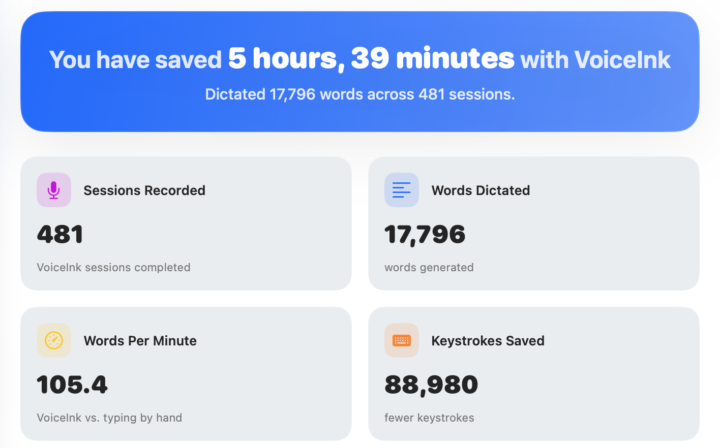
Some people think I respond with AI - while I just talk to my PC!
A few weeks back, I started using VoiceIn - I'm now talking to my PC rather than typing on my keyboard. I use it for anything from LinkedIn posts to comments, through to comments on articles and reports from my students. Over the past two weeks, I've saved almost a full day of work that I could dedicate to my research. Earlier today, we had an Inner Circle call, and some of you asked me how I manage to do everything I do. And this is one of the examples how I try to optimize my time. Rather than thinking about which activities I can cut, I'm thinking about how I can become more efficient at the things I usually do. I type quite fast anyway, but it is much easier & faster to speak rather than type. Obviously, these kinds of tools are not perfect; you still have to correct them sometimes, and you have to assess and make sure that their output aligns with what you wanted to say. It might also be less structured, so you might need to improve the structure of your writing. If you want to try here's a link that's an affiliate link. You can try it for free for 7 seven days - that's what I did. Then I decided to get a full license. It's not that expensive $29 for a lifetime so it's not even a subscription Let me know whether you've tried it and what you think. https://tryvoiceink.com?atp=drhanak
14d •
Professional Development session on Responsible AI in the classroom
Today @ 10am - 11am London time https://meet.google.com/qnd-kdtg-epf I’m hosting a Professional Development session on Responsible AI in the classroom and would love it if you could join me for a conversation about navigating the evolving AI landscape. We’ll briefly cover AI detection, what other educators are doing, and media literacy in the age of AI.
3
0
15d •
Insight from Inner Circle call
During our last Inner Circle call, we spent almost half the session not on methods, not on journals, but on… confidence. The research novelty was strong. The research design was solid. But the real friction was internal: “Some days I’m sure journals will be interested in this. Other days I’m convinced no one will care and it’s already outdated.” If that sounds familiar, you’re not alone. A few patterns keep coming up with PhD students and early‑career researchers: - “No novelty” from reviewers often means the gap and contribution aren’t visible enough, not that they don’t exist. - International/visiting scholars carry an extra “Who am I to publish on this?” when their context isn’t the “usual” one. - We quickly forget our small wins and treat a single rejection as a referendum on our entire career. Here are three shifts that helped the person on that call – and might help you too: 1. Keep a “wins log” Every week, write down specific wins: a clear paragraph, constructive feedback, a good question you answered at a seminar, a supervisor saying “this is promising”. On the bad days, you have evidence that you’re not standing still. 2. Treat confidence as a practice, not a personality trait Confidence is not “I always know the answer”. Confidence is “I’m willing to show my work, listen, and improve.” Every time you send a draft, ask a question, or present unfinished work, you’re doing a rep in the confidence gym. 3. Separate your value from reviewer decisions In many fields, 10–20% acceptance rates are normal. Rejection is the default outcome, even for very good work. The useful question is not “Am I good enough?” but “What is this decision telling me about how to sharpen my problem, gap, and contribution?” On that call, once we normalised the imposter feelings and anchored back to actual evidence of progress, you could feel the shift: from “Maybe I shouldn’t be doing this” to “Okay, how do we get this paper out?” In my Inner Circle, this is exactly the mix we work on every week:
2
0
21d •
Responsible use of AI in the classroom
I’m hosting a Professional Development session about Responsible AI policies in the classroom on 29th April 2026, and would love it if you could join me in a conversation about how to navigate the evolving AI landscape. We’ll briefly cover AI detection, what other educators are doing, and media literacy in the age of AI. I’ve recently become a GPTZero Ambassador (for those who don’t know, GPTZero is an AI writing detector), so all attendees of this webinar will receive 1 semester of GPTZero Premium for free! Join here: 29 April 2026, 10 am BST https://meet.google.com/qnd-kdtg-epf
1-29 of 29
powered by
skool.com/research-career-club-8446
Become 'go-to' research expert by delivering novel research; engaging outside academia; and building profile to amplify impact | Created by Prof Hanak
Suggested communities
Powered by