

3d •
Main Peptide Categories and Compounds
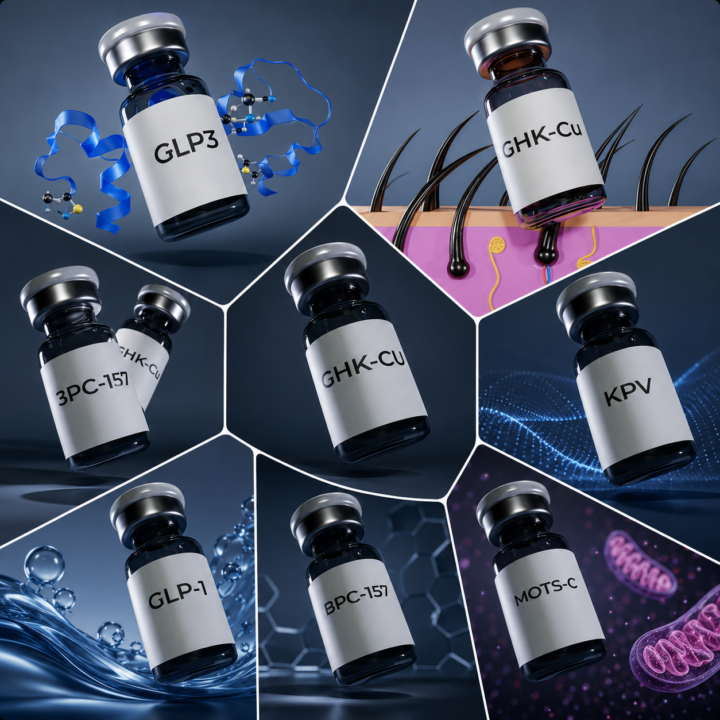
The peptide space contains hundreds of different compounds that are often grouped into broader categories based on their primary mechanisms or intended applications. Some of the main peptide categories include: GLP-1 / Metabolic PeptidesThese compounds are commonly discussed in relation to appetite regulation, blood sugar control, gastric emptying, insulin sensitivity, and weight management. Examples frequently discussed include semaglutide, tirzepatide, and retatrutide. Growth Hormone SecretagoguesThese peptides are associated with signaling pathways related to growth hormone release and IGF-1 activity. Examples include CJC-1295, Ipamorelin, Tesamorelin, and MK-677. Recovery & Tissue Repair PeptidesThis category is commonly discussed in relation to injury recovery, inflammation modulation, connective tissue support, and healing processes. Frequently referenced compounds include BPC-157 and TB-500. Cosmetic & Skin-Related PeptidesThese compounds are often associated with skin appearance, collagen signaling, pigmentation, hair support, and cosmetic optimization. Examples include GHK-Cu and Melanotan peptides. Cognitive & Neuro-Related PeptidesSome peptides are discussed for their potential effects on cognition, stress response, focus, neuroplasticity, mood, and neurological signaling. Examples often discussed include Semax and Selank. Longevity & Cellular Health PeptidesThis category includes compounds associated with aging research, mitochondrial function, immune signaling, telomere discussions, and cellular regulation. Examples frequently referenced include Epitalon, MOTS-c, and SS-31. Immune & Inflammatory Modulation PeptidesCertain peptides are researched or discussed in relation to immune activity, inflammation pathways, and systemic regulation. Experimental / Emerging CompoundsThe peptide space evolves rapidly, with new compounds and analogs continually entering discussion and research communities. Many of these compounds have limited long-term human data and varying levels of scientific validation.
20h •
Ordering locally
While this community begins it may take slightly longer but anywhere from overnight delivery to 10 days depending on what the order is. In short order that won’t be the case and there should be front loaded stock and delivery though your requested service of choice. So from usps normal 3-4 days to FedEx overnight. Your choice. Fine I’ll add a poll. What is your most valued class of peptide that you would choose to be able to order at bulk prices but have as fast as overnight delivery available to you. With COA and smooth customer service from the USA
Poll
4 members have voted
3
0
1-2 of 2
skool.com/purchasing-network-usa-peptide-6391
An information and resource collective on Peptides. What they are, how they work, responsible sourcing, and current status and shipping United States
Leaderboard (30-day)
1

+4
2

+2
3

+1
Powered by