
Write something
Mar 21 •
Market report
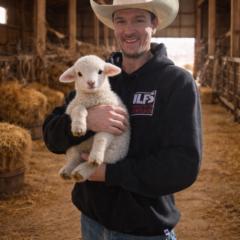
NLAND NORTHWEST MARKET UPDATE – PRIMAL ACRES MEATS Cattle market is still strong — no way around it. Calves and feeders are bringing a premium across the board. If you’re planning to finish beef this summer, waiting is not your friend right now. We’re actively putting together groups — if you want in, now’s the time to speak up. ⸻ WHAT’S MOVING THE MARKET RIGHT NOW • Feeders & calves: Still hot. Demand is steady and supply isn’t flooding the market. • Cows: Solid butcher cow market — if you need freezer beef or are moving cows, there’s opportunity both ways. • Lamb & goat: Prices staying elevated with Easter demand right here. • Eid al-Adha prep has already started — intact rams and goats are going to stay strong. ⸻ GOAT & LAMB BUYERS / SELLERS We are actively building groups right now. Looking for: • 80–140 lb lambs & goats • Under 2 years old preferred • Also have a market for older ewes & cull goats ⚠️ Reality check: these will not be cheap this year — demand is already building. If you’ve got animals OR need animals — let’s talk. ⸻ APRIL WHOLESALE BEEF RUN – APRIL 7 Orders due April 1 • Ground beef (10 lb tubes) — $6/lb • Whole ribeye sections — $10/lb • Whole chickens — $6/lb (avg 4 lb) • Raw pet food available We run these in volume — if you want in, get your order locked. ⸻ BEEF AVAILABLE • Grass-fed beef going into processing now • 1/4 grain & potato finished beef — ready next week ⸻ PIGS • Piglets moving strong • Breeding boars available (solid commercial genetics) • Cull hogs available (great for sausage/bacon) • 1 butcher hog ready now — $800 ⸻ BOTTOM LINE Markets are firm. Demand is real. Waiting usually costs you more in this kind of cycle. If you’re buying, selling, or trying to get positioned — we can help you move. ⸻ PRIMAL ACRES MEATS 📞 208-518-9484 📧 [email protected] 🌐 primalacresmeats.com #livestockauction #cattle #broker #pork #agriculture #dairy #feedlot #homesteading #beef #steak #ranchlife #meat #farm #farmtotable #farmlife
0
0
Mar 18 •
Piglet placement
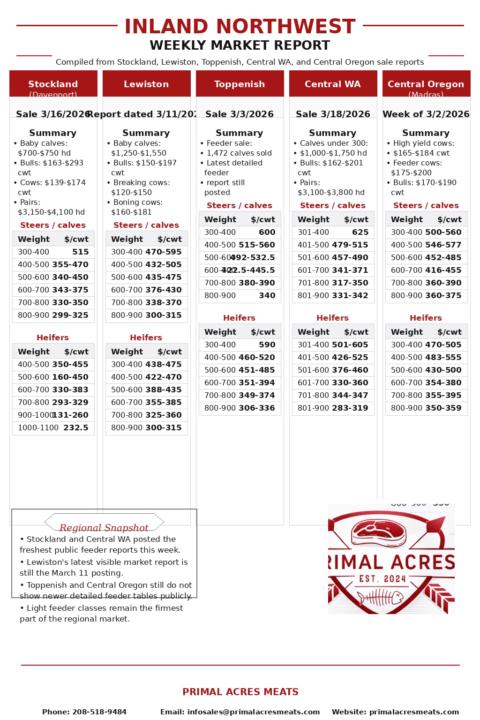
Well… I did a thing 😅 Tucked the last of our last group of piglets up in the nose of a livestock trailer we’re not even using right now. Seemed like a great idea at the time… dry, warm, out of the wind, safe, and out of the way. What I didn’t think through? Now I’ve got to crawl up there to feed and water them every day like an idiot 😂 But that’s ranch life. You make it work, you learn, and you do what’s best for the animals first. Truth is — after running a lot of groups through here, we’re dialing in a better intake system every time. Better flow, less stress, cleaner setup, and more efficient care. This little “inconvenient” setup is just part of building it right. Temporary pain… long-term gain. #PrimalAcresMeats #Piglets #RanchLife #FarmLife #Livestock #HomesteadLife #AgLife #RaisingPigs #FarmHumor #RealRanching #SmallFarmBigDreams #LearningEveryDay #BuiltNotBought #NorthwestAg #IdahoRanch #FarmGrowth #LivestockLife
0
0

Mar 11 •
Knowing your numbers
Let’s talk about the cost of raising livestock. We see it all the time with people raising beef, pork, chicken, and lamb. Goats are actually one of the few that seasonally pencil out fairly well, but across the board we constantly see producers throwing out prices and then wondering why the animals don’t sell. There is absolutely nothing wrong with knowing your numbers. In fact, you should know your numbers. But if you’re randomly throwing prices out there and complaining about not making sales… that’s on you. When you raise animals on a small homestead, almost everything about your operation is inflated from a cost standpoint. • You’re usually not buying feed by the semi load, so your feed cost is higher. • You’re not set up for volume, so your per-head costs stay high. • You’re usually not buying livestock in groups large enough to reduce purchase price. • You’re often running small batches, which means every animal carries more overhead. That’s the reality of small-scale production. And if you do have enough animals to justify scale but choose not to buy feed or inputs in bulk… that’s still a business decision. But here’s where the real issue shows up. When customers see extremely high prices for farm-raised meat, they ask the obvious question: “Why does it cost this much?” Sometimes the answer is simply: “This is what it’s worth.” And maybe it is worth that. But if a customer buys once, has a mediocre experience, or simply realizes they can’t afford that price again, they usually go right back to the grocery store. And when that happens, it hurts all of us. Because then the next rancher or farmer has to work twice as hard just to get that customer to even consider buying local again. That’s the part people forget. Pricing isn’t just about one sale today — it’s about building a long-term market for local meat. So know your numbers. Understand your costs. But also understand the difference between: • Charging a fair price • And passing inefficient costs directly to your customer
0
0
Mar 7 •
Market report
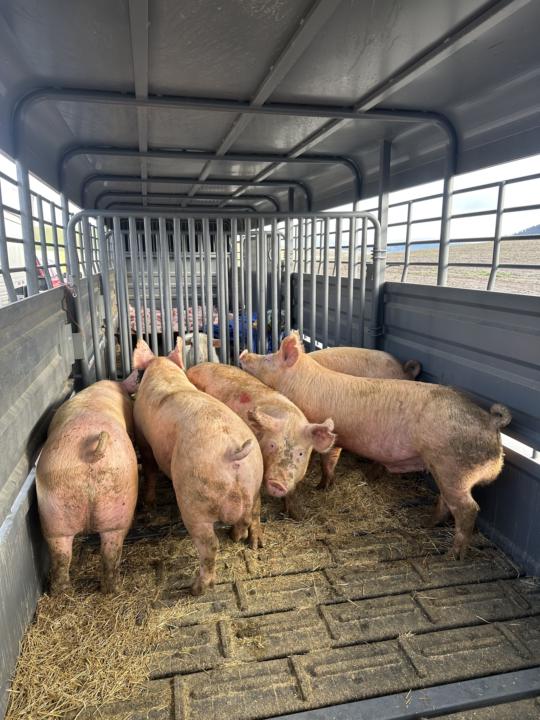
🐂 Inland Northwest Weekly Livestock Market Report Compiled from regional sale barns across Washington, Idaho, and Oregon. This report includes results from: • Stockland Livestock – Davenport, WA • Lewiston Livestock Commission – Lewiston, ID • Toppenish Livestock – Toppenish, WA • Central WA Livestock – Moses Lake, WA • Central Oregon Livestock – Madras, OR All prices reported exactly as posted by the sale barns. --- 📊 Bottle / Baby Calves Stockland (Davenport) $250 – $1,450 hd Lewiston $950 – $1,100 hd Central WA $650 – $1,575 hd --- 🐄 Slaughter Bulls Stockland $155 – $180 cwt Lewiston $150 – $186 cwt Central WA $155 – $189 cwt Central Oregon $170 – $190 cwt --- 🐄 Slaughter Cows Stockland $111 – $219 cwt Lewiston Breaking cows $125 – $150 cwt Boning cows $150 – $167 cwt Central WA High yield $159 – $213 cwt Medium $135 – $157 cwt Low $67 – $122 cwt Central Oregon High yield $165 – $184 cwt Feeder cows $175 – $200 cwt --- 🐂 Bred Cows & Pairs Stockland Bred cows $1,600 – $3,600 hd Pairs $4,050 – $4,550 hd Lewiston Stock cows $2,700 – $3,500 hd Pairs $3,500 – $4,400 hd Central WA Bred cows $2,800 – $3,700 hd Pairs $3,700 hd --- 📈 Feeder Steers (Selected Weight Classes) Stockland 300-400 lbs: $410 – $510 400-500 lbs: $405 – $457.5 500-600 lbs: $360 – $420 700-800 lbs: $297.5 – $332 Lewiston 400-500 lbs: $500 – $605 500-600 lbs: $480 – $537 600-700 lbs: $410 – $460 700-800 lbs: $375 – $414 Toppenish 300-400 lbs: $600 400-500 lbs: $515 – $560 500-600 lbs: $492 – $532.5 600-700 lbs: $422.5 – $445.5 700-800 lbs: $380 – $390 Central WA 500-600 lbs: $379 – $425 600-700 lbs: $292 – $351 700-800 lbs: $302 – $337 800-900 lbs: $313 – $321 Central Oregon 300-400 lbs: $500 – $560 400-500 lbs: $546 – $577 500-600 lbs: $452 – $455 600-700 lbs: $416 – $455 --- 📉 Feeder Heifers (Selected Weight Classes) Stockland Under 300 lbs: $550 – $600 300-400 lbs: $325 – $350 400-500 lbs: $270 – $471 500-600 lbs: $280 – $450 Lewiston 300-400 lbs: $420 – $500
0
0
Mar 5 •
Hard Work Doesn’t Determine Which Ranches Survive
Agriculture glorifies hard work. Early mornings. Late nights. Calving in the snow. Fixing equipment in the dark. But here’s the uncomfortable truth: Hard work alone doesn’t determine which ranches succeed. Some of the hardest working ranchers I know are barely staying afloat. Many are operating at losses year after year. Some eventually lose the ranch. At the same time, there are operations growing, expanding, buying land, and building long-term stability. So if it isn’t hard work… what actually separates the operations that win from the ones that struggle? After working across the Northwest as a livestock broker and spending time around a lot of different operations, a few patterns show up consistently. The successful ranches understand scale. The commodity system rewards volume and efficiency. Running a few cows and consigning them once a year is one thing. Running hundreds or thousands of animals where every pound of gain, trucking mile, and feed cost is optimized is a completely different business. The economics change dramatically. They manage risk like a business. The commodity guys that survive long term aren’t guessing. They’re using forward contracts, hedging cattle, managing feed risk, and protecting margins. They treat ranching like a financial operation as much as a livestock operation. They control costs aggressively. Feed sourcing. Genetics. Yardage. Labor. Equipment. Debt load. The operations that stay healthy know exactly where every dollar is going. They build multiple revenue streams. Even large commodity operations rarely rely on just one income source anymore. Custom feeding. Backgrounding. Direct marketing. Grazing leases. Equipment utilization. Diversification helps stabilize an industry that is naturally volatile. They think in decades, not seasons. The best ranches aren’t making decisions based on this year’s calf check. They’re building systems that work through multiple market cycles. Because in agriculture, markets always swing.
0
0
1-30 of 71
powered by
skool.com/primal-acres-meats-6128
A North Idaho ranch building resilient food systems through livestock, education, and real-world experience.
Suggested communities
Powered by