
Write something

1d •
🐴 Case Study: Why Does Maverick Look Like a Pigeon?
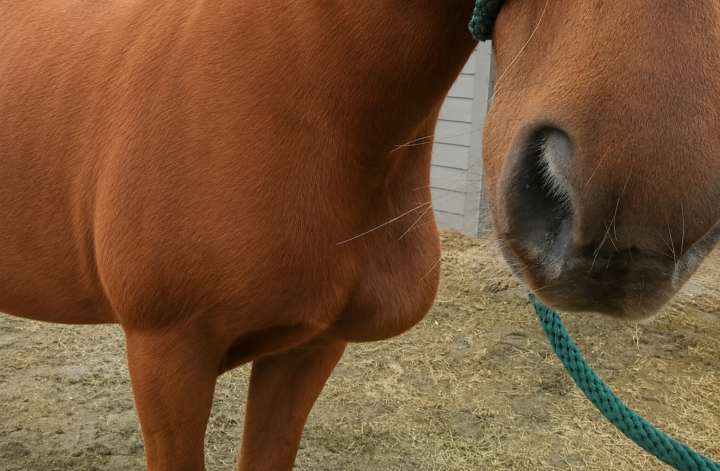
Meet Maverick, a 6-year-old Quarter Horse gelding on a ranch in central California. His owner calls in September because Maverick has developed a growing swelling between his front legs that is now the size of a grapefruit. His chest looks oddly puffed out, almost barrel-shaped. You arrive and press gently on the swelling. It is warm, firm, and painful. Maverick flinches and his temperature is 102.5°F. He is mildly stiff in both front legs from the swelling pressing against his shoulder muscles. The owner asks: should we start antibiotics right away? Your answer surprises her. No. This is pigeon fever, caused by Corynebacterium pseudotuberculosis, and the most important thing you can do for Maverick right now is nothing pharmacological. The bacteria survive inside macrophages within the abscess wall where antibiotics cannot reach them effectively. Treating now would slow the maturation process, prevent the abscess from draining naturally, and paradoxically make this take longer to resolve with a higher chance of recurrence. Your job is to wait for the abscess to become fluctuant over the next two to three weeks, then lance it at the lowest point, lavage the cavity daily, and leave it open to heal. You also put on gloves. This organism can infect humans too. 💡 The takeaway: Sometimes the best treatment is knowing when not to treat. For a full course on this condition, see the classroom or follow the link below: https://www.skool.com/pre-vet-skool-9535/classroom/eada0165?md=e9698e0ea46841929e4e62d7945915b3
11h •
🪶 Case Study: Why Are the Pheasants Dying After the Move?
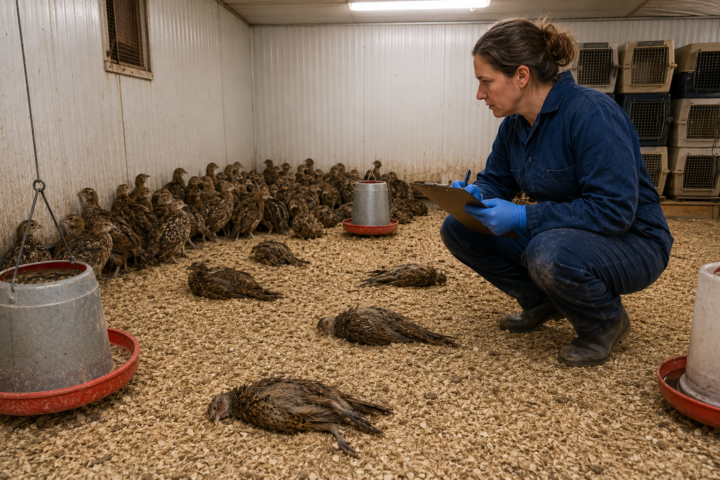
Meet a flock of 200 six-week-old ring-necked pheasants on a game bird operation in Pennsylvania. They arrived three days ago after a four-hour transport from a breeding facility in another state. The stress of the move was unavoidable. By day two the owner noticed birds huddling in corners with ruffled feathers. By day three twelve were dead. You perform a necropsy on three birds. The moment you open the abdominal cavity and examine the spleen you stop. Each spleen is enlarged to nearly three times its normal size, and the surface is covered in scattered white to gray circular foci against a dark red background. It looks exactly like marble. This is marble spleen disease, caused by fowl adenovirus. The virus had likely been circulating silently in the breeding flock. The pheasant chicks carried it, their maternal antibodies waned right around six weeks of age, and the transport stress delivered the final blow by suppressing what little immune function they had left. You look over at the pen of chickens on the same property. They are completely unaffected. There is no antiviral treatment. You start antibiotics for secondary bacterial infections, optimize the environment, and send spleen samples for PCR confirmation. 💡 The takeaway: Transport stress plus waning maternal immunity in young pheasants is a recipe for marble spleen disease. For a full course on this condition see the classroom or follow the link below: https://www.skool.com/pre-vet-skool-9535/classroom/cf98ed10?md=b7495a95c56f41b1816a2105613bd605
2d •
🐄 Case Study: Why Is Rio’s Urine the Color of Dark Cola?
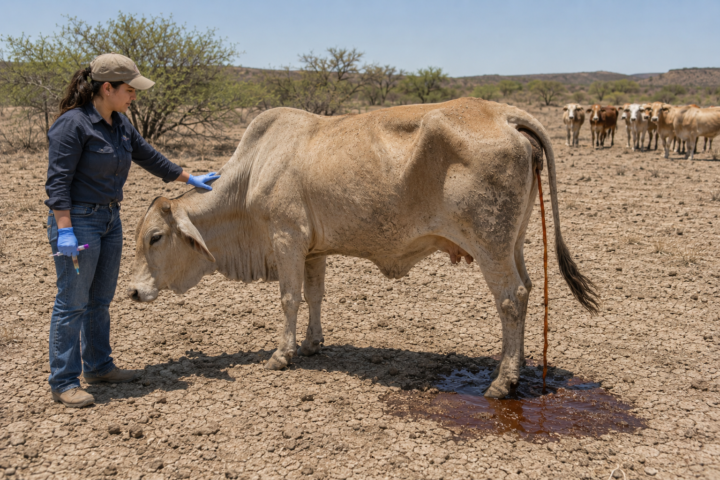
Meet Rio, a 4-year-old Brahman cross cow on a ranch in northern Mexico. Her owner notices she has stopped eating, is standing apart from the herd, and when she urinates the stream is dark reddish brown, the color of cola or strong tea. You arrive and examine her. Temperature 105°F Heart rate 130 bpm. Mucous membranes pale and beginning to yellow. The urine in the dirt is unmistakably dark red. That color tells you everything. This is babesiosis, specifically intravascular hemolysis. Babesia parasites have invaded Rio’s red blood cells, replicated inside them, and burst them open from within, releasing free hemoglobin directly into her bloodstream. That free hemoglobin is now being filtered through her kidneys and spilling into her urine, turning it the color that gave this disease its historic name: redwater fever. You draw blood and make a smear. Under oil immersion you find large pear-shaped organisms sitting in pairs inside the red blood cells at an obtuse angle to each other. Classic Babesia bigemina. Treatment is diminazene aceturate plus aggressive IV fluids to protect her kidneys before the free hemoglobin causes tubular damage. 💡 The takeaway: Red or brown urine in a febrile cow with anemia is babesiosis until proven otherwise. For a full course on this condition, see the classroom or follow the link below: https://www.skool.com/pre-vet-skool-9535/classroom/fc6656d5?md=757835abdfa24965bf61e52d614981ca
1
0
3d •
🐠 Case Study: Why Are All the Fish Dying at Once?
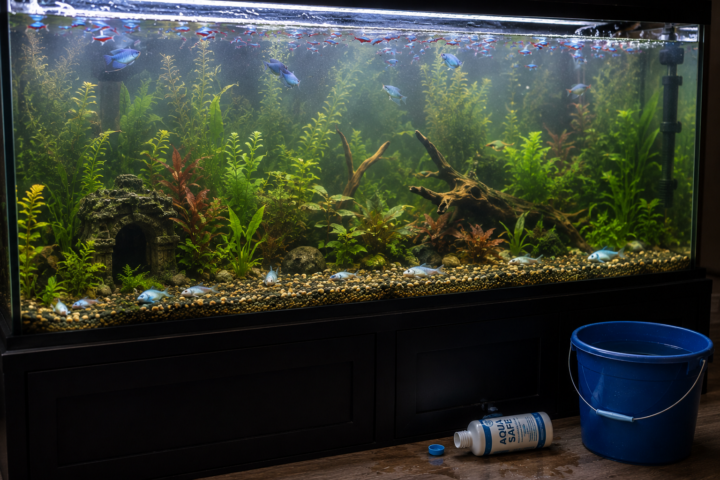
Meet Marco, a hobbyist with a beautiful 75-gallon community tank of tetras and gouramis he has spent two years building. On a Saturday morning he does a routine 40% water change. Within thirty minutes every fish in the tank is gasping at the surface. By the time he calls you, four are already dead. You ask one question first: did he treat the tap water before adding it? He pauses. He ran out of water conditioner last week and forgot to reorder. You test the tank water. Chlorine reads 0.9 mg/L. You ask his zip code and check the municipal water report. His city switched to chloramine six months ago. That detail changes everything. Chloramine is not chlorine. It does not dissipate if you leave water sitting overnight. It does not off-gas with aeration. It is chemically stable and it is destroying the gill epithelium of every fish in that tank right now, oxidizing the delicate cells that handle both oxygen exchange and osmoregulation simultaneously. You walk him through emergency treatment: a commercial chloramine remover to break the bond, then water changes to clear the released ammonia, aggressive aeration, and aquarium salt for osmoregulatory support. 💡 The takeaway: Chlorine and chloramine are not the same problem. Know which one is in your tap water. For a full course on this condition, see the classroom or follow this link below: https://www.skool.com/pre-vet-skool-9535/classroom/289939ea?md=d2f7e16935b945eb99e4cb97b379289b
0
0
4d •
🐑 Case Study: Why Is Clover Falling Behind the Flock?
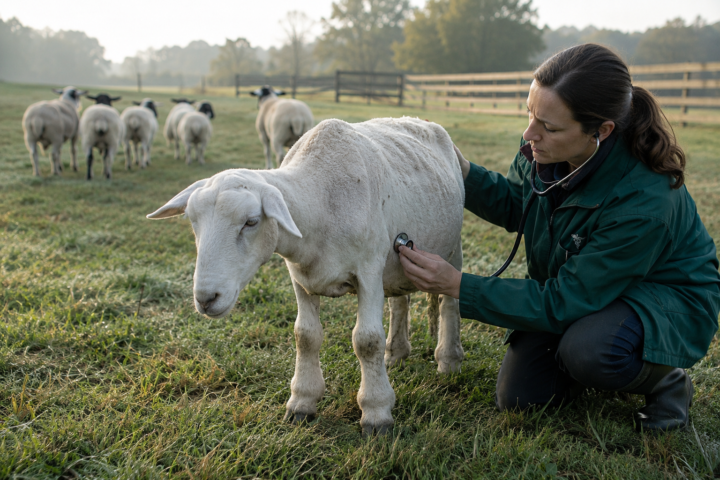
Meet Clover, a 3-year-old Dorper ewe on a Virginia farm. Her owner notices she keeps stopping during the morning move to the pasture while the rest of the flock walks on without her. She is not limping. She is not coughing. She just cannot keep up. The owner assumes she is getting old before her time. You arrive and listen to her heart. There it is: a loud systolic murmur over the left apex. Her gums are pink but her legs are puffy below the hocks. Jugular veins bulge when she lowers her head. This is not a respiratory problem. This is her heart failing. You ask about her recent history. Three months ago she had a dental abscess that was treated but incompletely resolved. That chronic oral infection was likely the source of bacteria that seeded her bloodstream and colonized her mitral valve, creating a growing mass of bacteria and fibrin called a vegetation. This is bacterial endocarditis caused almost certainly by Trueperella pyogenes, the most common culprit in small ruminants. Echocardiography confirms it. The prognosis is guarded. Treatment requires weeks of high-dose penicillin. 💡 The takeaway: In small ruminants, a chronic infection anywhere in the body is a potential future cardiac emergency. For more information on this condition see the classroom or follow the link below: https://www.skool.com/pre-vet-skool-9535/classroom/5ec73f41?md=103e2048185c486ab7470c06008503e8
1-26 of 26
powered by

skool.com/pre-vet-skool-9535
For anyone who loves animals & dreams of becoming a vet— explore real cases, learn from a DVM, and get the support to make your application shine.
Suggested communities
Powered by