
Write something
Pinned

Apr 8 •
🚨The Silent Damage: HYPERTENSION🚨
DO YOU KNOW HOW BLOOD PRESSURE AFFECT YOUR KIDNEYS OR HOW YOUR KIDNEYS AFFECT YOUR BLOOD PRESSURE???

Pinned
Apr 8 •
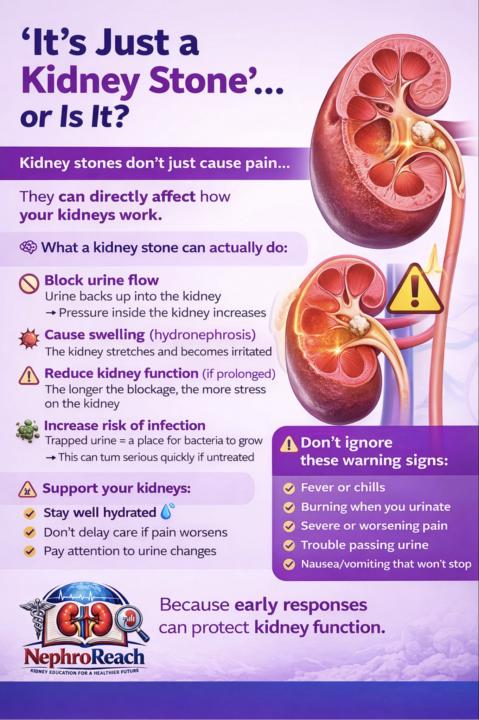
🪨 “It’s Just a Kidney Stone”… or Is It?
Kidney stones don’t just cause pain… They can directly affect how your kidneys work. 🧠 What a kidney stone can actually do: When a stone moves or gets stuck, it can: 🚫 Block urine flow → Urine backs up into the kidney → This increases pressure inside the kidney 💥 Cause swelling (hydronephrosis) → The kidney stretches and becomes irritated ⚠️ Reduce kidney function (if prolonged) → The longer the blockage, the more stress on the kidney 🦠 Increase risk of infection → Trapped urine = a place for bacteria to grow → This can turn serious quickly if untreated 🩸 Irritate the lining of the urinary tract → May cause blood in urine (but not always visible) ⚠️ Don’t ignore these warning signs: - Fever or chills - Burning when you urinate - Severe or worsening pain - Trouble passing urine - Nausea/vomiting that won’t stop 👉 These may mean the kidney is under stress or infection is developing 💧 What helps support your kidneys: - Stay well hydrated 💦 - Don’t delay care if pain worsens - Pay attention to urine changes 🗣️ Ask your provider: - “Is the stone blocking my kidney?” - “Is there any swelling in my kidney?” - “Am I at risk for infection?” - “How will this affect my kidney function?” ❤️💙 NephroReach Reminder: Kidney stones aren’t just about pain… They’re about pressure, blockage, and protecting your kidney function. 👉🏼 What you do early can prevent bigger problems later. Because kidney health matters BEFORE the ER. Comment for foods to avoid in relation to kidney stones 👇🏼
1
0
Pinned
Apr 8 •
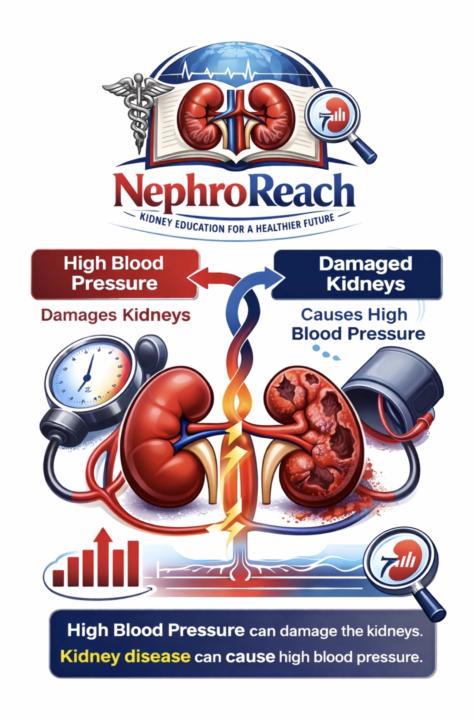
🩺 How Blood Pressure Affects the Kidneys🚨
Your kidneys are full of tiny blood vessels that act like filters. When blood pressure is too high: - It puts extra force on those vessels - Over time, they become damaged and stiff - The kidneys can’t filter waste as well - This can lead to kidney damage or failure 👉🏼 Think of it like a water hose under too much pressure—it eventually weakens and leaks. 🔄 How the Kidneys Affect Blood Pressure Your kidneys help control blood pressure by: - Balancing fluid levels - Releasing hormones that regulate pressure When kidneys are damaged: - They may hold onto extra fluid - More fluid = higher pressure in your blood vessels - This causes blood pressure to rise even more 👉🏼 It becomes a cycle: High BP → Kidney damage → Even higher BP ⚠️ Why It’s Called the “Silent Killer” - You can have high blood pressure and feel completely fine - Kidney damage can happen without symptoms - By the time you notice something, damage may already be done “High blood pressure quietly damages your kidneys over time… and damaged kidneys can push your blood pressure even higher. That’s why it’s called the silent kidney killer.”
1
0
Jun 7 •
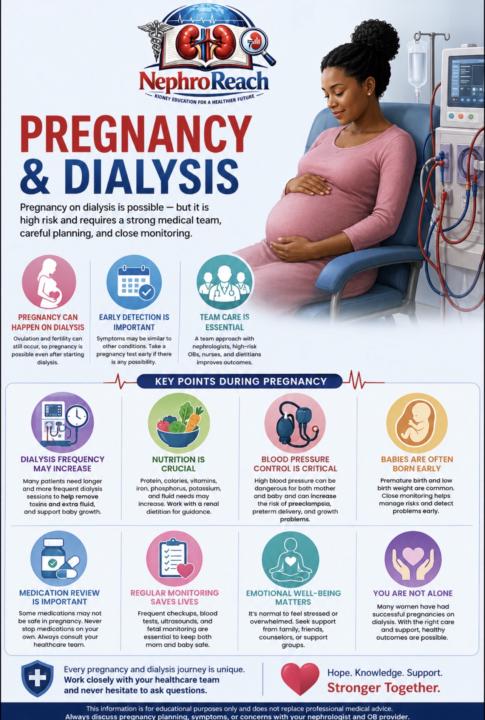
🤰 Pregnancy & Dialysis: Yes, It Can Happen 💙
Pregnancy while on dialysis is considered high-risk, but successful pregnancies are possible with close monitoring and a specialized care team. Key things to know:✅ Notify your nephrology team immediately if you think you may be pregnant.✅ More frequent dialysis treatments are often needed during pregnancy.✅ Blood pressure, anemia, nutrition, and fluid status require careful management.✅ A high-risk OB (Maternal-Fetal Medicine specialist) and nephrologist should work together throughout the pregnancy. Every pregnancy is unique, and early communication with your healthcare team is essential for the best possible outcomes for both mother and baby. 💙 Have questions about pregnancy and kidney disease? Talk with your nephrologist and OB provider. #Dialysis #KidneyDisease #PregnancyAndDialysis #CKD #ESRD #NephroReach #KidneyHealth #PatientEducation
0
0

1-14 of 14

Suggested communities
Powered by