
Premium Online Therapy/Coaching Package
Premium Therapy/Coaching Sessions Package - €108 per week
0%
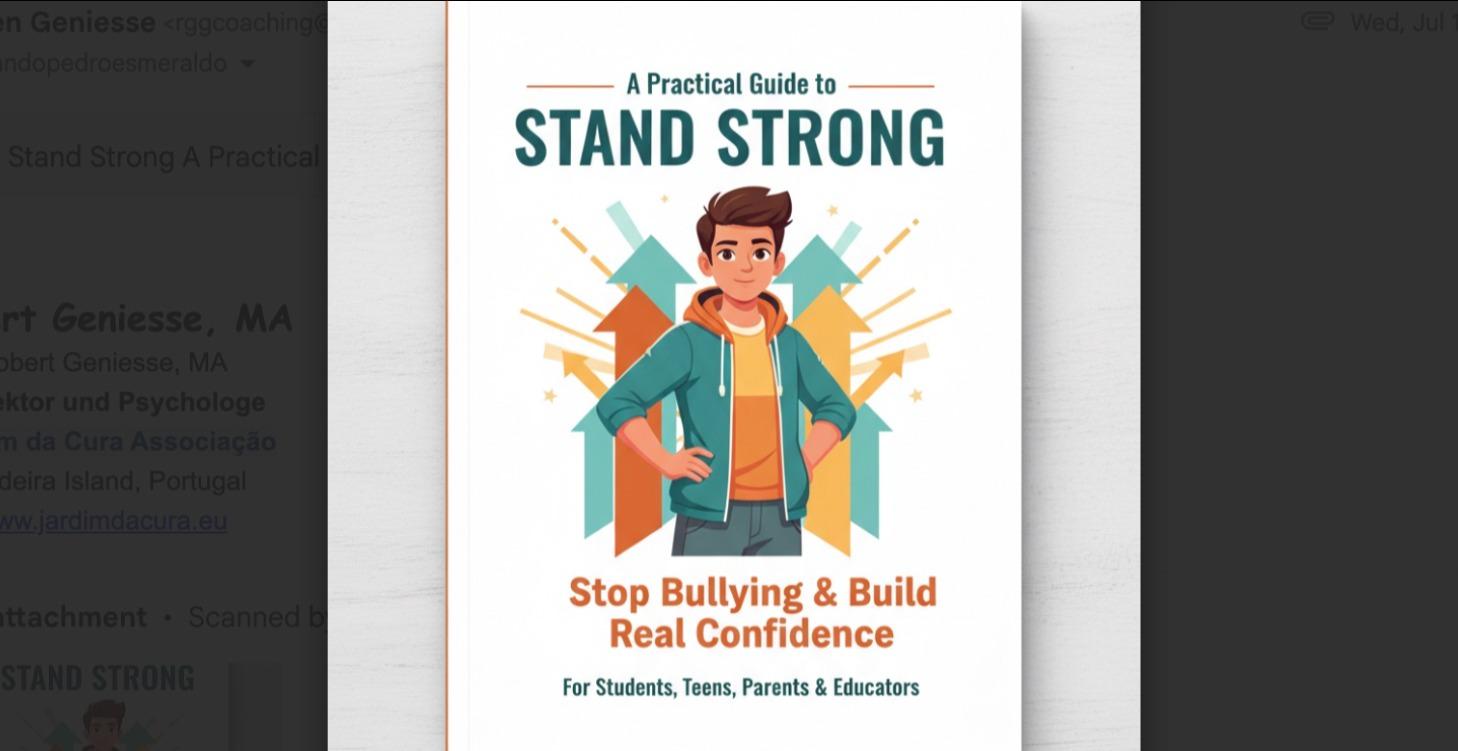
Practical Guide to Stand Strong- Free Gift
Stand Strong: A Practical Guide to Stop Bullying & Build Real Confidence is a complete digital workbook toolkit designed to help students and young adults develop the emotional strength, resilience, and communication skills they need to face bullying — and thrive.
Whether you're a parent, teacher, school counselor, coach, or youth group leader, this toolkit gives you practical, ready-to-use tools that make a real difference.
📥 Instant digital download — start using it today.
0%
Understand Before You Act #1
(Week 1 of 8) Before you act, you need to understand.
Most parents respond to the behavior — the silence, the eye rolls, the shutdown. This week we go underneath it.
You'll discover why teenagers shut down, what four root causes drive almost every difficult behavior, and where your own responses may be keeping the loop stuck.
Shutdown isn't defiance. It's protection. And nothing changes until you can see it that way.
One week. One new lens. Everything else builds on this.
0%
The Parent´s Role Reimagined #2
(Week 2 of 8) Most parents are either fixing the problem or enforcing the rules. This week, we change that.
You'll discover why both roles keep your teenager at a distance — and what it looks like to step into the one role that actually works: trusted guide. The shift isn't complicated. But it requires seeing patterns in yourself you may not have noticed yet.
Week 2 of 8. The role change that changes everything.
0%
The Language of Reconnection. #3
Your teenager isn't broken. But the way you've been talking to them might be closing doors without you realizing it.
This week you'll learn exactly which phrases trigger shutdown — and what to say instead. You'll discover how to stay curious without interrogating, how to be present without an agenda, and why the best conversations with your teenager almost never start with "we need to talk."
Week 3 of 8. The words that open doors.
0%

Reading Your Teen #4
Week 4: Reading Your Teen. Learn to tell the difference between normal teenage development and something that needs real support. This week covers the developmental baseline, the three lenses of anxiety, depression, and disengagement, red flags that require same-day action, and what to bring if you need to talk to a professional. You'll leave with an observation practice that replaces anxious guessing with a clear pattern.
0%

Building the Bridge #5
Trust with struggling teens rebuilds through small, consistent moments—not forced conversation or grand gestures. Five tools: Parallel Presence (no agenda), Two-Sentence Check-Ins (brief, low-pressure), Ordinary Moments (side-by-side), The Repair (genuine acknowledgment), Sustained Positive (strings-free praise). Connection requires creating conditions, not demanding it. Parents must prioritize self-care. Goal: shift daily relationship texture one moment at a time.
0%

The Momentum Plan #6
Week 6: The Momentum Plan Summary
Move from connection to co-creation. Build structure together—not imposed from above. Teenagers resist external control but own what they help create. Four elements: one clear goal, one small daily action, regular check-ins, and setback responses. Parent's role: hold the container warmly, not enforce or surveil. If your teen isn't ready, continue Week 5 connection work. The distinction between "for your teenager" and "with them" is everything.
0%

When It's Hard #7
Progress isn't linear—it's tidal. Setbacks aren't failure; they're proof the work is real. Three challenges: teenager's resistance (often a sign they feel safe), your own emotional triggers (manage, don't eliminate), and the invisible quiet of seeming stagnation. Use the recovery protocol: name it, reset to Week 5 basics, resume gently. Getting good at recovering is the most important skill. Measure progress by connection, not behavior.
0%

The Long Game Summary. #8
Integration week—no new tools. Sustaining change requires: maintenance (repair when you drift), regular reflection (quarterly check-ins), community (never alone). Seek professional support when needed—it's wisdom. The real work is becoming a parent who examines themselves, chooses growth, prioritizes connection. Your teenager may not name the shift yet, but something has changed. The long game is lifelong practice: repair after repair, moment after moment. You're equipped now. Keep going.
0%

Unlock at Level 2
or Upgrade to Standard
Breaking the Negative Cycle
Negative cycles happen when a teenager reacts with anger or disrespect and the parent responds with more anger, criticism, or punishment. Breaking the cycle starts by responding differently. Stay calm, listen, acknowledge their feelings, and set clear boundaries. You don’t have to accept disrespect, but you don’t have to match it either. Change your response, and you begin to change the relationship.
0%
1-11 of 11