

Jan 12 •
Walmart
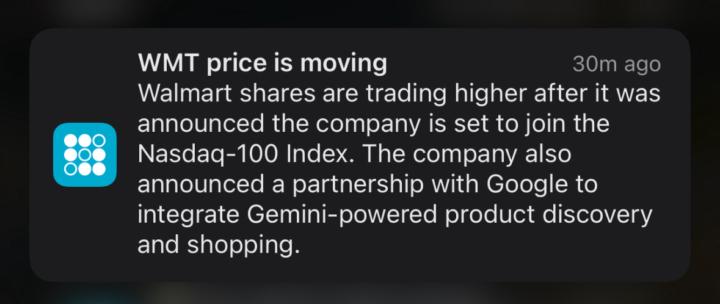
Here’s a balanced, up-to-date breakdown of Walmart (NYSE: WMT) as a potential stock purchase in 2026, covering fundamentals, growth prospects, risks, valuation, dividends, and near-term catalysts/concerns: ✅ 1. Walmart’s Core Strengths (Why Investors Like It) 📈 Stable, Defensive Business Model - Walmart is the largest global retailer with thousands of stores plus omni-channel (in-store + online) reach. It’s considered a defensive retail stock — meaning it tends to hold up better in downturns because people still buy essentials like groceries and household goods even when the economy slows. 💰 Dividend History & Shareholder Returns - Walmart has a long record of dividend increases (over 50+ years) and Dividend King status, which appeals to income-oriented investors. - Current dividend yield ~0.8% (modest compared to high-yield stocks) but well covered by earnings and consistently grown. 📊 Consistent Sales & Earnings Growth - Analysts forecast modest growth: earnings + revenue growth in the high single digits annually, indicating slow but steady expansion. - Revenue and EPS estimates have been cautiously revised upward by some analysts recently. 🚀 New Growth Catalysts - AI & tech integration: Walmart is partnering with Google’s AI unit (Gemini) to enable in-chat shopping and personalized recommendations — moving retail closer to agent-led commerce. - Drone delivery expansion — working with Alphabet’s Wing to add fast last-mile delivery in more U.S. cities. - Inclusion in the Nasdaq-100 Index reflects growing tech orientation and could attract more buyers. 📊 Strong Recent Price Action - Walmart stock recently hit all-time highs after solid performance and bullish sentiment around its tech moves and holiday sales. ⚠️ 2. Valuation & Potential Concerns 📉 Valuation Looks Rich - Walmart currently trades at a higher valuation (e.g., elevated P/E ratio) that some analysts believe already prices in most of its growth, possibly limiting near-term upside.
2
0

Jan 9 •
Check this out wolf pack
https://www.instagram.com/reel/DS7zHfwEitr/?igsh=MW1zNHNpMGZqdHQyNw==
1-3 of 3
powered by
skool.com/mmt-academy-7185
MODI MASTER TRADERS/INVESTORS
WOLFPACK! 🐺🐺🐺
WE ALL HUNT WE ALL EAT!
Suggested communities
Powered by