
Write something

3d •
Outliers Malcolm Gladwell
This collection of excerpts from Malcolm Gladwell’s book Outliers challenges the traditional belief that success stems solely from individual merit, talent, and ambition. Through various case studies, Gladwell illustrates how hidden advantages and extraordinary opportunities such as birth dates, cultural heritage, and socioeconomic luck shape high achievers. He introduces the "10,000-Hour Rule", suggesting that mastery in any field requires immense practice facilitated by special circumstances rather than innate genius alone. The text further examines the limitations of high IQ, arguing that intellect only serves as a threshold and does not guarantee real-world accomplishment. Ultimately, the sources suggest that extraordinary success is a product of accumulative advantage and the specific timing of one's environment. Deeper analysis and briefing are coming soon! :) Access your free copy @ https://files.blogs.baruch.cuny.edu/wp-content/blogs.dir/2205/files/2012/11/Malcolm-Gladwell-Outliers.pdf
0
0
14d •
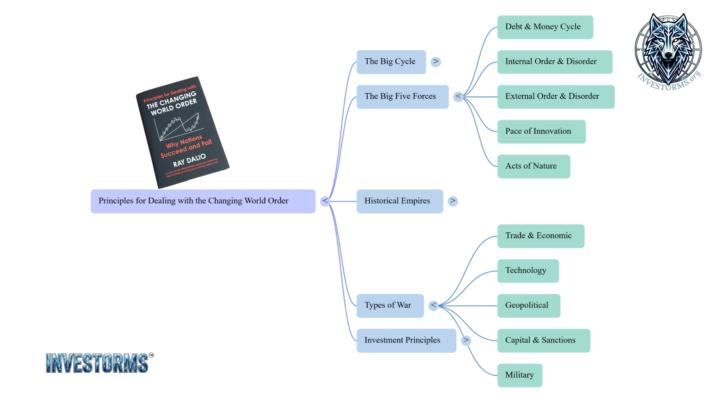
THE CHANGING WORLD ORDER by Ray Dalio
One of the most important books today as we are living the world order change live. Ray Dalio’s core message is straightforward: History moves in repeating cycles of rising and declining wealth and power. These cycles have appeared many times over the last 500+ years across major empires. 🔁 The Basic Pattern Dalio observed that countries and empires typically follow a recognizable path: 1. Period of strength and prosperity 2. Growth and expansion 3. Excesses build (especially debt and wealth gaps) 4. Financial and political stress increases 5. Conflict and crisis occur 6. System restructures 7. A new order emerges Then the process gradually repeats. 🧩 Why Cycles Keep Repeating According to Dalio, the main driver is simple: Human nature doesn’t change much over time. Emotions like: - greed - fear - envy - overconfidence consistently push systems toward excess and eventual correction. Because these behaviors repeat, similar economic and political patterns also repeat. 🔍 Key Structural Forces Dalio Highlights In the early chapters, three major cycles are especially important: - The long-term debt cycle - The internal order vs. disorder cycle - The external order vs. disorder cycle When these cycles align, large changes in the world order become more likely. 🧠 Bottom Line Dalio’s central insight is: - Progress over long periods is real - But instability is normal - Periods of peace and prosperity are regularly followed by periods of stress and restructuring Understanding these patterns can help observers better interpret major economic and geopolitical shifts.
13d •
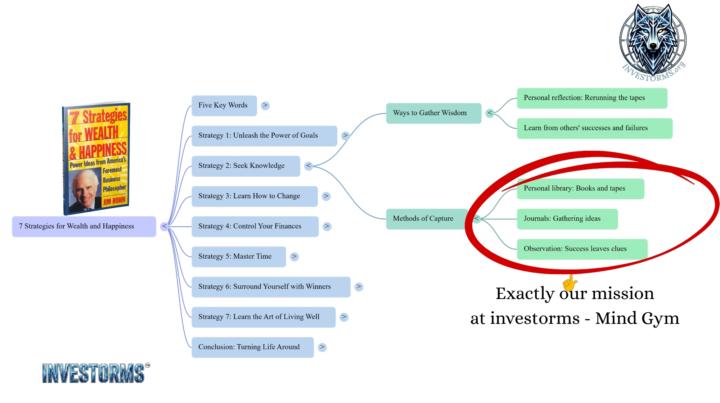
7 strategies for wealth and happiness by Jim Rohn
One Sentence That Captures the Whole Book “Small disciplines repeated daily lead to extraordinary lives.” The Core Principle Everything in the book rests on one law: Success is the natural result of consistently applying simple fundamentals. Not magic. It is not luck. and it is not talent alone. Just disciplined repetition of the right behaviors. Most people fail not from one big mistake but from thousands of small undisciplined actions accumulating over time. Likewise, success is small disciplines repeated daily. The Discipline Principle (The Foundation) Jim Rohn’s most important idea: Discipline is the bridge between goals and accomplishment. Example: Small daily action Result Save $10 daily Wealth Read 20 pages daily Knowledge Exercise daily Health Call 5 clients daily Sales growth Failure is simply neglect repeated daily. Success is discipline repeated daily. The 7 Strategies (Simplified and Practical) 1. Define Powerful Goals Practical method Write goals in four horizons: Timeframe Purpose 1 year Immediate direction 3 years Skill development 5 years Life positioning 10 years Vision Ask yourself: What do I want to do What do I want to be What do I want to have Where do I want to go What do I want to experience Then choose 16 core goals (4 in each category). 2. Seek Knowledge School teaches how to make a living. Self-education teaches how to make a life. Daily learning compounds like interest. Practical rule Every day: Read 📖 Listen 👂 Study 📝 Observe successful people Knowledge becomes wisdom only when applied. 3. Learn How to Change Your life improves only when you improve. Income rarely exceeds personal development. Example: Level of person Level of result Average thinking Average life Expanded thinking Expanded life Rule Work harder on yourself than on your job. Skills → opportunities → income. 4. Control Your Finances Most people earn money but never manage it. Rohn emphasizes: Wealth = disciplined allocation of money. Basic rule:
2
0
15d •
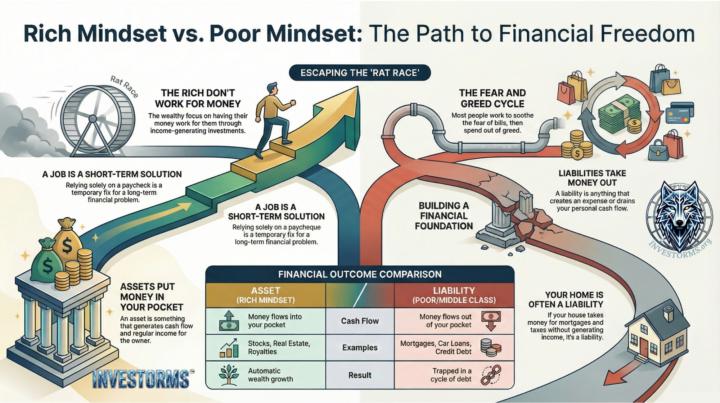
Rich Dad Poor Dad by Robert Kiyosaki
Rich Dad Poor Dad is a starting point for anyone looking to gain control of their financial future. Most people don’t have an income problem. They have a thinking problem about money. That’s why Rich Dad Poor Dad still hits decades later. Stop working only for income. Start building assets. 🧠 The Core Idea (Simple but powerful) The book splits money behavior into two paths: Poor Dad mindset - Study → get a safe job - Work → earn → spend - Repeat for decades - Hope retirement works out Rich Dad mindset - Study how money actually flows - Build or buy assets - Use cash flow to fund lifestyle - Let systems work in the background
14d •
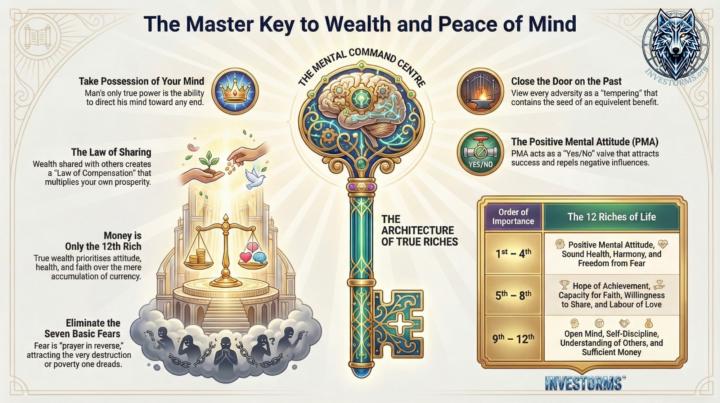
Grow Rich with Peace of Mind by Napoleon Hill
Most people pursue money. Hill argues the real objective is peace of mind because without it, wealth cannot be fully enjoyed. In this work, Napoleon Hill reframes success as the result of disciplined thinking and emotional control rather than luck or formal education. He emphasizes that individuals must first understand and direct their own minds; only then can they consistently achieve meaningful goals. Hill identifies several recurring principles among high achievers: - A definite purpose supported by a clear time horizon - Freedom from fear and negative mental habits - Persistence through temporary setbacks - The habit of constructive, self-directed thinking - Cooperative relationships that multiply effort He also broadens the definition of wealth. Peace of mind, in his view, includes freedom from chronic worry, fear, and self-induced stress, along with the ability to work with enthusiasm and help others productively. Core message: Material success without mental stability is incomplete. Mastery of one’s thinking is the primary lever behind durable achievement. Free access to the ebook in the comments section. Take notes as you o through it. When we select this book for the challenge, those who complete it properly may qualify for valuable prizes. Read carefully. Apply what matters. Results will show.
1-5 of 5

skool.com/mindgym
Strategic Thinking by Investorms
Welcome to our Mental Model Lab 📚
We break down powerful books into practical insights you can apply immediately.
Leaderboard (30-day)
1

+1
Powered by