
Write something

22d •
🌸 Mother Gaia — The Heart of Transformation
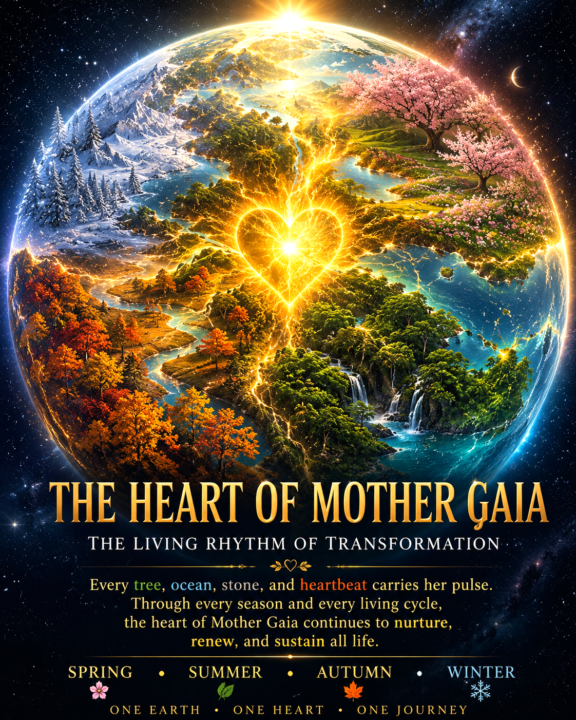
Journeys of the Heart - Summer Solstice 🌍 Mother Gaia — Sacred Wheel Oracle "The rivers are my veins, the forests my body, the mountains my bones. All that you are is born of me — and through love, we are one." — Gaia 🌿 The Earth reaches another turning in her endless journey around the Sun. The Summer Solstice reminds us that transformation is not an event. It is the rhythm of life itself. Mother Gaia has been living this wisdom since the beginning. Every forest that grows... Every river that shapes the land... Every mountain patiently transformed by wind and rain... Every seed that becomes a flower... Every season that gives way to the next... The whole Earth quietly reminds us that life is always becoming. Nothing in Nature remains exactly as it was. Yet nothing resists becoming what it is meant to become. The seasons do not compete. Spring does not rush Summer. Summer does not fear Autumn. Autumn does not resist Winter. Winter does not cling to what has passed. Each season trusts the next. Each has its own purpose. Each prepares the way for what follows. Nature does not compare. Nature collaborates. Perhaps the human heart is invited to live the same way. We often wish to hurry our healing. We measure ourselves against where we think we should be. We wonder why growth feels slow. Yet the oak does not compare itself to the wildflower. The river does not envy the mountain. Each fulfills its own purpose by becoming fully itself. Perhaps wisdom begins when we stop asking, "Why am I not there yet?" and begin asking, "What is this season helping me become?" Mother Gaia reminds us that transformation cannot be forced. It can only be lived. Just as the Earth trusts her seasons, perhaps we are invited to trust our own. 🌿 Reflection What season of transformation is my heart living today,
0
0
26d •
🌸 Story, Myth & Archetype - Why Certain Stories Stay With Us
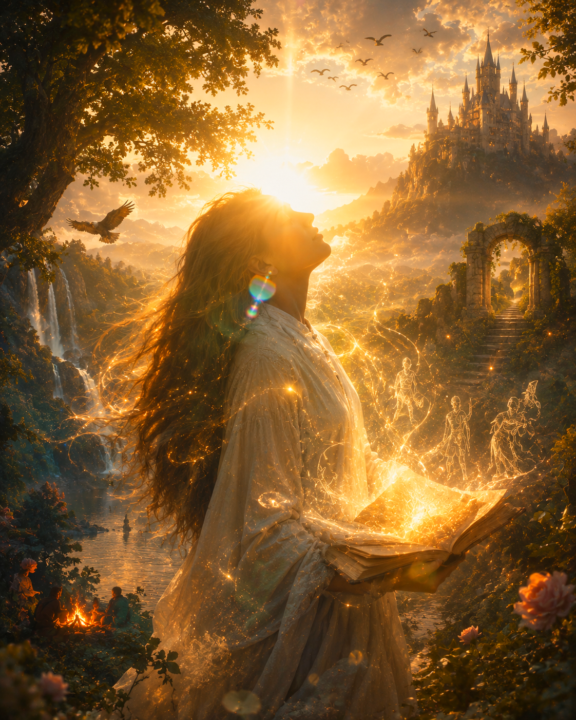
Long before psychology, self-help, or personal development, humanity learned through stories. Stories carried wisdom from one generation to the next. They preserved values, explored human struggles, and helped people make sense of life's mysteries. Whether shared around ancient fires, written in myths and legends, captured in books, or brought to life through film, stories have always been one of humanity's most enduring symbolic languages. Although cultures created different myths and legends, many of their stories shared something remarkable: The same archetypes appeared again and again. The Hero. The Mentor. The Wanderer. The Guardian. The Healer. The Sage. Different names. Different worlds. The same human experiences. Carl Jung suggested that these recurring figures emerge from the collective unconscious — universal patterns that help us understand ourselves and one another. This is why certain stories continue to resonate across generations. They are not simply entertaining us, They are reflecting us. 🎬 Storytelling as Modern Myth Today, mythology often arrives through books, films, and television. Modern storytellers continue the ancient tradition of carrying meaning through narrative. Consider the work of filmmakers such as Steven Spielberg, George Lucas, Peter Jackson, and many others who bring timeless archetypes into contemporary stories. Whether telling stories about explorers, children, heroes, dreamers, or encounters with the unknown, these storytellers invite us into journeys that mirror our own. The outer story may involve adventure, fantasy, history, or imagination. The deeper story often explores what it means to be human. This is the enduring power of myth. 🌟 The Hero's Journey In Star Wars, Luke Skywalker begins as an ordinary young man before being called into a greater adventure. Through mentors, challenges, loss, and transformation, he discovers strengths he never knew he possessed. -The Hero reminds us that growth often begins when we step beyond what is familiar.
0
0
Jun 8 •
🌸 The Hero & The Soul — Understanding Two Journeys We All Walk
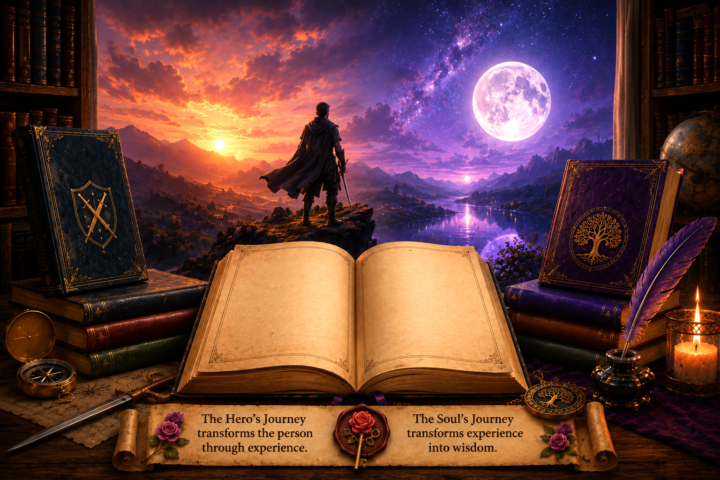
✨ Introduction Throughout history, humanity has told stories about heroes. Heroes leave home. Face challenges. Meet allies and mentors. Overcome obstacles. Return transformed. We recognize these stories because they reflect our own experiences. Yet beneath the Hero’s Journey lies another journey — quieter, deeper, and often less visible. The Soul’s Journey. While the Hero seeks to overcome life’s challenges, the Soul seeks to understand them. Together, these two journeys shape every human life. → The Hero’s Journey transforms the person through experience. → The Soul’s Journey transforms experience into wisdom. ━━━━━━━━━━━━━━ 📚✨ Story One: THE CHALLENGE → The Hero's Journey A challenge appears. The hero asks: "How do I overcome this?" FOCUS IS: Action • Courage • Strength • Resilience The hero develops courage, strength, skill, and resilience. → The Soul's Journey The same challenge appears. The soul asks: "What is this experience teaching me?" FOCUS IS: Meaning • Awareness • Understanding • Wisdom The soul develops awareness, understanding, compassion, and wisdom. Reflection Have there been challenges in your life that first demanded strength, but later revealed deeper lessons? ━━━━━━━━━━━━━━ 📚✨ Story Two: BELONGING → The Hero's Journey The hero seeks a place in the world. A team. A family. A community. A purpose. The question becomes: "Where do I belong?" FOCUS IS: Connection • Acceptance • Identity • Purpose → The Soul's Journey The soul discovers that belonging begins within. The question becomes: "Can I belong to myself?" FOCUS IS: Self-Acceptance • Authenticity • Inner Harmony • Self-Love Reflection When have you sought acceptance from others, only to discover the importance of self-acceptance? ━━━━━━━━━━━━━━ 📚✨ Story Three: LOSS → The Hero's Journey Loss creates a wound. The hero must continue despite grief. The question becomes: "How do I survive this?" FOCUS IS: Endurance • Perseverance • Adaptation • Recovery → The Soul's Journey Loss becomes a teacher.
0
0
Jun 8 •
🌸 The Soul’s Journey Through Generations
Every life begins as part of a larger story. Before we take our first breath, others have already walked before us. They have loved, struggled, sacrificed, hoped, and endured. Their experiences become part of the roots from which we grow. Some generations are called to survive. Some are called to build. Some are called to heal. Some are called to remember. Though the challenges may differ, the journey itself remains remarkably similar. Each person inherits strengths, wounds, values, questions, and dreams from those who came before. Over time, these become the raw materials through which a unique life is shaped. The soul’s journey is not simply about becoming someone new. It is also about discovering what we have been entrusted to carry forward. Along the way, we encounter seasons of courage and uncertainty, belonging and loss, responsibility and transformation. We search for meaning. We question our path. We learn that strength without compassion becomes rigid, while compassion without strength struggles to take form. Gradually, wisdom emerges. We begin to understand that our lives are woven into something much larger than ourselves. The stories of our ancestors become part of our story. Our story becomes part of the legacy we leave behind. And those who follow will continue the journey in ways we cannot yet imagine. In this way, life is not a solitary path but a living river of experience flowing across generations. Each person becomes both a receiver and a giver. A student and a teacher. A seeker and a guide. The soul’s journey is not measured by achievement alone, but by awareness, compassion, and the ways we help life continue to unfold. We are the roots, the trunk, and the branches all at once. And perhaps the deepest realization is this: The purpose of the journey is not simply to arrive. It is to become a conscious participant in the story of life itself. For every generation carries a different shield, a different challenge, and a different gift. Yet each contributes to the unfolding story of humanity.
0
0
May 11 •
🌸 Clarity Beyond Fear
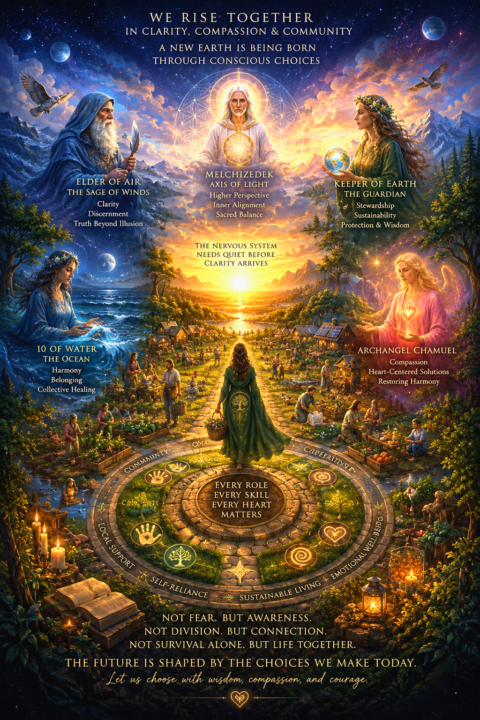
Archetypes, Collective Change & the Individual Path of Awakening 🌿 There are moments in history when humanity begins to pause, and question the direction of the world around it. Economic uncertainty. Rising living costs. Emotional exhaustion. Division between people. A longing for something more meaningful, sustainable, and human. Many feel it quietly. Not only in the mind — but in the nervous system, the heart, and the soul. And perhaps one of the greatest questions emerging during this time is: How do we remain grounded, compassionate, and purposeful while the world around us changes? 🌿 Collective Shifts & the Human Experience Throughout history, periods of instability have often become turning points in human consciousness. When systems become strained, people naturally begin reflecting upon: - how they work - how they live - what truly matters - how communities survive - what creates emotional well-being - what kind of future they wish to build Some respond through fear. Some through control. Some through despair. But others begin awakening new ways of living: - community support - local sustainability - meaningful work - creativity - emotional healing - cooperation - reconnection with nature - spiritual reflection - practical wisdom What many are sensing today is not simply “collapse.” It is a transition of awareness. A remembering that human beings were never meant to thrive entirely disconnected from: - one another - the Earth - meaningful contribution - emotional wellness - rhythm and balance 🌿 Clarity vs Illusion During uncertain times, the difference between illusion and clarity becomes more visible. Illusion says: - Human worth is measured only through productivity - Wealth alone creates security - Competition matters more than cooperation - Constant speed equals progress - Exhaustion is normal - Human beings are replaceable But eventually, both individuals and societies begin feeling the imbalance.
0
0
1-10 of 10
powered by
skool.com/library-of-soul-wisdom-5608
✨ Guiding seekers on the path of self reflection through shared wisdom and soulful connections.
Suggested communities
Powered by