
Write something

4h •
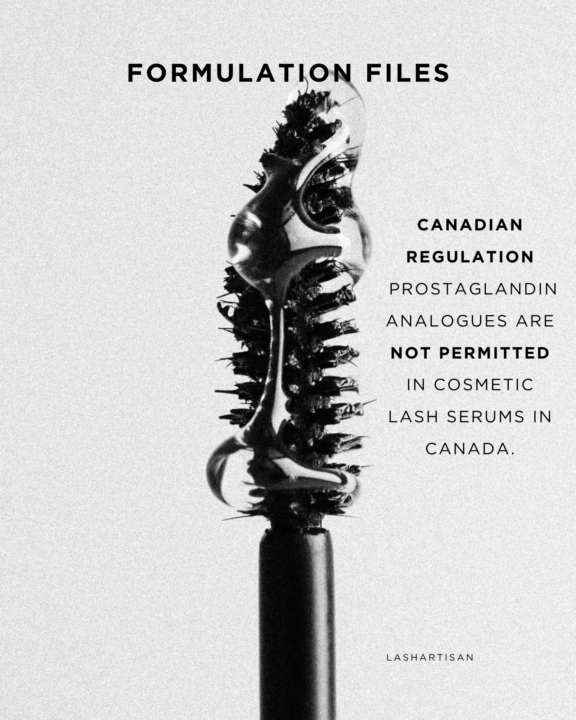
Prostaglandins❓
Okay, so I know we know that prostaglandin analogues are banned in Canada and not the USA, but do we actually know what the ingredient names are and the deeper reason why? Can we confidently tell our clients what to look for on an ingredient list when they are choosing a lash serum, or even when we decide what to carry in our own studio? And beyond that, do we understand what these ingredients are doing over time, not just the results we see at the beginning? Like any cosmetic product, there are side effects, but are not the same for everyone, so the conversation is not about whether something is good or bad, but about knowing how it works so we can guide with clarity. This is where awareness becomes part of our role as artists. After reading through this, what stood out to you most, was it the ingredient names, how it works, or the long term understanding behind it?
0
0
14d •
Thioglycolate is restricted, not banned!
Thioglycolate is one of the most important ingredients to understand in lash and brow chemistry because the percentage used affects how quickly and how strongly the formula works. It breaks disulfide bonds in the hair so the hair can be reshaped, but percentage alone does not tell the full story. Processing speed is also influenced by pH, formulation, and the condition of the hair. When you understand the chemistry, you start to recognize what you are seeing during processing, not just what step you are on. Click the classroom tab to learn the full breakdown of it's science, function, and how to identify when it is working.
0
0

19d •
What Artists Get Wrong About Formaldehyde
Most lash artists have heard the term “formaldehyde free” when it comes to adhesives, but very few actually understand what that means. Here is the truth. Cyanoacrylate adhesives do not contain formaldehyde as an added ingredient, but they can release trace amounts during curing and over time as the adhesive breaks down. This is a normal part of how the chemistry works. So the conversation should not be about chasing labels. It should be about understanding control. Your environment, your humidity, your temperature, how you store your adhesive, how fresh your bottle is, and how you finish your sets all play a role in reducing exposure and sensitivity. When you understand this, you stop relying on marketing and start working with intention. Inside the classroom, I break this down in detail. We go into the chemistry of cyanoacrylate, what actually happens during curing, and exactly how to set up your environment to create better retention and safer applications.
0
0

1-3 of 3
skool.com/lashartisan
Build your lash business in real time with feedback, support, and structure. Master your craft, grow your income, create freedom.
Powered by