
7d • General discussion
How to Train Jiu-Jitsu Without Burning Out or Getting Hurt
Most people don’t quit jiu-jitsu because they lose motivation.They quit because they get hurt, frustrated, or overwhelmed.
Burnout doesn’t usually come from training too little—it comes from training without intention.
If you want to stay on the mat long enough to actually get good, here are a few principles that matter more than any single technique.
1. Train for Longevity, Not Wins
Winning rounds feels good. Staying healthy feels better.
If every session is treated like a competition, your body (and mind) won’t keep up. You don’t need to “win” practice to improve. You need to show up consistently.
Ask yourself:
- Did I learn something today?
- Did I leave the mat healthy?
- Can I train again tomorrow?
If the answer is yes, that was a good session.
2. Focus on Positions Before Submissions
Submissions are fun. Positions are what keep you safe.
When you chase submissions without control, you expose yourself to bad scrambles, bad angles, and unnecessary stress on your body.
Spend more time:
- Escaping bad positions
- Holding strong positions
- Understanding where you are, not just what you want
Solid positions reduce panic—and panic leads to injuries.
3. Control Your Intensity
Not every round needs to be hard.
You should have:
- Some rounds to learn
- Some rounds to experiment
- Some rounds to push
If every round is 100%, your nervous system never recovers. That’s when burnout creeps in.
Training smart means knowing when to dial it up—and when to dial it back.
4. Accept That Feeling Lost Is Part of Progress
If you feel confused, stuck, or behind—you’re probably doing it right.
Jiu-jitsu isn’t linear. Growth often looks like:
- Feeling lost
- Then small clarity
- Then confusion again
- Then another breakthrough
Don’t mistake confusion for failure. It’s usually a sign you’re learning something new.
5. Build Habits, Not Expectations
Burnout often comes from unrealistic expectations.
Instead of:“I should be better by now”
Try:
- “I’ll train 2–4 times a week”
- “I’ll focus on one position this month”
- “I’ll ask questions when I’m unsure”
Habits keep you moving forward even when motivation fades.
6. Use the Community
You don’t have to figure this out alone.
Ask questions. Share frustrations. Learn from others who’ve been where you are. Jiu-jitsu is individual, but progress is communal.
The mat teaches you how to deal with pressure—but the people around you help you stay in the game.
Final Thought
The goal isn’t to train the hardest.The goal is to train long enough to become who you’re capable of becoming.
Longevity > ego.Consistency > intensity.Learning > winning.
Question for You
What’s the biggest thing that’s slowed your training in the past—injuries, time, motivation, or frustration?
Drop it in the comments 👇
p.s- check out this episode of Mat Made with Jiu Jitsu grandma for motivation!
6
1 comment
How to Train Jiu-Jitsu Without Burning Out or Getting Hurt
skool.com/kennykimbjj
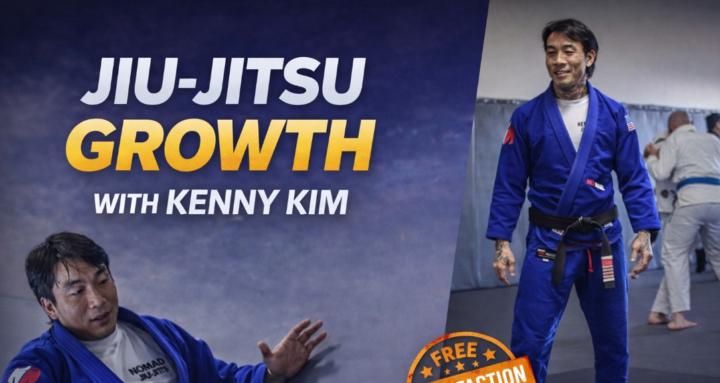
Free jiu-jitsu community with weekly techniques, open discussion, and optional deep-dive courses with Kenny Kim.
Leaderboard (30-day)
1

+4
2
+4
3

+4
4

+3
5

+2
Powered by