
Write something
Pinned

May 25 •
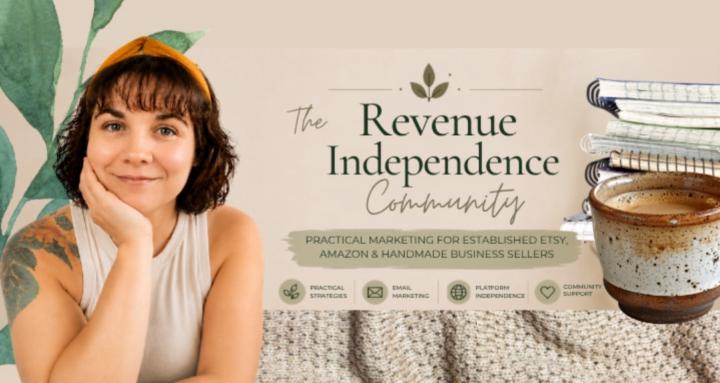
Welcome to the Revenue Independence Community
This space is for established handmade sellers on Etsy, Amazon, and Facebook who are ready to build something more sustainable than chasing algorithms. Here, we focus on: Revenue independence Audience ownership Intentional marketing Predictable sales systems A business that actually supports your life Inside, you'll get practical training, email marketing strategy, and platform independence support, plus a community of sellers doing the same work at the same stage. Introduce yourself below: What do you make? What platform are you currently selling on? What's one thing you want help with right now? I'm Rhiannon, founder of Keary Marketing. I help established handmade sellers stop depending entirely on platforms they don't control and start building the infrastructure they actually own. You don't need to do more. You need systems that work better. Glad you're here.
1
0
6d •
Where did your holiday sales come from last year?
Before we build anything this month, a quick baseline. Think back to last November and December. Roughly what share of your sales came through a marketplace, and what share came from something you own, like your email list or your own site? Reply with your best guess. Something like "90 marketplace, 10 email" is perfect. No one needs exact numbers. There is no wrong answer. A lopsided number is the reason we're here. We'll come back to it in January and see what changed.
0
0
12d •
What are you actually keeping from your holiday sales?
Quick question for the group: when a holiday buyer finds you through a marketplace, what happens to that relationship after the sale ships? I've been thinking about this heading into October. A strong November doesn't mean much if every one of those buyers disappears back into the platform in December. The sellers who get compounding growth are the ones who move at least some of that traffic onto something they own, an email list, before the season peaks. Curious what people here are already doing, if anything, to capture holiday buyers past the one-time sale.
0
0
Sep 3 •
Why September is the make-or-break month for your holiday season
Most sellers treat September like a warm-up but it's the last month where your decisions actually change what November and December look like. Here's the trick: holiday buyers don't find you in November. They find you now, or they find you never. Search algorithms need weeks to learn what you sell and email lists need time to warm up before you ask for a sale. If you're still relying on marketplace search to bring you holiday traffic, September is your deadline to build something that doesn't disappear when the algorithm shifts. That means: An email list that's actually warm, not just collected and content that's already ranking before the holiday search volume hits. You need a clear answer to "why buy from me" that doesn't depend on being featured. October is for execution, November is for selling and September is for building the thing that makes both of those possible. What are you building this month that isn't dependent on a platform deciding to show you?
0
0
Jul 28 •
New on the blog: why "just post more" isn't a platform independence strategy
Quick one for you. If you've been told to fix a slow month by posting more, you're not wrong to feel like that advice isn't landing. Posting more is a visibility strategy. It doesn't touch the actual problem, which is how much of your business depends on a platform that can change the rules any time it wants. This week's post breaks down three questions that'll tell you more about your platform dependence than any engagement number will: If your top platform disappeared tomorrow, how would customers find you again? How many of your sales this year came from a source you don't own? Do you have a way to reach customers directly, without a platform in between? Sat with these myself while writing it. Not all the answers were comfortable. Full post is up now, linked here. Would love to hear where you land on the three questions if you give them an honest answer.
0
0
1-14 of 14
powered by
skool.com/keary-marketing-4815
For handmade sellers on Etsy, Amazon & Facebook who want sales that don't rely on someone else's algorithm.
Suggested communities
Powered by