If the Lord Will
James 4:13–17 (part 1)
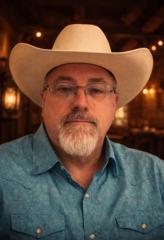
I have been diagnosed with an aneurysm in my ascending aorta.
In many people, an aneurysm like this can remain hidden until it ruptures, and when an ascending aortic aneurysm ruptures, it is often fatal.
Mine was discovered before that happened.
And I wasn’t even looking for an aneurysm.
I went in because I have struggled with breathing problems for many years. I wanted answers so I could finally move forward with that problem. During the evaluation, they performed an echocardiogram.
That is when they found the aneurysm.
Now I am preparing for open-heart surgery.
Experiences like this have a way of changing how you read certain passages of Scripture.
James writes:
“Whereas ye know not what shall be on the morrow. For what is your life? It is even a vapour, that appeareth for a little time, and then vanisheth away.”
— James 4:14, KJV
The Greek word translated “vapour” is ἀτμίς (atmis).
It means a vapor, mist, or breath—something that appears for a little while and then disappears.
James is not saying that our lives are meaningless.
He is reminding us that they are brief, fragile, and not under our control.
Years ago, while I was trying to understand why Christian denominations taught so many different things, I encountered what many people call the “name it and claim it” teaching.
According to that way of thinking, I should never acknowledge the possibility that something could go wrong. I should simply “claim” my healing. If I admit that I could die, someone might say that I am doubting God or demonstrating weak faith.
But that is not what James teaches.
James does not tell us to declare what tomorrow will bring.
He says:
“Ye know not what shall be on the morrow.”
Then he tells us how we should approach the future:
“If the Lord will, we shall live, and do this, or that.”
— James 4:15
The Greek says:
ἐὰν ὁ κύριος θελήσῃ
ean ho Kyrios thelēsē
“If the Lord wills.”
But notice what James says immediately afterward:
“We shall live.”
James does not merely say, “If the Lord wills, my plans will succeed.”
He places life itself under the will of God.
That is not weak faith.
That is faith.
Faith is not convincing myself that I control tomorrow if I can only believe strongly enough.
Faith is recognizing that I do not control tomorrow and trusting the One who does.
Having an aneurysm has made that truth very real to me.
But it has also made me realize something else:
My life was no more guaranteed before they discovered the aneurysm than it is today.
The aneurysm did not suddenly place my life in God’s hands.
My life was already in His hands.
The diagnosis simply woke me up to something that had always been true.
I have been honest with God.
I don’t want to leave yet.
I’m not ready for graduation.
There are people I love. There are things I still want to do. I want to participate in what God is doing in these last days. I want whatever time He gives me to matter.
But I cannot write tomorrow’s schedule and then expect God to sign His name at the bottom.
James calls that kind of presumptuous confidence ἀλαζονεία (alazoneia)—boastful self-confidence, the arrogance of living as though the future belongs to us.
It doesn’t.
Tomorrow belongs to God.
So my prayer is not, “God, I have declared what You must do.”
It is:
Lord, if You will, I shall live.
If You will, I will have this surgery.
If You will, I will recover.
If You will, I will continue the work You have given me to do.
And today, while He has given me breath, I want to use it.
James is not teaching us to fear tomorrow.
He is teaching us to stop pretending that we own it.
“For what is your life?”
It is a vapor.
Maybe the question is not, What am I going to do tomorrow?
Maybe the better question is:
What am I going to do with the day God has given me today?
3
3 comments
If the Lord Will
powered by
skool.com/join-the-last-days-disciples-3141
The Training Place for:
The Called
The Few
The Chosen
Wander no more Misfit Christian. Time is short. Join today. Go to work for God tomorrow.
Suggested communities
Powered by