
Write something
Pinned

Jul 19 •
Now Offering Jeweler Assessments to prep for Scale or EXIT!
Let's JAMM! Are you a jewelry business owner preparing to scale, adopt AI, increase enterprise value, or eventually sell your company? It might be time to schedule a free assessment to see if you are ready for the Jewelers Advantage Maturity Model. This is how we use both Human & AI insight to understand the unique, current state of your Business Operations, and how to predictably navigate either your growth path, or prepare to SELL the business without breaking them. This is the single highest leverage call you will ever have for your Jewelry Business and Career. ✨All of the Testimonial clients on our About page started here, and it's where we set the stage for you to have the same "life changing" experience! Details and Sign Up are here, you'll get to speak with me directly: https://www.skool.com/jewelers-advantage-ai-4685/classroom/70d46952?md=0651249a2ada47d5bd45caa7f8489bdc
Pinned
Mar 25 •
FREE AI Tools from Jewelers Advantage
Welcome! Here are 3 Free AI Tools my team and I built, that not only help you build your AI-powered Jewelry Business, but also help you complete the program! ✨MasterJeweler AI: Our flagship model, can be used with the Custom Jeweler Launch Checklist you download at the start of the program. This Launch Checklist contains a "Prompt Column" that helps you with specific stages of your step-by-step journey through our "AI for Jeweler's" curriculum focused on Custom Jewelry. By using these tools, you can launch a Custom Jeweler Funnel in 1-4 weeks, depending on your experience with AI - while remaining aligned with the BEST PRACTICE frameworks here at Jeweler's Advantage. 1. Download the PDF. 2. Use the Launch Links in the doc, to find our tools in ChatGPT. 3. Use the Custom Jeweler Launch Checklist with these tools. 4. Complete the AI4J Curriculum step-by-step with AI helping you - it's impossible to fail.
2
0

Jun 25 •
AI Powered Mood Boards for Custom Jewelry
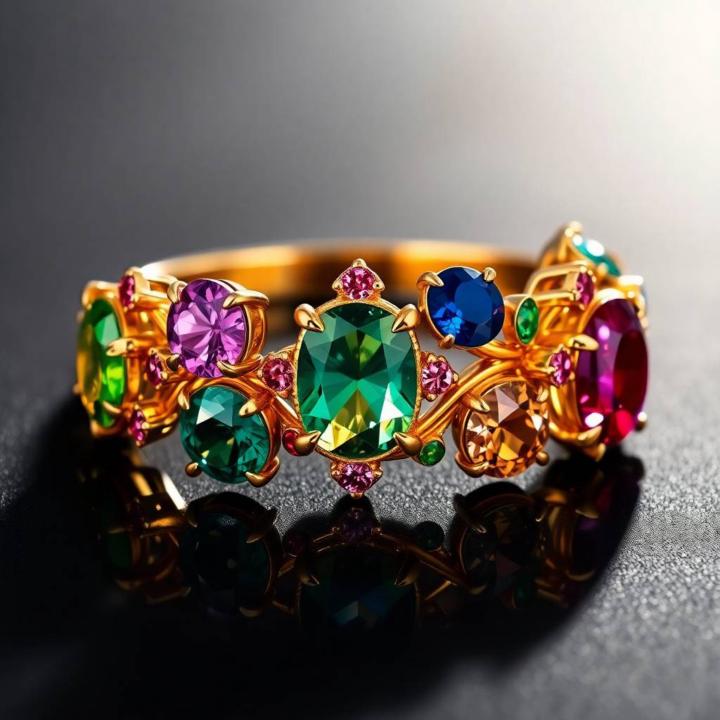
Assess Trends → Create Text Prompt → Generate Visual Directions → Curate for Quality → Build the Mood Board This is the future Mood Board workflow for Custom Jewelers. In less than 10 minutes, we went from real jewelry industry trends to a refined visual direction using AI. First, we assessed what’s happening in the market. Then we turned that insight into a focused text prompt. From there, Leonardo Flow State brought the trend to life with a wide range of images, giving us fast creative options to review, refine, and curate. The real advantage? When you have a Custom AI built for your brand, you can combine current industry trends with what makes your work special and unique. That means faster concepts, stronger client presentations, more inspired Custom Projects, and a design experience that makes you look like a sorcerer in the eyes of your client. And remember: Taking action is what actually makes this possible. Here is the Free Tool I used to kick this off, starting with the INDUSTRY NEWS Convo Starter in MasterJeweler: https://www.skool.com/jewelers-advantage-ai-4685/classroom/874ea21d?md=92fc2ea814d44b97a535578c3653383b
Oct 8 •
The 5 Person POWER TEAM
JEWELERS - This is what you should be aiming for if you own a small Jewelry Business. You can go fast in a way Major Brands can't comprehend, while presenting visually at a level that competes with them directly. Use This AI, with the following Prompt + Image: https://chatgpt.com/g/g-69c3e9cb6b788191b900fd460fe87bb3-masterjeweler-ai {Share the image attached to this post with the AI} "Help me understand how a 5 Person Team can have the cognitive power of 50. I will tell you about the Current State of my Jewelry Business, as well as the Desired State. Help me identify which new team members I need to create assymetric leverage. Be sure to dial in exactly what Business Model I am currently operating, do not just jump straight to eComm if I don't have it in place the correct way. Help me understand how AI can help with Custom Mood Boards, helping fill skill gaps for Repair performed by new bench jewelers, plan digital marketing, connect to CAD through MCP, and how to assess Gemstone and Metal Markets."
1
0

Sep 29 •
This AI 3D CAD Workflow will be Industry Standard by 2027
JEWELERS ✨ AI has crossed an important line. It’s stopped being just an image generator. Now it’s learning how to build Production-grade 3D CAD. Of course, this has been the number one request of anyone in Jewelry using AI, and it’s about to redefine the Design to CAD workflow once more. Expect for this to become Industry Standard by 2027. Here’s the WORKFLOW… ✨PHASE 1: CONCEPT Start in 2D. Generate 20 or 30 visual directions quickly, explore silhouettes, proportions and styling, then get the client aligned before anyone spends hours building CAD. AI becomes an imagination amplifier. Most Jewelers are still learning Phase 1. ✨PHASE 2: DIGITAL CLAY Once the design direction is approved, neural 3D tools can turn organic artwork, reliefs, textures or sculptural elements into usable 3D form. But don’t confuse that mesh with finished CAD. Think of it as digital wax. It gives us the first look, but still might not be ready to print. ✨PHASE 3: AGENTIC CAD Now the heavy lifting begins. Using MCP (basically the plug in the wall for AI to talk to another AI), a frontier AI model can connect directly to a real CAD environment like RhinoArtisan. Instead of clicking through every operation manually, imagine simply saying: “Add a 2-carat oval ruby, half-carat diamond sides, build a four-prong basket and size the ring to a US 7.” The agent can begin constructing that geometry inside the actual CAD environment. Stones. Settings. Shank. Metal weight. Potentially even live material and diamond pricing. This is the key shift: AI is not replacing CAD. AI is learning how to USE CAD. (Like a human would). ✨PHASE 4: MANUFACTURING CHECK Then the design has to survive reality. Wall thickness gets checked. Shrinkage gets compensated for. Geometry gets validated. Sprues can be generated. The final model gets exported as a watertight manufacturing file. That’s the Architectural Synthesis: Creative AI handles imagination. Neural 3D handles form. Agentic CAD handles engineering. Automation handles manufacturing validation.

1-30 of 36
powered by

skool.com/jewelers-advantage-ai-4685
The most effective AI Training & Tools available, for the Jeweler of the future...
Suggested communities
Powered by