User
Write something
Pinned

[START HERE] Welcome to Japanese in Real Life
Welcome! We’re glad you’re here. This community is for people who want to use Japanese confidently in real life — not just study grammar or memorize vocabulary. If you’re coming from Japanese Lessons with Native Teachers on Facebook, this is the next step: a more structured space with clearer guidance, practical lessons, and ongoing support from native teachers. 🎯 What This Community Is About Inside this group, we focus on: - Japanese as it’s actually spoken - Practical phrases for daily life, travel, and work - Building speaking confidence - Clear explanations from native teachers - Steady, realistic progress Short lessons, real examples, and usable Japanese — no fluff. 🧭 How to Use This Community - Check in regularly for new lesson topics and practice prompts - Ask questions — no question is “too basic” - Practice actively (even short answers are valuable) - Learn from both teachers and other learners Consistency matters more than perfection here. ✅ Start Here (Important) Please reply to this post and introduce yourself: 1. Your current Japanese level (beginner / intermediate / other) 2. Why you’re learning Japanese 3. One situation where you want to use Japanese more confidently This helps us shape lessons around real member needs.
Pinned
Real-Life Japanese Learning App for Community Members!
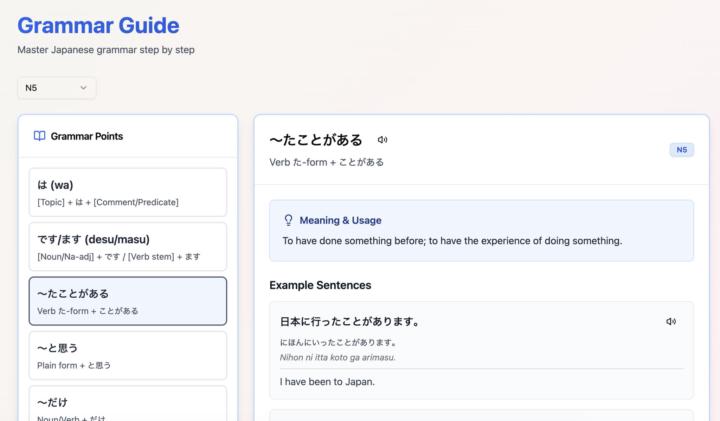
We’re excited to share that members of our Skool community, Japanese in Real Life, get free access to the Japanese Native (Sakura Sensei) app! This beginner-friendly web app helps you practice everyday Japanese with: - Daily words and phrases for real-life situations - Interactive conversation prompts to practice speaking and thinking in Japanese - Support for reading and recognizing hiragana, katakana, and basic kanji - Progress tracking so you can see your improvement over time The app is designed to complement our Japanese in Real Life lessons, giving you a practical, hands-on way to reinforce what you learn in the community. It’s perfect for beginners or anyone who wants more confidence speaking and understanding Japanese. Access the app for free as a community member: https://sakura-sensei-01a7581a.base44.app
0
0
Real-Life Japanese Learning App for Community Members!
Japanese in Real Life: Train Etiquette in Japan (with Useful Language)
Trains are a part of everyday life in Japan. They are clean, punctual, and usually quiet. Knowing basic train etiquette—and a few key Japanese phrases—will help you feel confident and avoid uncomfortable situations. 🚆 Basic Train Etiquette in Japan ✅ What to Do 1. Line Up ProperlyStand in line at the platform markings and wait for passengers to exit before boarding. 2. Keep Your Voice LowQuiet conversation is okay, but speaking loudly is considered rude. 3. Put Your Phone on SilentSet your phone to マナーモード (manā mōdo) – silent mode. 4. Offer Priority SeatsPriority seats are for: - Elderly people - Pregnant people - People with disabilities - People with small children 5. Wear Your Backpack on the Front or Put It DownThis helps avoid hitting others in crowded trains. ❌ What NOT to Do 1. Don’t Talk on the PhonePhone calls are strongly discouraged on trains. 2. Don’t Eat or Drink (Usually)Eating is generally avoided, except on long-distance trains like the Shinkansen. 3. Don’t Block the DoorsMove inside the car quickly after boarding. 4. Don’t Spread OutAvoid sitting with legs wide or using extra seats for bags. 🗣️ Useful Japanese Language on Trains 📢 Announcements You’ll Hear - 次は〜です。Tsugi wa ~ desu.→ “Next stop is ~.” - ドアが閉まります。Doa ga shimarimasu.→ “The doors are closing.” - ご注意ください。Go-chūi kudasai.→ “Please be careful.” 🙏 Polite Phrases to Use - すみませんSumimasen→ Excuse me / Sorry (very useful) - ありがとうございますArigatō gozaimasu→ Thank you (polite) - 大丈夫ですDaijōbu desu→ “I’m okay” (use when refusing a seat) 💺 Offering or Refusing a Seat - どうぞDōzo→ “Please” (when offering a seat) - 座ってくださいSuwatte kudasai→ “Please sit.” - 大丈夫です、ありがとうございますDaijōbu desu, arigatō gozaimasu→ “I’m okay, thank you.” 🌱 Real-Life Tip If you’re unsure what to do, watch what Japanese passengers do. Quiet behavior, awareness of others, and simple politeness go a long way. 🚉 Final Thought Train etiquette in Japan is based on consideration for others. You don’t need perfect Japanese—just calm behavior and a few polite phrases will help you fit in smoothly.
Japanese in Real Life: Train Etiquette in Japan (with Useful Language)
A Simple Guide to Using Japanese Numbers in Real Life (Course Preview)
Japanese numbers are easy to learn, but how you use them depends on the situation. Once you understand the basics, you’ll start noticing numbers everywhere—restaurants, shops, trains, and daily conversations. https://www.skool.com/japanese-in-real-life-1835/classroom/5b4ed240?md=80b3936ce99a43b3a855bec2f6ba6fa0 Basic Numbers (1–10) - 1 一(いち / ichi) - 2 二(に / ni) - 3 三(さん / san) - 4 四(よん / yon) - 5 五(ご / go) - 6 六(ろく / roku) - 7 七(なな / nana) - 8 八(はち / hachi) - 9 九(きゅう / kyū) - 10 十(じゅう / jū) Numbers in Real Life: Counters Matter In Japanese, numbers often change depending on what you’re counting. These are called counters. People - 一人(ひとり / hitori)– one person - 二人(ふたり / futari)– two people - 三人(さんにん / san-nin)– three people At restaurants, you’ll often hear: - 何名様ですか? (Nan-mei sama desu ka? – How many people?) - 二人です。 (Futari desu. – Two people.) Time - 一時(いちじ / ichi-ji)– 1 o’clock - 三時(さんじ / san-ji)– 3 o’clock Money - 100円(ひゃくえん / hyaku-en) - 1,000円(せんえん / sen-en) A Useful Tip You don’t need to master all counters at once. Start with: - 人(people) - 円(money) - 時(time) Japanese people are very understanding, and using the correct number—even imperfectly—goes a long way. Learning numbers isn’t just counting; it’s learning how Japanese is actually used in daily life.
How to Pray at Shrines and Temples (and Photo Etiquette)
When living in Japan or traveling around the country, you will often visit shrines (神社) and temples (お寺)—sometimes even while hiking or sightseeing. These are not just tourist spots. They are active religious spaces. Knowing the basic etiquette will help you act respectfully and feel more confident in real-life situations. ⛩️ How to Pray at a Shinto Shrine (神社) Shrines belong to Shinto, Japan’s traditional belief system. You can usually recognize a shrine by the torii gate at the entrance. Shrine Etiquette – Step by Step 1. Bow once before entering the torii gateThis shows respect when entering a sacred space. 2. Walk to the side of the pathThe center of the path is traditionally for the gods. 3. Clean your hands and mouth at the water basin (手水舎 / temizuya) 4. At the main shrine: This style is called 二礼二拍手一礼 (two bows, two claps, one bow). 🛕 How to Pray at a Buddhist Temple (お寺) Temples belong to Buddhism and are different from shrines. There is no torii gate, and the atmosphere is usually quieter. Temple Etiquette – Step by Step 1. Enter quietlyTemples are places for reflection and calm. 2. Incense (if available) 3. At the altar: ⚠️ Do NOT clap at temples. Clapping is only done at shrines. 📸 Real-Life Photo Etiquette in Japan This is especially important: - Do not take photos of people while they are praying - Avoid taking close photos near someone praying - Some shrines and temples do not allow photos at all - Always check signs or observe what locals are doing Simple rule:👉 If someone is praying, don’t take pictures. 🌱 Why This Matters in Real Life In Japan, shrines and temples are part of daily life—not just tourist attractions. Even if you are not religious, showing quiet respect is always appreciated. Although Japanese people are not overly religious, they do consider praying at temples and shrines a reverent activity. Understanding these customs will help you feel more comfortable, avoid awkward moments, and connect more naturally with life in Japan.
0
0
How to Pray at Shrines and Temples (and Photo Etiquette)
1-10 of 10
powered by
Japanese in Real Life
skool.com/japanese-in-real-life-1835
Learn practical, real-life Japanese with native teachers. Clear guidance, speaking-focused practice, and steady progress.
Build your own community
Bring people together around your passion and get paid.
Powered by