
Write something

Mar 4 •
What’s the most underrated CRO research method?
In your opinion, what is it? We all use heatmaps, surveys, customer service reports, analytics, etc. But do you have a “secret” research method that worked wonders for a particular client, or your own brand?

Feb 4 •
Finding Your Next Big Test
One of the hardest parts of the G.E.M. framework is the Explore phase. Not because of a lack of ideas, but because most tests start too close to the solution. One of my favorite ways to uncover your next multiplier test is to slow down and ask a few simple (but uncomfortable) questions: • What’s keeping you up at night (or your boss)? • What’s the most strategically important thing right now? • If you could wave a magic wand and change one thing, what would it be? Then keep asking “why?”Over and over. Until the answer turns into something you can actually experiment on. That experiment shouldn’t just tweak a page; it should help you answer a real question or validate a decision that gives you more confidence to explore further. When Cameron from Bare Bones and I first started talking, his initial idea was straightforward: Remove flavor options from the PDP to reduce decision fatigue. Great idea. But… why? As we kept digging, the real question surfaced: Why do Amazon buyers behave so differently from Shopify buyers? That insight completely changed the direction of the test. Instead of a narrowly defined PDP cleanup, we ran a theme test: One theme with a traditional Add to CartOne theme with a “Buy on Amazon” CTA alongside it. What started as a UX test turned into something much bigger. It helped Cam: • Better understand the post-ad buyer journey • Invest more confidently into Meta acquisition • Make a strategic decision with real signal behind it I’ve attached the full conversation so you can watch how that exploration actually unfolded. And here’s the follow-up discussion if you want to go deeper:https://youtu.be/PUpCc4GEaOE?si=IGFHvl5gvuaRpUV7 This is a great example of how asking better questions in Explore leads to better experiments — and much bigger outcomes.
2
0

Jan 29 •
Re-thinking why I run headline tests
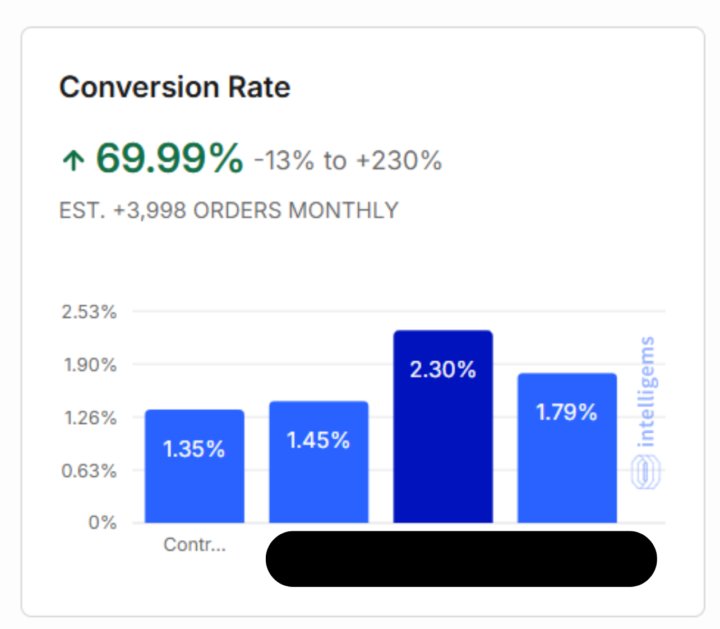
Couple headline tests that have RIPPED for me lately, and kinda made me re-think my approach to testing. For the first time ever, I wrote headlines with specific intentions, deeper than just "make more money" ... On the first test here, I wrote specifically to increase CVR, the headline was geared at convincing more people on our website that our products were good enough quality and worth more to them than the price we offer it for... That's usually how I write... But now that I'm at a supplements brand, I took a swing at writing headlines that would persuade people to subscribe, rather than one-time-purchase our supps. The headline & subtext is more about how our products already fit it to their daily routines and how it can improve them. CVR and Rev Per Session were basically flat on that test, but the Sub % rate was WAYYY higher, so that's a huge win for us. Anyone else have examples of content tests designed to move specific metrics like this?

Jan 26 •
Know Your Data, Know Your Business
Here's one quick way to start exploring your data. This Is NOT About Generating Test Ideas That's lazy. You've heard advice like "test your shipping threshold" or "try bundling." But without knowing YOUR data, you're guessing. Generic advice doesn't help because every brand is different. This is about exploring and understanding. Understanding comes first. Testing validates what you see in your data signals. I highly encourage you to go to our explore model and dig deeper into this. Personal opinion, those who learn how to master the exploration data phase are the ones who really unlock growth. https://www.skool.com/intelligems-academy-1535/classroom/90ab5960?md=605f4d08374d41e4a58b069e22ca4757

Jan 6 •
How to find your natural free shipping threshold (without guessing)
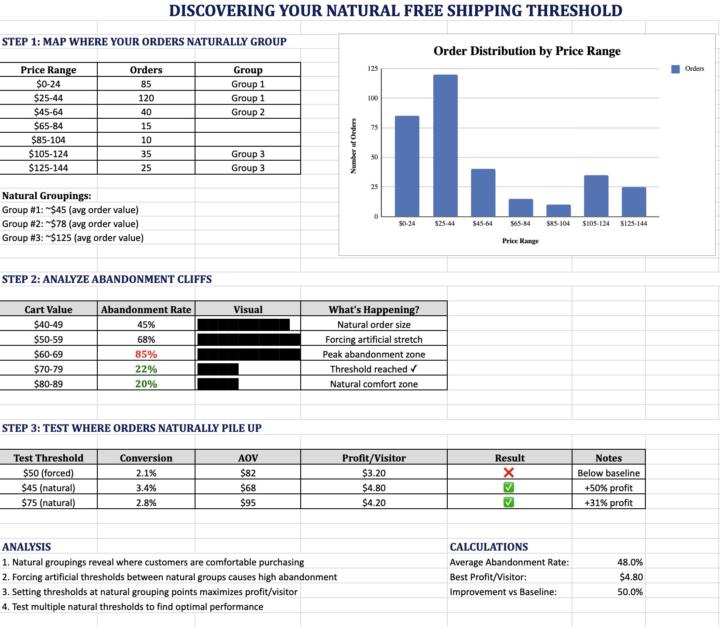
Most store owners pick $50 or $75 because it sounds right. But your customers are already showing you the real number. Here's how to let the data decide: 1. Graph your order history Plot your orders by value over the last 90 days. You'll see natural peaks where customers tend to land. These clusters reveal spending comfort zones you didn't set... they emerged on their own. 2. Find your abandonment cliffs Pull cart abandonment rates by value. Look for sharp drops at specific price points. That's where your current threshold creates friction that kills conversions. 3. Watch what gets added last Check which products appear in carts just above your threshold. Stickers, samples, cheapest items in your store? That's customers telling you the threshold feels arbitrary. They're buying stuff they don't want just to hit the number. 4. Test at natural pile-up points Run threshold tests where orders already cluster. But don't measure AOV alone. Profit per visitor tells the real story. A lower threshold with higher conversion often wins. Your data already has the answer. You just have to ask the right questions.
1-7 of 7

skool.com/gem
A free community where e-commerce teams learn to test beyond the page. If you want to validate business decisions with confidence, this is for you.
Powered by