Unlock for $47
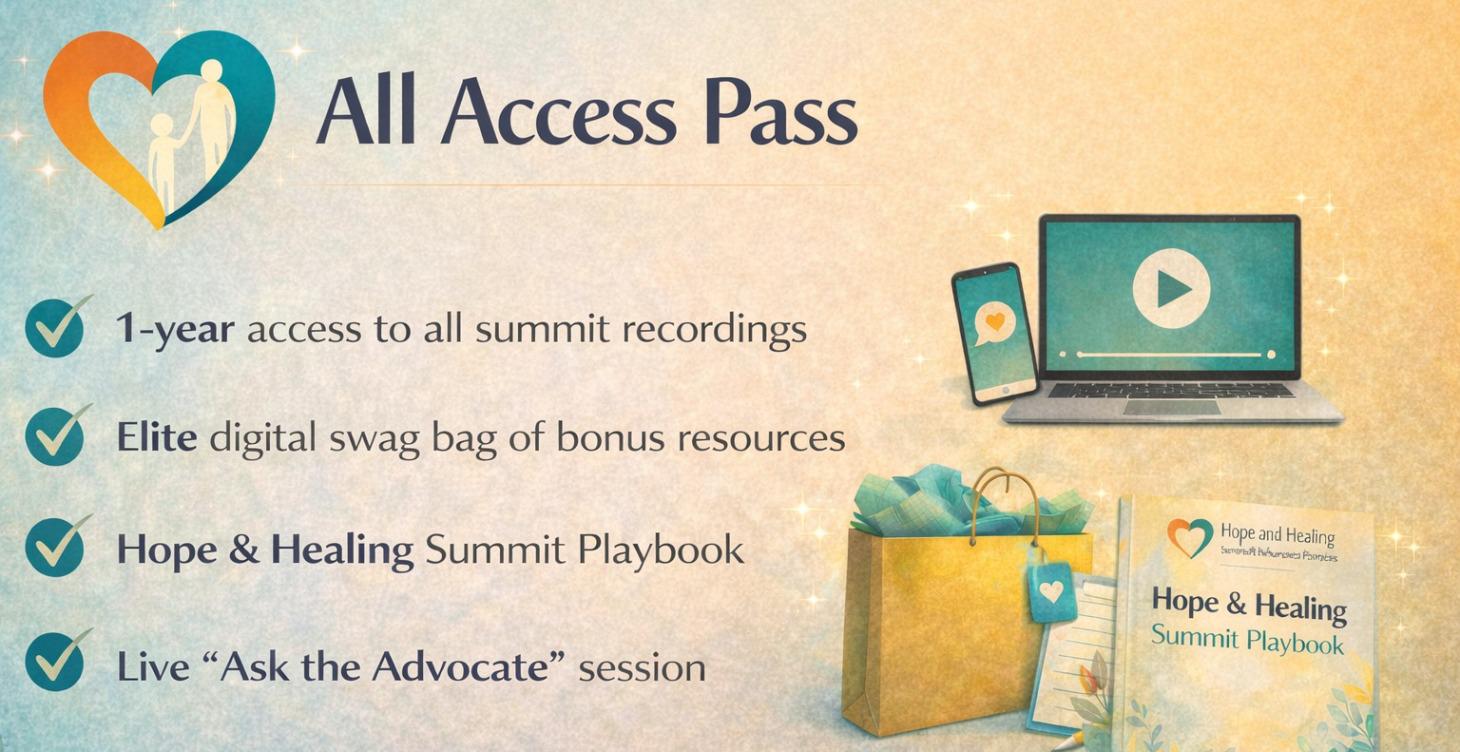
All Access Pass
Designed to support both your advocacy and your well-being long after the summit ends, the All Access Pass includes:
-Access to the summit recordings for one full year, instead of 48 hours
-An exclusive digital swag bag with contributions from some of our expert presenters
-The Hope and Healing Summit Playbook PDF to help you reflect, take notes, and turn your insights into action
-A live "Ask the Advocate" session with Dr. Stephanie
0%
Optimize Your Child's IEP
An effective IEP can be the difference between surviving school and truly thriving. In this presentation, Special Education Advocate Dr. Stephanie Reissner breaks down how to optimize your child’s IEP so it actually works in the real world. You’ll learn how to identify gaps, strengthen goals and accommodations, and advocate confidently so services align with your child’s unique needs- without feeling overwhelmed, intimidated, or unheard.
0%
A Guided Sound Experience
Participants will engage in a gentle, guided sound experience using crystal singing bowls, chimes, and rhythm to support relaxation and sensory regulation. The session offers a calm, pressure-free environment where participants can rest, reset, and experience sound as a grounding sensory tool. Participants may leave with an increased sense of calm, improved body awareness, and simple ways to return to a relaxed state.
0%
The Voice as a Pathway to Healing
Quick vocal tools for parental regulation using the voice. Three practices you can use anytime to find calm and steadiness. 12 minutes, no experience required.
0%
Methylation Basics to Balance Moods and Behaviors
Mood and behavior challenges are often linked to biology, not behavior. This session explores how neuro disruptors and biochemical imbalances can affect mood, focus, and regulation. You’ll learn how to identify common disruptors, support healthy methylation, and use simple strategies to help balance neurotransmitters. It’s your chemistry, not your character.
0%
Dopamine and ADHD: What's really going on
What dopamine is and how to hack it
0%
The Invisible Barrier to Reading Progress
Stress and emotional overload are often the hidden barriers to reading progress, showing up as avoidance, shutdowns, tears, or sudden skill loss. Licensed Dyslexia Therapist Robin Carbajal explains how overload creates a downward spiral that blocks learning and shares practical strategies to protect confidence, build self-advocacy, and restore motivation so progress can continue.
0%
Reducing Demands at Home
In this short session, parents will learn how lowering demands at home can quickly reduce stress and overwhelm for their child. We will explore how too many expectations, transitions, and “one more thing” moments add up in a sensitive nervous system, and how small changes in routines, language, and pacing can create more calm. You will leave with practical, realistic ways to simplify the day, reduce friction, and make home feel more doable for your child.
0%
The Confidence Code
This presentation explores how the “garden of your mind” shapes confidence, self-belief, and emotional well-being. Using simple science, storytelling, and interactive exercises, Renee guides the audience through understanding how thoughts function like seeds—either planting flowers of joy and confidence or weeds of doubt and anxiety.
0%
Dyslexia Demystified
Parents will learn some of the common symptoms of dyslexia in children of various ages. Information will also include possible paths to increased school support with next steps to take when advocating for a child having difficulty learning to read and spell.
0%
What is Executive Functioning & Why Does It Matter
This presentation is your introduction to Executive Function, the skills that help us get important things done - things like time management, organization, staying focused and more. You'll identify your child's Executive Function challenges and come away understanding more about how to support their brains with these critical skills - in school and in life.
0%

5 Foundations for Building Finances
In this session, participants will explore five pillars for finances that are important for families raising children with disabilities. Taught by a former special education educator turned financial coach, You’ll walk away with practical tips, permission to simplify and supportive tools to help you build a financial life that aligns with your values, energy, and family needs without shame, overwhelm, or spreadsheets.
0%
How to Help Your Child Read Better
This session helps parents understand why reading can be hard for some children and what actually supports reading growth. You’ll learn the core skills behind reading, how to support them at home in simple ways, and how to respond if school instruction isn’t meeting your child’s needs. Families will leave with clearer direction, practical ideas, and a better sense of what to focus on—and what to let go.
0%
Parents & Educators: The Bridges That Connect Us
This session explores the shared emotional experiences of parents and educators supporting children with special needs. While often approaching decisions from different roles, both are united by a common goal—the success and well-being of the child. Through reflection and real-world insight, participants will gain a deeper understanding of the emotional weight carried on both sides of the IEP table and the power of collaboration rooted in empathy, trust, and shared purpose.
0%
Setting Realistic Goals for Real Growth
After this presentation, you'll leave knowing exactly how to tell if an IEP goal is measurable, meaningful, and based on your child’s actual needs—not vague “checkbox” language. You’ll also walk away with a simple checklist and the right questions to ask so goals are written clearly, tracked with real data, and adjusted when progress isn’t happening.
0%
1-15 of 15